

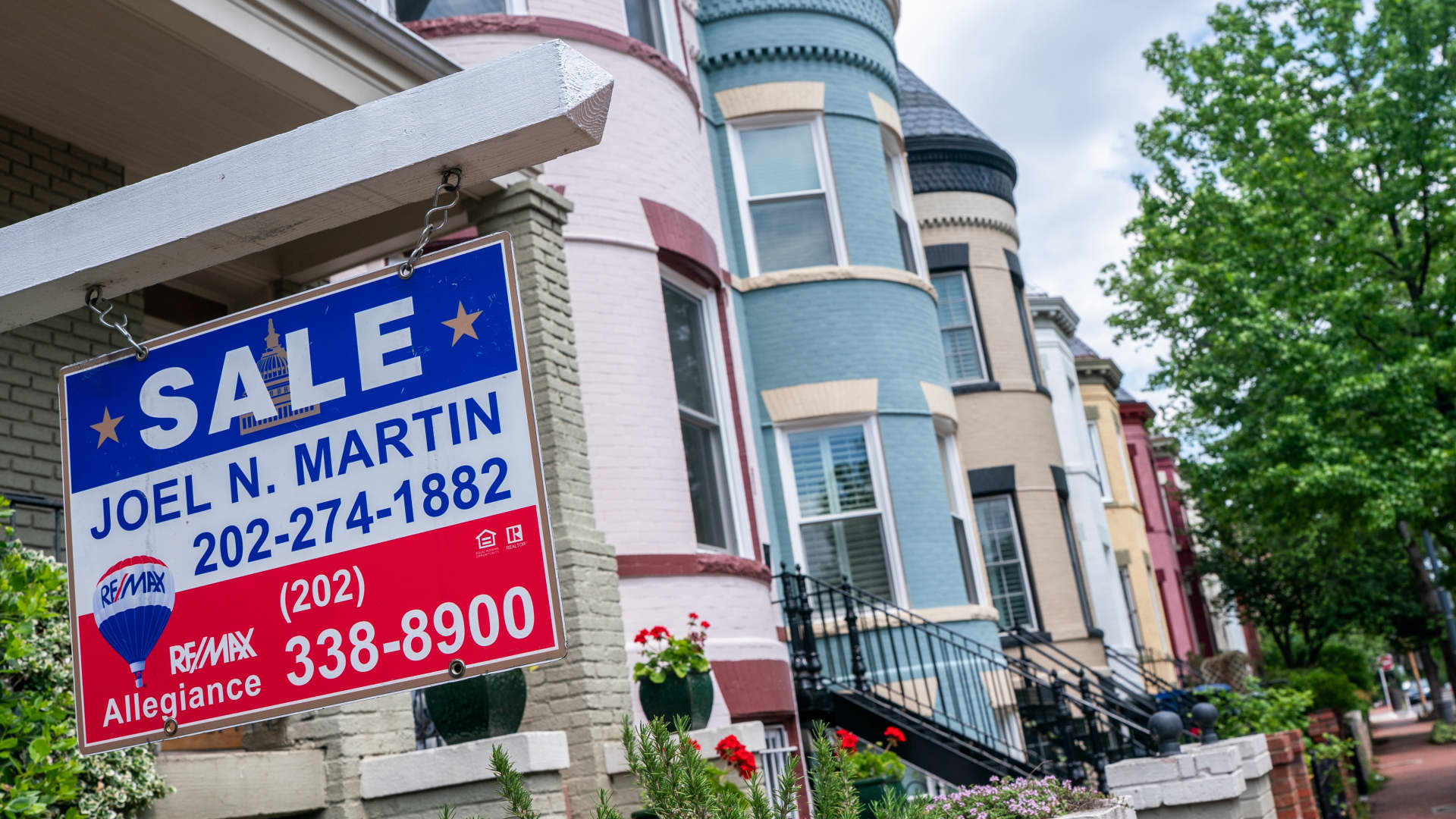

The U.S. housing market has yet to regain momentum into 2026, according to the quarterly CNBC Housing Market Survey, but real estate agents say they are seeing a substantial shift toward a more balanced market.
In the final quarter of 2025, mortgage rates have changed little, but home prices have steadily declined. Average interest rates on popular 30-year fixed mortgages fell sharply in the third quarter but held steady between 6.2% and 6.4% in the fourth, leaving some buyers on the sidelines with no incentive to jump.
There are now early signs that more activity may be coming.
“The buyers I’ve seen are buying for life reasons, like having a baby, relocating, retiring or downsizing,” said Ashley Ramage, a real estate agent in Raleigh, North Carolina.
Among real estate agents surveyed by CNBC in the fourth quarter, 37.5% said it was a balanced market, rather than the buyer’s market they reported seeing in the third quarter. This is up from 30% in the third quarter and appears to be as consumers lose confidence in the economy as job losses widen.
“Interest rates, much more than the intrinsic cost of living factor, have definitely slowed down the movement of people and us,” said Heather Dell, a real estate agent in Detroit. “Homeowners insurance, auto insurance, utilities and medical insurance are common objections we hear when buyers talk about their purchase.”
The CNBC Housing Market Survey is a national survey of randomly selected real estate agents across the United States. Responses to the fourth quarter survey were collected from December 10th to December 17th. This quarter, 72 agents shared their insights.
Although the majority of agents said it was still a buyer’s market due to easing prices and increased inventory for sale, some agents noted that buyer and seller expectations remained very different.
“Buyers tend to think the market is more like 2008, and sellers tend to think the market is more like 2021, 2022, and those are diametrically opposed markets,” said John Fragola, a real estate agent in Charleston, South Carolina.
Of course, 2008 was the beginning of the subprime mortgage crisis, which led to the Great Recession and the housing crash, flooding the market with distressed homes and giving buyers all the power. Meanwhile, 2021 saw a buying frenzy shortly after the coronavirus pandemic began, with inventories dropping to record lows and giving all the power to sellers.
The current market appears to be in balance due to price easing.
According to a CNBC survey, 92% of agents said at least one seller lowered their prices in the fourth quarter, up from 89% in the previous quarter. Nearly half of respondents said the majority of sellers had reduced prices.
“Especially in my market, the amount of concessions has gone up,” Ramage said. “Unfortunately, at the beginning of the year, many sellers were still stuck in a 2021 mindset, but as the year progressed and listings slowed down, they had to become more comfortable with the fact that they would probably need to offer some concessions to get the deal done.”
Although prices are easing, they are still at historically high levels, but buyers appear to be getting used to that being the new normal.
Asked how affordability is impacting buyers, agents said fewer buyers left the market in the fourth quarter than in the previous period, and delays in purchases also decreased. There are also fewer compromises in terms of home size, features, and location.
However, the price cuts were not so positive for sellers, who reported that more real estate agents were forced to delist than in the third quarter.
“Personally, I’ve had some clients say, ‘Let’s stop for a second and put the brakes on here, and then we’ll get back into the spring market with more buyers,'” Fragola said.
Looking into the new year, 67.8% of agents said they expected sales to improve in the first quarter, despite the late end to 2025. 77% of agents said they expected full year 2026 to be better than last year.
There is more inventory on the market now, and some agents said they believe consumers are getting used to the current economic situation.
“I think a lot of people are feeling a little bit more comfortable with the unknown,” Ramage said. “Sentiment has changed from fear to cautious optimism.”
