

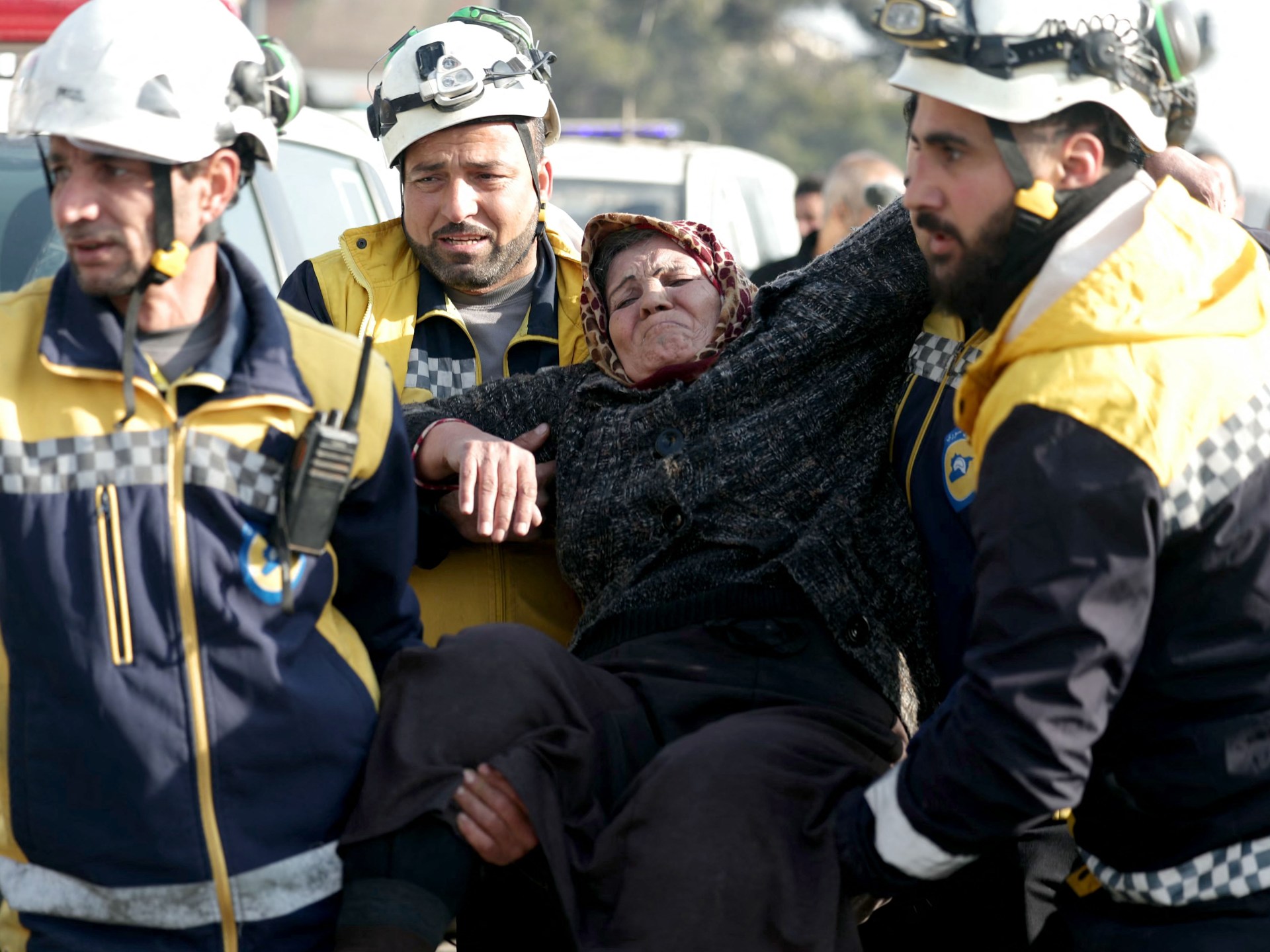
Syrian authorities have imposed a curfew in several areas of Aleppo city as clashes between the Syrian army and the Kurdish-led Syrian Democratic Forces (SDF) intensify.
The Aleppo Internal Security Command said in a statement on Thursday that it had imposed a curfew in the neighborhoods of Ashrafieh, Sheikh Maqsood, Bani Zeyed, Al-Siriyan, Al-Kharrok and Al-Midan “until further notice.”
Recommended stories
list of 3 itemsend of list
In a statement shared by Syrian state news agency SANA, the command said: “This measure aims to ensure the safety of the population and is part of ongoing security procedures to maintain order and prevent violations that may endanger life or property.”
“During the enforcement period of this curfew, all movement within the area covered by this curfew is strictly prohibited, without exception.”
More than 100,000 civilians have been evacuated from their homes in Ashrafieh and Sheikh Maqsoud since fighting broke out between the Syrian army and the SDF earlier this week, Aleppo’s media director told Al Jazeera.
Rana Issa, 43, who fled the Ashrafieh district with her family after being attacked by a sniper on Thursday, told AFP news agency that “many people want to leave” but are afraid of being shot.
“We went through a very difficult time,” Issa said. “My children were scared.”
The clashes came amid stalled talks on how to implement a March 2025 agreement to integrate the SDF, which controls large swaths of territory in northern and northeastern Syria, into the country’s state institutions.
At least 22 people have been killed and 173 injured in Aleppo this week, with the Syrian army accusing the SDF of targeting civilian areas with artillery and mortar shells.
The Kurdish-led group denied the allegations and claimed this week’s casualties were caused by “indiscriminate” artillery and missile bombardment by factions aligned with the Damascus government.
Late Thursday, Syria’s interior ministry announced that government forces had begun deploying to the Ashrafieh area “following the withdrawal of militants affiliated with the SDF.”
“Each unit, in coordination with army units deployed in the vicinity, launched a mission to protect civilians and prevent any violations or signs of disorder,” the ministry said in a statement shared by SANA.
Al Jazeera’s Resul Serdar reported from an Aleppo hospital on Thursday night, saying heavy shelling could be heard coming from inside the facility as medical workers struggled to treat injured patients.
“The situation is increasingly escalating,” Serdar said, adding that Aleppo was experiencing the “heaviest” fighting since the ouster of longtime Syrian leader Bashar al-Assad in December 2024.
“I hear one gunshot after another,” he said.
The “daunting task” of unification
SDF commander Mazloum Abdi (also known as Mazloum Kobani) said the violence in Aleppo was undermining talks with the Damascus government led by President Ahmed al-Sharaa.
“The deployment of tanks and artillery near Aleppo, the bombing and displacement of unarmed civilians, and attempts to attack Kurdish areas during the negotiation process undermine the chances of reaching an agreement,” Abdi said in a statement.
Armenak Tokmajian, a non-resident scholar at the Carnegie Middle East Center think tank, told Al Jazeera that the reintegration of Kurdish-led forces into Syria’s state institutions “cannot be achieved through force alone.”
Instead, Tokmajian said al-Shara needs a multipronged approach to bring the militants on board, including a comprehensive national framework that outlines the direction post-Assad Syria will take.
“Many of these armed groups don’t want to lay down their weapons because they don’t know what will happen to this country,” he says.
“To be honest, the central government faces a daunting and very difficult task to end the division and thereby end the instability in Syria and create a relatively unified country.”
