

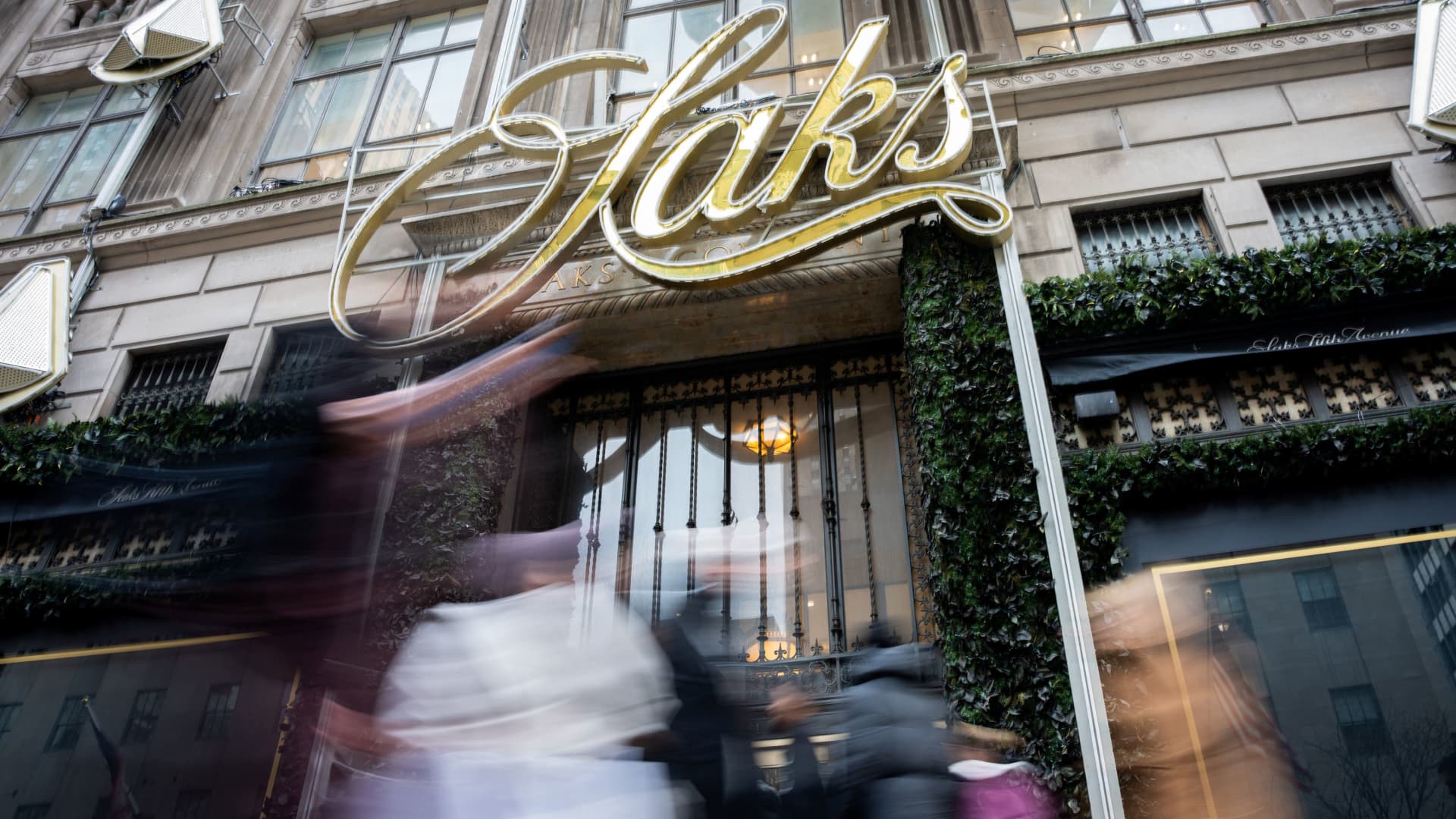
Shoppers walk outside the Saks Fifth Avenue flagship store in Manhattan, New York City, USA on January 6, 2026.
Angelina Katsanis | Reuters
Saks Global, the parent company of the 159-year-old department store that is a luxury fashion destination and icon, filed for Chapter 11 bankruptcy protection on Wednesday, saying the business was bankrupt due to a mountain of unsustainable debt.
The company also announced that former Neiman Marcus CEO Geoffroy Van Raemdonk will succeed Richard Baker as CEO effective immediately. He had only been in the job for two weeks, but had been involved with Saks since Hudson’s Bay acquired the company in 2013, when he was CEO of the Canadian department store.
Along with Van Raemdonk, the company will have a revamped senior management team made up of veterans from Neiman Marcus, which Saks Global acquired in 2024. Darcy Pennick, who served as president of Bergdorf Goodman before Saks acquired the department store, will become president and chief commercial officer of Saks Global. Lana Todorovic, former chief merchandising officer at Neiman, has been named head of global brand partnerships.
Prior to the filing, Sachs secured $1.75 billion in new financing from a group of the company’s senior secured debt holders and asset-based lenders. The largest share, $1 billion, is a debtor loan that will be used to fund operations while the company is under Chapter 11, and an additional $500 million will be available to the company once it emerges from bankruptcy, expected to be disbursed later this year, the company said. The asset-based lender provided $240 million in additional liquidity.
The influx of new capital comes after Saks struggled to arrange a DIP loan that would be used to keep the business afloat during the Chapter 11 process, CNBC previously reported. Without it, Saks faced the prospect of liquidation and could have spelled the end for one of the most legendary department stores in history.
For several weeks, filing for bankruptcy seemed inevitable after Saks Global failed to pay interest to bondholders late last month. What’s not yet clear is what will happen to the company and its nearly 200 doors at its Saks namesake stores and off-price chains, as well as Neiman Marcus and Bergdorf Goodman.
The company said in a news release that it is “evaluating the size of its business” to direct resources where it believes it has “the greatest long-term potential.” This will likely mean reducing the number of stores in the coming months to reduce the company’s fixed costs.
“This is a defining moment for Saks Global, and the path forward represents a meaningful opportunity to strengthen our business foundation and position us for the future,” CEO Van Raemdonk said in a news release.
“Working closely with these newly appointed leaders and our colleagues across the organization, we will move through this process together as we remain focused on serving our customers and luxury brands. I look forward to serving as CEO and continuing to transform the company so that Saks Global can continue to play a central role in shaping the future of luxury retail.”
Why did Saxophone collapse?
Saks, whose customers include some of the world’s wealthiest shoppers, has been steadily running out of cash and not paying some of its bills since acquiring longtime rival Neiman Marcus in a debt-laden $2.7 billion deal in 2024.
Still, Saks was having trouble paying its vendors even before acquiring Neiman. Sachs said at the time that through the acquisition, the company received a significant amount of new capital that was supposed to deleverage the combined business and provide “substantial liquidity.”
The partnership was expected to bring deep-pocketed investors from the tech industry, including Amazon and Salesforce, to a fresh start, improve cost structures, and create a luxury department store powerhouse with stronger bargaining power.
Instead, Sachs failed to implement the turnaround plan investors had hoped for. The company temporarily improved vendor payments, but then moved to 90-day payment terms, angering and pushing out brands who said the terms were too burdensome for their businesses.
Soon, the company stopped paying suppliers again, leading to a drop in both assortment and sales.
Sachs’ debt started trading below par, raising questions about the company’s ability to continue operating and pay interest to bondholders, the people said. Over the summer, the company secured $600 million in new financing and sold major real estate assets to increase cash.
Although these efforts bought the company some time, they ultimately did not prevent it from filing for bankruptcy.
