

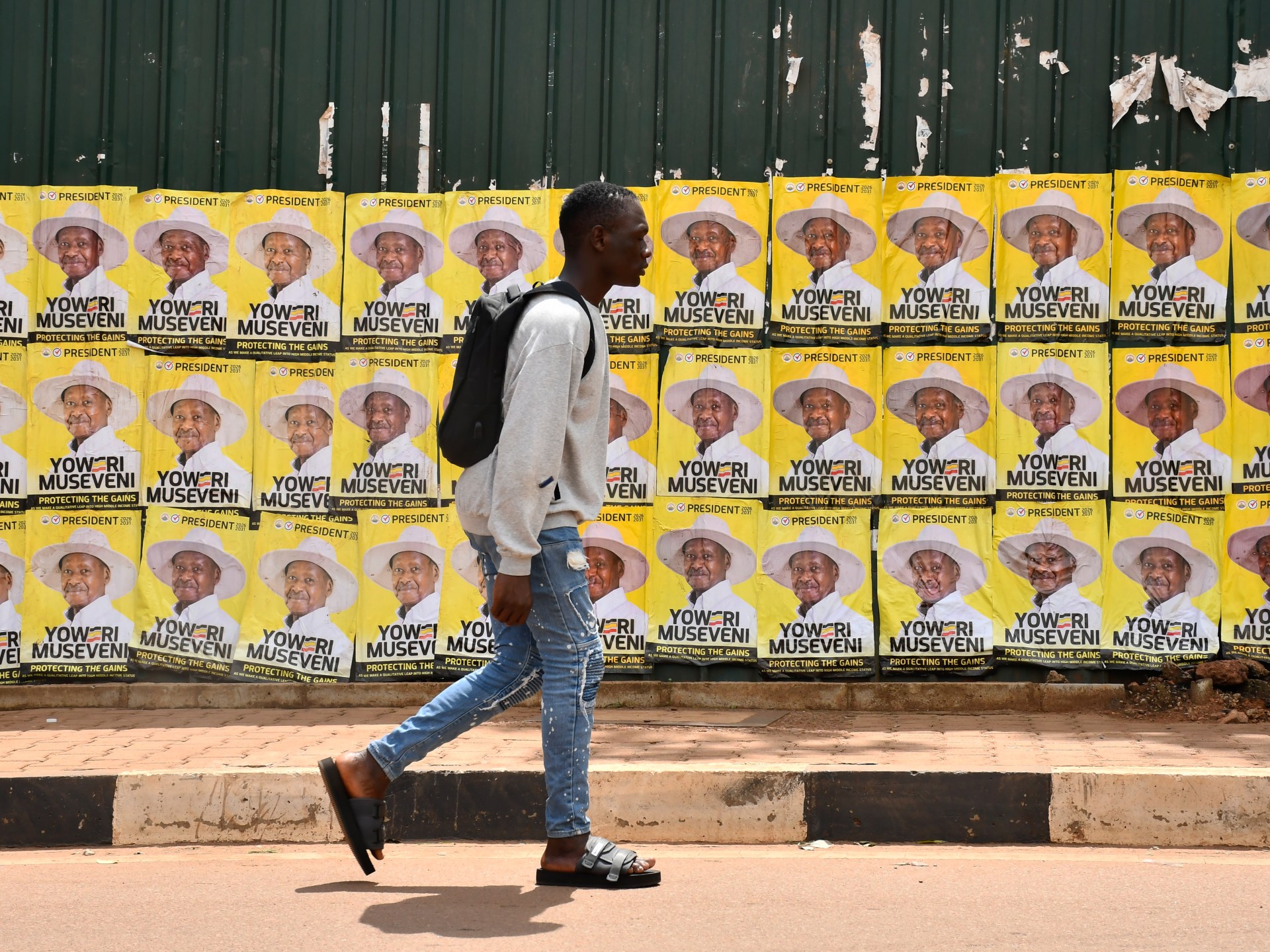
Amnesty International said the internet blackout was “particularly worrying” as election campaigning “has been marred by massive repression”.

Published January 14, 2026
Calls are growing in Uganda to lift a nationwide internet blackout ahead of a contentious election, with the United Nations calling government-imposed restrictions “very concerning”.
In a social media post on Wednesday, the United Nations Human Rights Office stressed that “open access to communication and information is the key to free and genuine elections.”
Recommended stories
list of 3 itemsend of list
“All Ugandans must be able to participate in shaping their future and the future of their country,” he said.
The call came a day after the East African country directed mobile network operators to block public internet access from Tuesday night as it prepares for general elections on January 15.
Internet monitoring firm Netblocks said in its latest update on Wednesday that Uganda is “in the midst of a widespread internet shutdown.”
“Far from stopping misinformation, this measure is likely to limit transparency and increase the risk of voter fraud,” the group warned.
Ugandan President Yoweri Museveni, 81, is accused of overseeing a years-long crackdown on government critics and arresting opposition leaders and their supporters.
Museveni is being challenged in Thursday’s vote by pop star-turned-politician Bobi Wine, whose campaign rallies are routinely disrupted by Ugandan authorities.
The United Nations human rights office warned last week that Ugandans would head to voting stations amid “widespread repression and intimidation against political opponents, human rights defenders, journalists and people with dissenting views.”
The Uganda Communications Commission defended the internet shutdown as necessary to curb “misinformation, disinformation, electoral fraud and related risks.”
But Thiele Chaguta, Amnesty International’s regional director for East and Southern Africa, denounced the restrictions as a “brazen attack on freedom of expression”.
“It is particularly worrying that this situation comes so close to a critical election that is already marred by a massive repression and an unprecedented crackdown on opposition parties and dissent,” Chaguta said in a statement Wednesday.
“Total closures disrupt people’s movement, livelihoods, and ability to access critical information. They are inherently disproportionate under international human rights law and should never be imposed.”
According to Human Rights Watch, widespread violence broke out during Uganda’s last general elections in 2021, leaving at least 54 people dead.Authorities also blocked access to social media and the internet.
