

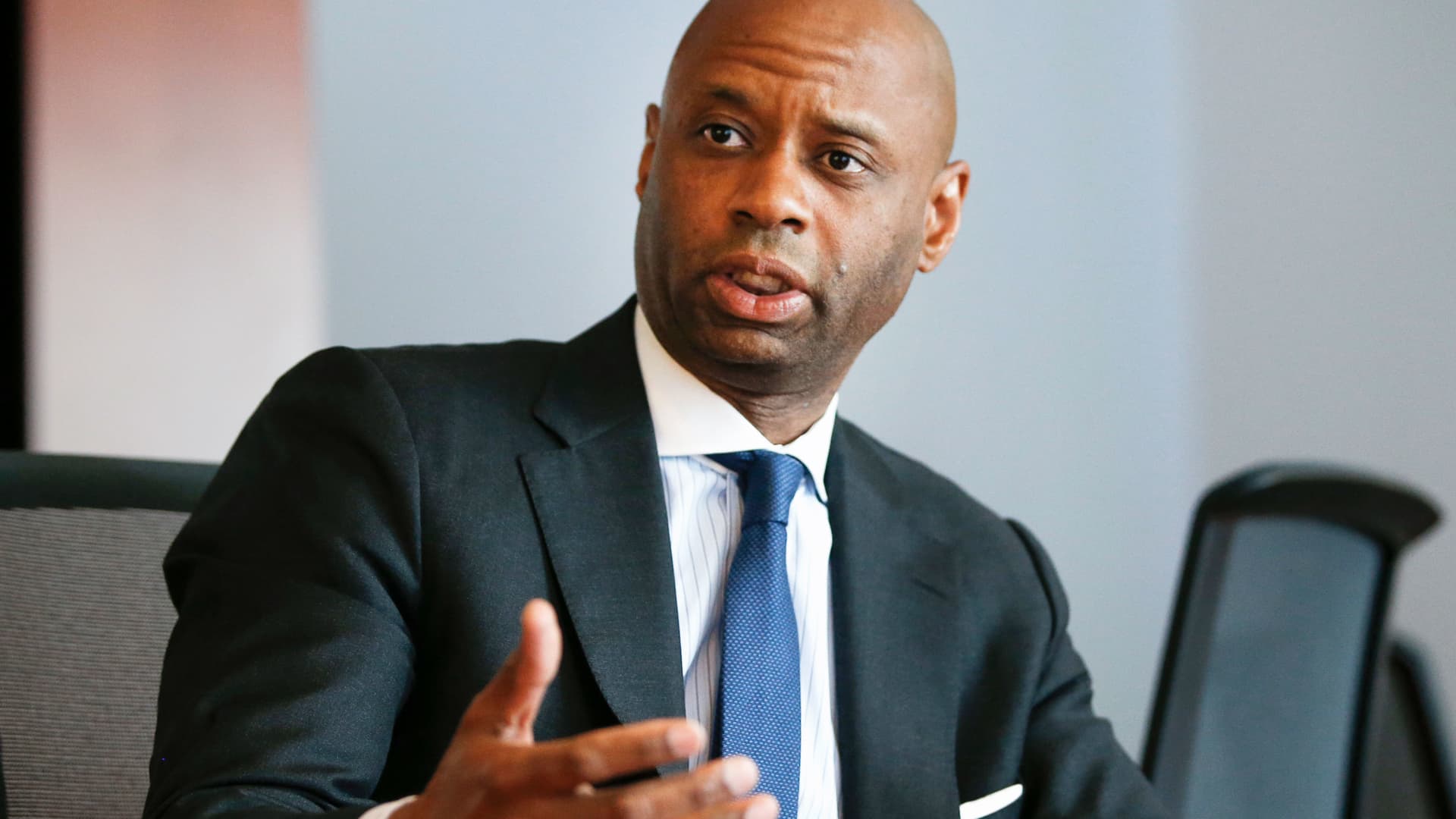
Mark Mason, CEO of Citi Private Bank, speaks at the Global Wealth Management Summit in New York on June 17, 2014.
Shannon Stapleton Reuter
Big U.S. banks show no signs of capitulating to President Donald Trump’s order to lower credit card interest rates, creating a standoff just as the president is expected to take to the world stage in Davos next week.
executives of JP Morgan Chase and citygroup warned this week that rather than offering the cards at 10% interest by January 20, as directed by President Trump, banks would simply close many customers’ accounts.
“Interest rate caps are not something we support and cannot support,” Citigroup Chief Financial Officer Mark Mason told reporters Wednesday.
That would “restrict access to credit to the people who need it most, and frankly that would have a negative impact on the economy,” he said.
JPMorgan Chief Financial Officer Jeremy Burnham said on Tuesday that “everything is on the table” regarding the response and suggested the industry could defend itself in court if necessary.
President Trump, hoping to address voters’ concerns about affordability ahead of this year’s midterm elections, launched a sweeping attack on banks in a social media post late Friday, claiming the banking industry was ripping off credit card borrowers. In media interviews and follow-up posts, President Trump doubled down on that claim, supporting another bill targeting swipe fees paid by merchants.
But five days after the initial threat, bankers and their lobbyists told CNBC they had yet to receive any formal or written guidance on the policy from the Trump administration.
This has given some hope that the government is not serious about pursuing a cap on interest rates, industry officials speaking candidly on condition of anonymity said.
Trading hours?
President Trump has said that banks that don’t comply with interest rates are “breaking the law,” but there is currently no law in the U.S. that caps card interest rates. A bill introduced last year that would cap interest rates at 10% for five years has stalled in Congress.
“We are currently complying with the law,” said one person familiar with the operations of a major card issuer.
Without legislation, which is unlikely, the industry will either avoid the cap altogether or be forced to make concessions similar to what President Trump did with the pharmaceutical industry, analysts at Wolfe Research led by Tobin Marcus said in a note Tuesday.
“We continue to look at pharmaceutical companies as a case study in how this type of trading under duress works,” Marcus said. “In that case, Mr. Trump had enough influence to get new pricing commitments, but not enough to elicit really painful commitments.”

The financial sector is closely watching two upcoming events to see how the credit card battle will unfold, sources told CNBC.
The first is a session in the Senate this month that could include measures currently underway to add to President Trump’s interest rate caps and push for limits on interchange fees. But the path forward is uncertain, given that several Republicans, including House Speaker Mike Johnson, have already indicated they will not support credit card price controls.
Another looming date is next Wednesday, the day after President Trump’s January 20 deadline. That’s when President Trump will address business and political leaders at the annual World Economic Forum in Davos, Switzerland. U.S. Treasury Secretary Scott Bessent and JPMorgan CEO Jamie Dimon are also scheduled to attend.
At Davos last year, Trump surprised Bank of America CEO Brian Moynihan and accused him and Dimon of discriminating against conservatives in terms of access to bank accounts.
