

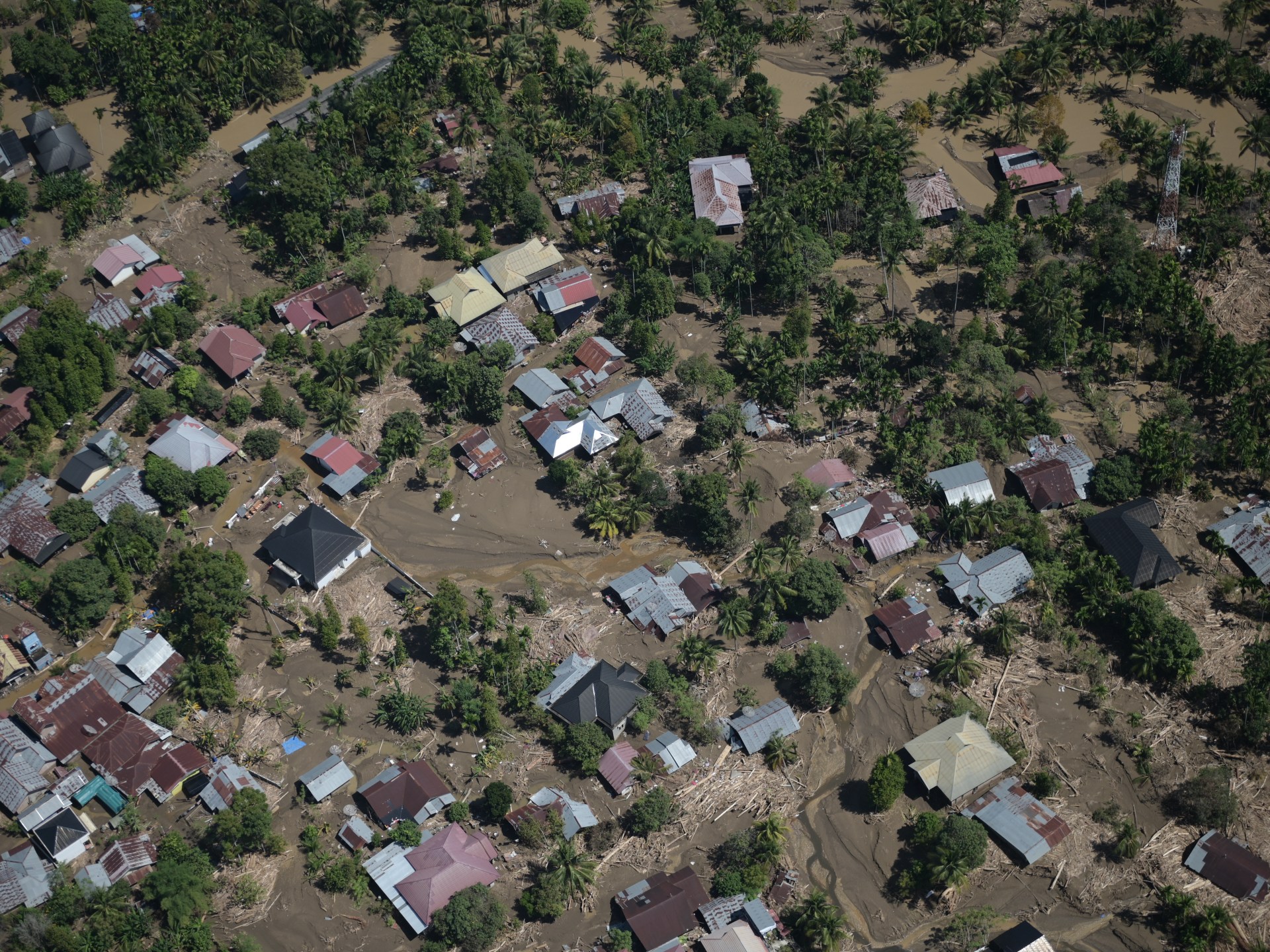
Environmental groups say governments also have a responsibility to give corporations the right to destroy large tracts of land.
Published January 16, 2026
The Indonesian government has filed multiple lawsuits against six companies seeking more than $200 million in damages after severe flooding across Sumatra killed more than 1,000 people last year, but environmentalists have criticized the move as insufficient.
Environmentalists, experts and the government have cited the role of deforestation in last year’s disaster, which sent torrents of mud and wood logs washing over villages in the island’s northwest.
Recommended stories
list of 4 itemsend of list
The environment ministry announced Thursday that the government is seeking 4.8 trillion rupiah ($283.8 million) in compensation from six companies for causing unspecified damage to more than 2,500 hectares of area.
This total amount represents both the penalty for damages and the proposed monetary value of recovery efforts.
The ministry added that the lawsuit was filed in courts in Jakarta and Medan, North Sumatra province on Thursday.
“We remain firmly committed to the polluter pays principle,” Environment Minister Hanif Faisol Nurofik said in a statement.
He added: “Companies that profit from damaging ecosystems must take full responsibility for restoring them.”
In an interview with AFP, the Ministry of the Environment did not provide details about the alleged damage caused by the defendants, but the statement only listed their initials.
Indonesia Business Post reported that the ministry was also conducting environmental audits of more than 100 companies operating in North Sumatra, West Sumatra and Aceh provinces, and cited Nurofik that potential criminal suspects would be identified after the audits were completed.
Separately, a task force comprising the military, police, attorney general’s office and ministries has identified 12 companies suspected of being involved in flash floods and landslides in Sumatra, Indonesia Business Post reported.
Environmental groups argue that governments have some responsibility when they give corporations the right to demolish large tracts of land.
Ali Rompas, a forest activist with Greenpeace Indonesia, called the lawsuit a “minimalist” move, adding that authorities should comprehensively review the policies responsible for the disaster.
“In addition to the effects of the climate crisis, the floods were also caused by land degradation, including deforestation by corporations,” Ali told AFP.
“Those companies got permission from the government.”
Over the past few decades, vast swaths of Indonesia’s lush rainforest have been cleared by mining, plantations and fires.
More than 240,000 hectares of primary forest will be lost by 2024, according to analysis by conservation startup The Treemap’s Nusantara Atlas Project.
Forestry Minister Raja Juli Antoni announced last month that the government would cancel 22 forestry permits across the country, including one covering more than 100,000 hectares on the island of Sumatra.
Antoni did not say whether the decision was related to the disaster, but previously said the floods provided an opportunity to “evaluate our policies.”
“The pendulum between economics and ecology seems to have swung too far in favor of economics and needs to be brought back to the center,” Antoni said at the time.
