

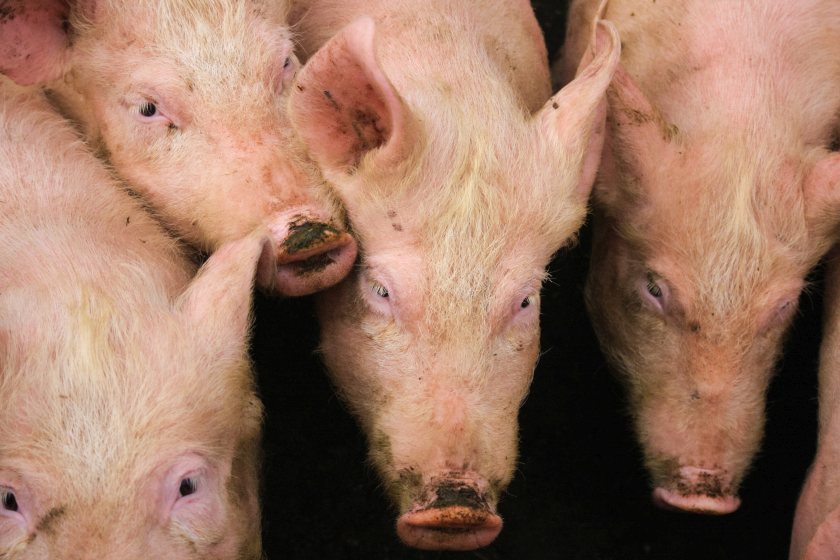
Plans to bring pig and poultry protein back into animal feed are inching closer, but farmers are now facing further delays as the changes relate to future UK-EU agreements.
Defra and the Welsh Government have confirmed their intention to allow pig protein to be fed to poultry and poultry protein to be fed to pigs, ending a ban that had been in place since the 1990s to combat BSE.
But ministers said the regulatory changes would not be introduced on their own, but would be suspended until the UK implements its sanitary and phytosanitary (SPS) agreement with the EU. No timeline has been set for when such an agreement would take effect.
Defra has published a summary of its response to the February 2025 consultation on livestock feed management changes and its views on the proposals.
The project will allow processed animal protein (PAP) from pigs and poultry to be used in animal feed for the first time in decades. It would also allow insect protein to be used in pig and poultry feed, and ruminant collagen and gelatin to be used in non-ruminant feed.
Safeguards will continue to be a central part of proposals. These include measures to prevent cross-contamination in the feed chain, such as physical separation of production processes throughout the supply chain.
The changes will bring the UK into line with EU rules due to be introduced in 2021. Defra pointed out that pigs and poultry imported from the EU can already be given PAP under existing arrangements.
In a joint response, the Departments said they intended to take forward their proposals after considering all consultation responses.
“However, the government recently announced its intention to pursue an SPS agreement to reset the UK-EU relationship and dynamically align it with EU rules,” the response said.
“We will therefore no longer make these changes on our own, but instead in the future process of the UK implementing the SPS agreement with the EU.”
Mr Defra said these proposals reflected the decreasing incidence of BSE and the improved scientific understanding of the disease.
“The risk assessment of the proposed changes concluded that these changes would maintain the same level of human and animal health protection provided by current controls,” the report said.
It added that even if the changes were introduced, key protections would remain in place. These include a ban on the continued feeding of PAP to ruminants as required by the World Organization for Animal Health (WOAH), and existing animal by-product regulations that prohibit intraspecies recycling.
The consultation received 736 responses, 84% of which were from members of the public. Although many companies opposed the proposal, industry groups and businesses generally expressed some support.
Industry groups warned that delays could lead to prolonged uncertainty for producers.
Lizzie Wilson, chief executive of the National Pig Association, said she was not surprised by the decision, but expressed concern that it reflected a growing tendency for Defra policy to be put on hold until the EU-SPS deal was implemented, despite the lack of a clear timetable.
He said the NPA had long supported the return of PAPs for pigs and poultry in principle, but only if strict conditions were met.
“The industry needs to be confident that this practice is safe, well-regulated and accepted across the supply chain and the public. There are also a range of practical issues that need to be addressed to make it a cost-effective solution,” she said.
In its response to the consultation, the NPA said any move to allow PAP for pigs and poultry in the UK would need to address acceptance across the food value chain, operators’ ability to meet compliance costs, market competitiveness and the robustness of analytical management tools.
For pig and poultry producers, the decision leaves the potential for feed innovation on hold until there is clarity on the UK’s future regulatory alignment with the EU.
Until these issues are resolved, the use of PAP in pigs and poultry is unlikely to be implemented beyond principle.
