
Close Menu
  • Home
  • Aerospace & Defense
    • Automation & Process Control
      • Automotive & Transportation
  • Banking & Finance
    • Chemicals & Materials
    • Consumer Goods & Services
  • Economy
    • Electronics & Semiconductor
  • Energy & Resources
    • Food & Beverage
    • Hospitality & Tourism
    • Information Technology
  • Agriculture
What's Hot

Explained: $47 billion deal heralds the Middle Ages of the US oil boom – Energy News, Top Headlines, Commentary, Features, Events

Grain demand from UK processors falls to 20-year low in 2025/26

Pfizer (PFE) Q4 2025 Earnings

Facebook X (Twitter) Instagram
USA Business Watch – Insightful News on Economy, Finance, Politics & Industry
  • Home
  • Aerospace & Defense
    • Automation & Process Control
      • Automotive & Transportation
  • Banking & Finance
    • Chemicals & Materials
    • Consumer Goods & Services
  • Economy
    • Electronics & Semiconductor
  • Energy & Resources
    • Food & Beverage
    • Hospitality & Tourism
    • Information Technology
  • Agriculture
  • Home
  • About Us
  • Market Research Reports and Company
  • Contact us
  • DMCA
  • Privacy Policy
  • Terms & Conditions
USA Business Watch – Insightful News on Economy, Finance, Politics & Industry
Home » High-altitude sheep grazing is associated with more stable soil carbon, researchers say
Agriculture

High-altitude sheep grazing is associated with more stable soil carbon, researchers say

Bussiness InsightsBy Bussiness InsightsFebruary 3, 2026No Comments4 Mins Read
Share Facebook Twitter Pinterest Copy Link Telegram LinkedIn Tumblr Email
Share
Facebook Twitter LinkedIn Pinterest Email


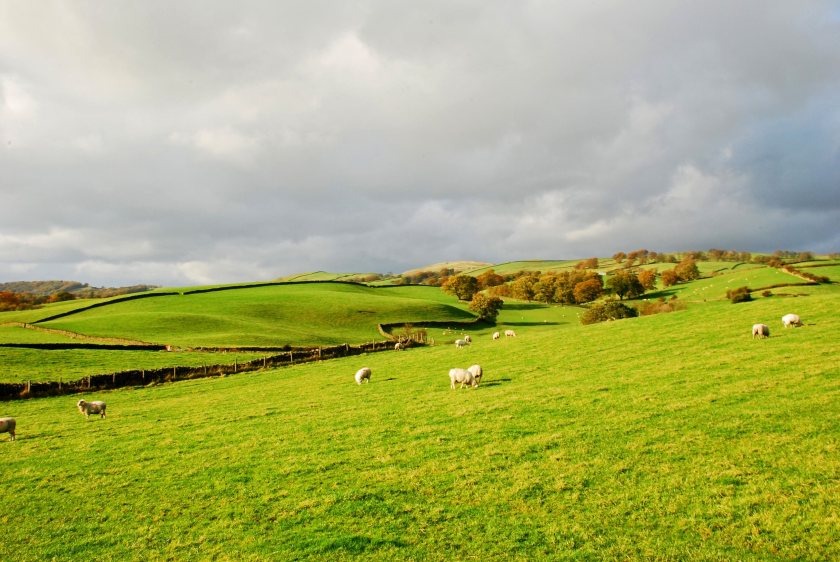
Removing sheep and other livestock from highland grasslands could weaken long-term soil carbon stocks, new research questions the need to remove grazing animals from land to meet climate change goals.

The study, led by the University of Manchester, suggests that while livestock removal may increase short-lived carbon held in plants and dead vegetation, it may also reduce more stable forms of soil carbon, which are essential for long-term climate mitigation.

Researchers found that complete removal of herbivores is associated with a loss of mineral-associated organic carbon (MAOC), a type of carbon bound to soil minerals that can remain trapped for decades or centuries.

Grasslands contain about a third of the world’s above-ground carbon, most of which is stored underground. As governments pursue net-zero targets, removing livestock from historically grazed grasslands is increasingly being promoted as a scalable climate change solution.

However, the study warns that looking at total carbon levels alone can be misleading about how safely that carbon is stored.

The findings, published in the Proceedings of the National Academy of Sciences (PNAS), show that carbon durability is just as important as carbon content when assessing land use change.

“Ungrazed grasslands tend to accumulate more unprotected carbon in plants and leaf litter, which is associated with lower levels of soil carbon protected by minerals, which are the most resistant forms to decomposition due to warming,” said lead author Dr. Honghong Chou.

“Although high grazing intensity can have negative effects on soil carbon, our results show that completely excluding grazers does not necessarily lead to increased long-term soil carbon stocks.”

For farmers and land managers, the findings suggest that the complete removal of livestock from upland grasslands does not necessarily yield the expected climate benefits.

This study shows that low-intensity grazing can play a role in maintaining stable soil carbon, highlighting that it’s not whether it’s grazed, but how the land is managed that matters.

An international team of researchers analyzed 12 upland grasslands spanning an 800km north-south gradient from Dartmoor in the UK to Glensough in Scotland.

At each site, we compared grasslands that had not been grazed for more than 10 years to neighboring areas that had been grazed for the same period.

Ungrazed grasslands generally accumulate faster-cycling carbon in plant biomass and surface litter. However, they usually contain low levels of MAOC in the soil.

Decreases in long-lived soil carbon were associated with vegetation changes associated with the removal of grazing sheep.

Grass-dominated landscapes often gave way to dwarf shrubs such as heather. These shrubs form relationships with specialized fungi known as ericoid mycorrhizae, which slow the decomposition of litter.

This process increases short-lived carbon on the ground, but also accelerates the breakdown of older, more stable soil carbon as nutrients are released to support plant growth. When the soil becomes wet, the minerals that normally protect MAOC can be further weakened.

“When we view herbivore removal as a universally beneficial strategy for carbon mitigation, the continuity of carbon durability within ecosystems is often overlooked,” said Dr. Shanshi Liu of the Yale Center for Natural Carbon Capture, who co-led the study.

“As slowly cycling carbon decreases, grassland carbon stocks may become more vulnerable to future climate change.”

Researchers say their findings are particularly relevant as the UK and other countries develop land-use frameworks, environmental plans and carbon markets aimed at meeting net-zero commitments.

Professor Richard Burgett, Head of Ecology at Lancaster University, who initiated the study, said: “Our results suggest that maintaining low-intensity grazing on large areas of upland grassland in the UK is important to protect the most stable forms of soil carbon.”

The authors stress that this study does not advocate overgrazing, but rather more balanced grassland management that considers both carbon storage and carbon residue.

They say future climate strategies need to recognize that long-term outcomes depend not only on how much carbon grasslands store, but also on how much is safely held under different grazing systems.

Are you enjoying British farming?

Get the weekly agriculture roundup – the essential UK agriculture newsletter


Source link

Follow on Google News Follow on Flipboard
Share. Facebook Twitter Pinterest LinkedIn Tumblr Email Copy Link
Previous ArticlePepsiCo (PEP) Q4 2025 Earnings
Next Article Kimmeridge comments on proposed Cotera-Devon merger – Energy News, Top Headlines, Commentary, Features, Events
Bussiness Insights
  • Website

Related Posts

Grain demand from UK processors falls to 20-year low in 2025/26

February 3, 2026

Citizens warned against eating eggs produced at home near industrial sites

February 3, 2026

First Milk confirms that milk price for 30.25 people will remain unchanged from March

February 3, 2026
Leave A Reply Cancel Reply

Latest Posts

Grain demand from UK processors falls to 20-year low in 2025/26

Citizens warned against eating eggs produced at home near industrial sites

High-altitude sheep grazing is associated with more stable soil carbon, researchers say

First Milk confirms that milk price for 30.25 people will remain unchanged from March

Latest Posts

York Space begins trading at $38 a share, touts ‘Golden Dome’ potential

January 29, 2026

American Airlines flies to Venezuela for the first time since 2019

January 29, 2026

Southwest Airlines (LUV) 2025 Q4 Earnings

January 28, 2026

Subscribe to News

Subscribe to our newsletter and never miss our latest news

Subscribe my Newsletter for New Posts & tips Let's stay updated!

Recent Posts

  • Explained: $47 billion deal heralds the Middle Ages of the US oil boom – Energy News, Top Headlines, Commentary, Features, Events
  • Grain demand from UK processors falls to 20-year low in 2025/26
  • Pfizer (PFE) Q4 2025 Earnings
  • Why peace is so elusive in Pakistan’s chaotic Balochistan | Conflict News
  • Citizens warned against eating eggs produced at home near industrial sites

Recent Comments

  1. Numbersjed on 100% tariffs on Trump’s drugs: What we know | Donald Trump News
  2. JamesPak on Hundreds gather in Barcelona to protest overtourism in southern Europe
  3. vibroanalizador on 100% tariffs on Trump’s drugs: What we know | Donald Trump News
  4. игровой аппарат гейтс оф олимпус on 100% tariffs on Trump’s drugs: What we know | Donald Trump News
  5. online casino games slots on 100% tariffs on Trump’s drugs: What we know | Donald Trump News

Welcome to USA Business Watch – your trusted source for real-time insights, in-depth analysis, and industry trends across the American and global business landscape.

At USABusinessWatch.com, we aim to inform decision-makers, professionals, entrepreneurs, and curious minds with credible news and expert commentary across key sectors that shape the economy and society.

Facebook X (Twitter) Instagram Pinterest YouTube

Subscribe to Updates

Subscribe to our newsletter and never miss our latest news

Subscribe my Newsletter for New Posts & tips Let's stay updated!

Archives

  • February 2026
  • January 2026
  • December 2025
  • November 2025
  • October 2025
  • September 2025
  • August 2025
  • July 2025
  • June 2025
  • March 2022
  • January 2021

Categories

  • Aerospace & Defense
  • Agriculture
  • Automation & Process Control
  • Automotive & Transportation
  • Banking & Finance
  • Chemicals & Materials
  • Consumer Goods & Services
  • Economy
  • Economy
  • Electronics & Semiconductor
  • Energy & Resources
  • Food & Beverage
  • Hospitality & Tourism
  • Information Technology
  • Political
Facebook X (Twitter) Instagram Pinterest
  • Home
  • About Us
  • Market Research Reports and Company
  • Contact us
  • DMCA
  • Privacy Policy
  • Terms & Conditions
© 2026 usabusinesswatch. Designed by usabusinesswatch.

Type above and press Enter to search. Press Esc to cancel.