

TEHRAN, Iran – Several former Iranian leaders, including some currently imprisoned or under house arrest, have issued statements condemning the killing of thousands of people during nationwide protests, drawing threats from hardliners.
The Iranian government claims that 3,117 people were killed in anti-regime protests. The government rejects claims by the United Nations and international human rights organizations that state forces were behind the killings, which took place mainly on the night of January 8 and 9.
Recommended stories
list of 3 itemsend of list
The US-based Human Rights Defenders News Agency (HRANA) said it had confirmed 6,854 deaths and was investigating 11,280 other cases.
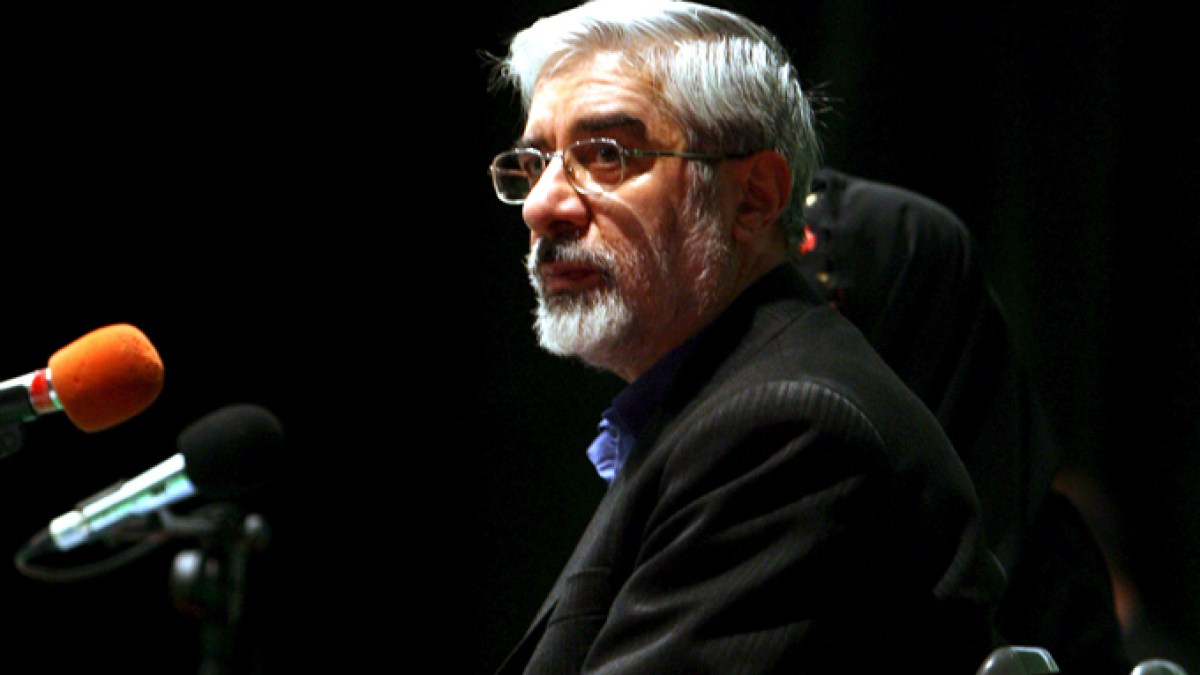
“After years of escalating repression, this is a catastrophe that will be remembered for decades, if not centuries,” wrote Mir Hossein Mousavi, a former reformist presidential candidate who has been under house arrest since the aftermath of the 2009 Green Movement.
“How many times can you tell people that they don’t want this system, that they don’t believe your lies? Enough is enough. The game is over.”
Mousavi instructed the armed forces to “put down their guns and withdraw from power so that the nation itself can bring freedom and prosperity to this land,” stressing that this must be done without foreign intervention in the shadow of a new war between the United States and Israel.
He said Iran needed a constitutional referendum and a peaceful, democratic transition of power.
A group of 400 activists, including national and international celebrities, endorsed Mousavi’s statement.
Mostafa Tajzadeh, a prominent former reformist imprisoned politician, said he wants Iran to “overcome the dire situation that the failure of the guardianship of Islamic jurists and the failure of clerical governance has imposed on the Iranian people.”
In a brief statement from prison last week, he said this depended on “resistance, wisdom and responsible action from all citizens and political actors” and called for the establishment of an independent fact-finding mission to uncover the true dimensions of the “atrocities” committed against demonstrators last month.
“Major Reform”
Other former strongmen have harshly criticized Iran’s current policies, but have avoided calling for the Islamic Republic to be effectively removed from power.
Former President Hassan Rouhani, who many believe is eyeing a future return to power, gave a recorded speech last week to former ministers and insiders, calling for “big reforms, not small ones.”
He acknowledged that Iranians have been protesting for a variety of reasons over the past 40 years and argued that their voices must be listened to if the country wants to survive, but he did not mention the November 2019 internet blackout and killing of protesters during his time in office.
President Rouhani added that the regime needs to hold a referendum on key topics such as foreign policy and the struggling economy to avoid further nationwide protests and prevent people from seeking help from foreign powers.
Mohammad Khatami, a reformist cleric who was president from 1997 to 2005, was more moderate in tone, saying the violence had derailed protests that were supposed to help “expand dialogue to improve national politics.”
He said in a statement that Iran “must return to a forgotten republicanism and an Islamism that embraces republicanism in all its aspects and requirements and places development, along with justice, at the center of its foreign and domestic policies.”
Mehdi Karroubi, another senior reform cleric who was released from house arrest after 15 years after less than a year, called the killings during the protests “a crime of a magnitude that cannot be conveyed by words or pen,” and said the regime was responsible.
Referring to Supreme Leader Ayatollah Ali Khamenei, who has held absolute power for nearly 37 years, he said, “Today’s dire state of affairs in Iran is a direct result of Khamenei’s destructive interventions and policies at home and abroad.”
Karroubi cited the 86-year-old leader’s “obsession with the costly and wasteful nuclear project and the severe impact of sanctions over the past two decades on the country and its people” as a notable example.

political prisoner re-arrested
Last week, three prominent Iranian former political prisoners were again arrested by security forces and imprisoned.
Fars news agency, affiliated with the Islamic Revolutionary Guards Corps (IRGC), reported that Mehdi Mahmoudian, Abdullah Momeni, and Vida Rabbani were arrested for smuggling statements from Mir Hossein Mousavi, who was under house arrest.
Mahmoudian is a journalist, activist, and co-writer of the Oscar-nominated political drama film It Was Just an Accident, which won the Palme d’Or at the 2025 Cannes Film Festival. Momeni and Rabbani are also political activists who have been arrested multiple times by Iran’s establishment.
The three are among 17 human rights activists, filmmakers and civil society activists, including Nobel Peace Prize winner Narges Mohammadi and internationally renowned lawyer Nasrin Sotoudeh, who co-signed a statement last week blaming the supreme leader and theocratic regime for the killings of protesters.
“The mass killing of justice-seekers who bravely protested against this illegal system is a systematic state crime against humanity,” they wrote, condemning the shooting of civilians, the attacks on the injured, and the denial of medical care as “acts contrary to Iranian security and betrayal of the homeland.”
Activists called for a referendum and a constituent assembly so Iranians could democratically decide their political future.
Hardliners are furious
The atmosphere in circles dominated by hardliners and their affiliated media is completely different.
On Sunday, members of parliament wore the uniforms of the Revolutionary Guards, which was designated a “terrorist” organization by the European Union last week.
They chanted “Death to America” and vowed to hunt down European attachés working in Tehran’s embassies and deport them as “terrorists.”
Nasrollah Pagemanfar, a cleric who represents northeastern Mashhad in parliament, said in a public parliamentary session on Sunday that former President Rouhani should be hanged for supporting engagement with the West, a demand echoed by other hardline lawmakers in recent years.
Addressing President Rouhani, he said, “Today is the time for “major reforms” to arrest and execute you.”
Fellow lawmaker Amirhossein Sabeti blamed the government of President Massoud Pezeshkian, which is negotiating mediation with the United States, but not Ayatollah Khamenei or the ruling class.
“Today, the Iranian people are not waiting for talks from a position of weakness, but for a pre-emptive strike against Israel and US military bases in the region,” he asserted.
