

listen to this article5 minutes
information
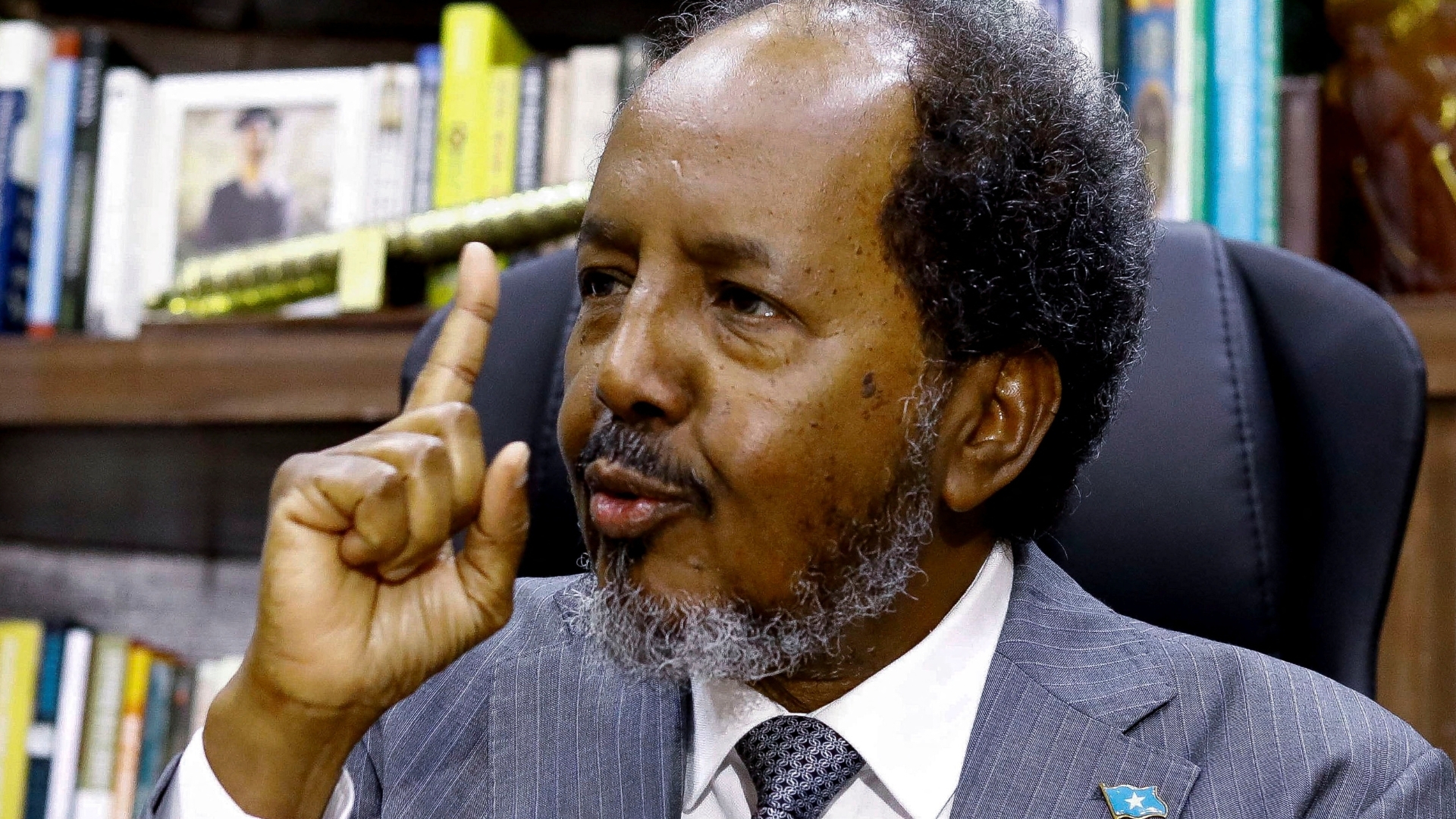
Somali President Hassan Sheikh Mohamud has accused Israel of “interference” in his country, saying recognition of the breakaway region of Somaliland has further increased instability and weakened the international order.
In an exclusive interview with Al Jazeera broadcast on Saturday, Mohamud said Somalia would “never allow” the establishment of an Israeli base in Somaliland and would “stand against” any such move.
Recommended stories
list of 3 itemsend of list
He also warned that the proposed Israeli base could be used as a springboard to attack neighboring countries.
Mohamud’s comments came amid regional backlash against Israeli Prime Minister Benjamin Netanyahu’s December decision to recognize Somaliland, a breakaway region of Somalia that makes up the northwest of what was once a British protectorate.
The territory straddles one of the world’s most important maritime routes and is bordered by multiple conflicts in the Horn of Africa and the Middle East.
Israel’s move makes it the first country in the world to recognize Somaliland as an independent state. This comes months after the Associated Press reported that Israeli authorities had contacted Somaliland officials to discuss using the territory to displace Palestinians during the genocidal war in Gaza.
Israel and Somaliland deny the allegations, but a Somaliland official from the country’s Ministry of Foreign Affairs and International Cooperation told Israel’s Channel 12 in January that the establishment of an Israeli military base was “on the table and being discussed,” although it was subject to conditions.
Somalia denounced Israel’s move as an attack on its territorial integrity and unity, a position supported by most African and Arab leaders, and called on Prime Minister Benjamin Netanyahu to withdraw recognition.
But Somaliland’s leader, Abdirahman Mohamed Abdullahi, known as Ciro, welcomed Israel’s diplomatic move and praised Netanyahu for his “leadership and dedication to promoting stability and peace” in the region.
“We will protect ourselves”
In an interview with Al Jazeera, Mohamud called Israel’s diplomatic maneuver “reckless, fundamentally wrong and illegal under international law.”
He also promised to fight back against the Israeli military presence in Somaliland.
“We will fight to the best of our ability. Of course we will defend ourselves,” he said. “And that means we will fight against Israeli military incursions, because we are against it and we will never tolerate it.”
Israel’s recognition represents a dramatic change in Somaliland’s fortunes after years of diplomatic isolation.
The region broke away from Somalia during decades of brutal civil war under the hardline government of Siad Barre, whose forces decimated the north. While much of Somalia fell into turmoil, Somaliland stabilized by the late 1990s.
Since then, Somaliland has developed a distinct political identity, with its own currency, flag and parliament. However, its eastern region remains contested by communities that do not support separatist plans in the capital, Hargeisa.
In recent years, Somaliland has sought international recognition and developed relations with the United Arab Emirates and Taiwan, signatories of the Abraham Accords with Israel.
Mohamud said in an interview that Israel’s move “disturbs Somalia’s sovereignty and territorial integrity” and “undermines stability, security and trade in ways that affect all of Africa, the Red Sea and the wider world.”
He added that Israel’s use of deadly force against Palestinians in the Gaza Strip cannot be separated from what is happening in Somaliland, adding that this reflects a weakening of the foundations of global governance.
“A key global concern is the weakening of the established rules-based international order. That order is no longer intact,” Mohamud said.
He warned that the system created after World War II was “under serious threat” as the idea that “the strong are right” was being replaced by adherence to international law.
On the other hand, the United States has not yet indicated any major changes regarding the Somaliland issue.
But in August, US President Donald Trump, who has previously insulted Somalia and Muhammad, suggested he was preparing to address the issue when asked about Somaliland at a White House press conference.
“Another complex issue, we are working on Somaliland,” he said.
