

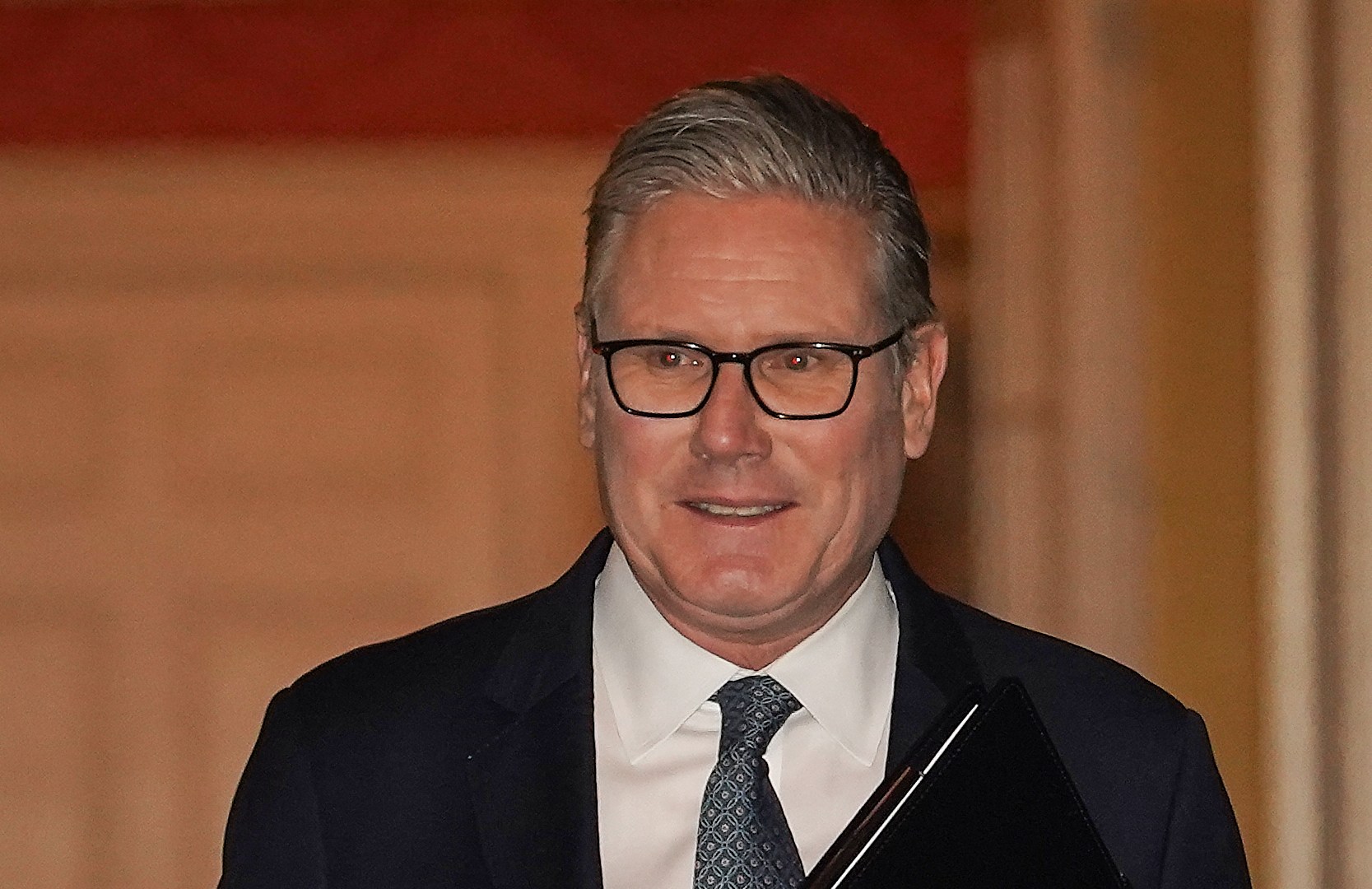
British Prime Minister Keir Starmer has emerged reeling but ultimately unscathed after a day-long drama in which key members of the Labor Party called for his resignation over revelations about former ambassador to the United States Peter Mandelson in the Jeffrey Epstein dossier.
Mr Starmer has been under increasing pressure for more than a week since the latest US Department of Justice documents relating to criminal proceedings against the deceased sex offender were released. They revealed that Mandelson maintained a close friendship with the disgraced financier even after Epstein was jailed in 2008 after pleading guilty to sexual solicitation of a minor.
They include documents and emails that suggest Mr. Mandelson may have received payments and passed on confidential information from Mr. Epstein during the 2008-2009 financial crisis.
Mr Starmer has since admitted that he knew about their friendship when he appointed Mr Mandelson as ambassador, but said Mr Mandelson had lied about the extent of it. The incident caused outrage in Congress. Two key members of Mr Starmer’s inner circle have resigned, and a third is also under pressure to resign. On Monday, Scottish Labor leader Anas Sarwar called on the First Minister to do the same.
Mr Starmer’s position has so far been strengthened by a rally of support from ministers on Monday night, but how badly has this incident rocked the government?

Why did Anas Sarwar ask Starmer to resign?
Mr Sarwar said in a press conference early on Monday afternoon that he had called Mr Starmer to tell him it was time for him to resign. “I spoke to the Prime Minister earlier today and I think it’s safe to say that he and I have different views,” Sarwar said.
He said there had been “too many mistakes” in Mr Mandelson’s appointment.
Sarwar became the first Labor stalwart to challenge the prime minister, saying: “The distractions need to end and the leadership of Downing Street needs to change.”
Mr Sarwar said he believed Mr Starmer was a “decent person”, but the outrage over the Epstein file had severely damaged the government’s support and damaged its chances in the next Scottish Parliament election. Opinion polls show Scottish Labor with a slight lead over the Scottish National Party, followed by Nigel Farage’s far-right Reform Party.
But ministers came out in support of Starmer, ending a coup that ultimately failed. Former deputy prime minister and Labor Party leader Angela Reiner was the first to voice support for him. In a post on X, she did not defend Mr Starmer’s decision but said it was “the worst possible response”. [to the scandal] There will be party politics and factional fighting. ”
“I urge all colleagues to unite, remember our values and practice them as a team,” she wrote to X. “The Prime Minister has his full support to lead us to that objective.”
Within hours, nearly every cabinet minister followed suit. Health Secretary Wes Streeting called on the public to “give Keir a chance”. Work and Pensions Secretary Pat McFadden said he wanted the First Minister to continue in his role, while Scottish Secretary Douglas Alexander said he “respected” Mr Sarwar’s position but supported the First Minister.
On Monday night, Mr Starmer addressed more than 400 MPs and MPs at a Labor party meeting. “I’ve won every battle I’ve ever fought. I fought to change Labor so we can win elections again,” he told them.
“But let me tell you this: I fought hard for the chance to change our country, and I have no intention of running away from my mission and responsibility to our country and throwing us into chaos like others have done.”

Who quit Starmer’s team and why?
Two key figures have already resigned and a third is under pressure to resign, according to British media.
Amid growing anger over new revelations about Mr Mandelson and Mr Epstein, Starmer’s chief of staff Morgan McSweeney resigned on Sunday, taking “full responsibility” for advising the prime minister to appoint Mr Mandelson as ambassador in 2025, despite the risks.
Mr McSweeney said: “The decision to appoint Mr Mandelson was the wrong one.” “He has caused damage to our party. … I advised the Prime Minister to make that appointment and I take responsibility for that.”
Mr. Mandelson was fired in September after serving seven months in prison after the British daily The Sun obtained other emails showing the depth of his friendship with Mr. Epstein.
Mr Mandelson resigned from Labor and the House of Lords after the latest part of the Epstein dossier was released on January 30.
Starmer’s communications director Tim Allan resigned on Monday, saying he was doing so to pave the way for the creation of a “new No. 10 team” as Starmer seeks to reset his government.
Allan, who founded Portland Communications, a company specializing in reputation management, has been in the job for just five months, and Starmer is now looking to hire his fifth communications director since taking over in 2024.
Chris Wormald, Downing Street’s cabinet secretary and the most senior civil servant, is also reportedly under pressure to resign, and is said to be currently negotiating his resignation from the role for a term of less than a year.
Britain’s Guardian newspaper reported that some people close to Starmer viewed his appointment as “disastrous”.

What did Epstein’s files reveal about Mandelson?
The latest file disclosures revealed that Mr. Mandelson maintained a relationship with Mr. Epstein even after Mr. Epstein was jailed in 2008.
They also suggested that Mr. Mandelson received payments from the deceased financier and may have shared market-sensitive information with him that was economically important to Mr. Epstein.
Mandelson’s leak of classified information is said to have occurred in 2009, when he was Britain’s business secretary.
British police have launched a criminal investigation into allegations of misconduct in public office related to Mandelson’s relationship with Epstein.
In one of the emails revealed in the latest set of documents released by the US Department of Justice, Mandelson instructed Epstein to “fight for early release” shortly before his sentencing in 2008.
“I think it’s your world,” Mandelson told Epstein, adding of his prosecution: “I still don’t understand much of it. That can’t happen in Britain. You have to be incredibly resilient, fight for early release and be as philosophical about this issue as you can.”

How much damage has this done to Starmer?
Mr Starmer publicly apologized for appointing Mr Mandelson as ambassador to the US, despite knowing of his links to the disgraced financier, but not the extent of them.
Mr Starmer apologized to Mr Epstein’s victims on Thursday, saying: “None of us knew the depth and darkness of that relationship.”
“I’m sorry, I’m sorry for what I did to you, I’m sorry that so many people in power have let you down, I’m sorry for believing Mr Mandelson’s lies and appointing him.”
But experts said this was not enough to free him completely.
Tim Bale, a political science professor at Queen Mary University of London, said the scandal was deeply damaging to Starmer. “A more popular prime minister might have been able to weather this situation, but he was already facing considerable hostility from voters before the situation exploded,” Beil told Al Jazeera. “He has managed to hold on to his cabinet so far, but he has completely lost the trust of voters and it will be difficult to regain it.”
Mr Bale said: “People are disgusted by Mr Starmer’s decision to appoint Mr Mandelson, despite knowing that Mr Starmer remained friends with Mr Epstein even after his conviction.”

Could Mr Starmer’s leadership still be challenged?
Experts say Mr Starmer survived Monday night but remains in a weak position with low approval ratings.
Labor is expected to lose the crucial Scottish election in May. A parliamentary by-election is also scheduled for February 26th.
“Imminent danger [to Starmer] it is? [Labour] Mr Bale said: “A crushing defeat in the by-election, followed by a crushing defeat in the big election in May. This will reignite calls for Mr Starmer to resign, and if he does not, he will face a challenge from one or more of his colleagues.”
Among the front-runners to replace Mr Starmer is former deputy prime minister Mr Reiner, who resigned from cabinet last year amid a tax scandal.
The Guardian reports that a website promoting Mr Rayner as leader, angelaforleader.co.uk, was briefly set up in January. Rayner declined to link to the website.
Another politician preparing to replace Starmer is Health Secretary Wes Street.
Mr Street, 43, has also been linked to a relationship with Mr Mandelson. In an effort to distance himself from the former ambassador, Mr Street this week shared a private conversation with Mr Mandelson in which he questioned the government’s growth plans.
Home Secretary Shabana Mahmood, 45, is also one of the candidates to succeed Mr Starmer. She has become popular among several right-wing leaders of the Labor Party for her push to tighten border controls and crack down on illegal immigration.

What other challenges does Labor face under Starmer?
Labor won power in July 2024, ending nearly 14 years of Conservative rule. But then the Prime Minister had a difficult time in Downing Street.
In the 2024 election, Farage’s right-wing, populist, anti-immigration party Reform UK won just five seats out of 650 in parliament. However, it has since become one of the most polled parties in Britain. A YouGov poll in July showed the reformers in the lead, with the reformers expected to win 271 seats if elections were held at that time.
In a speech on Monday, Mr Starmer called the challenge posed by the rise of the Reform Party, which has attracted a number of high-profile defectors from the Conservative Party in recent weeks, a “fight for life”.
Mr Starmer also faces domestic pressure to stop illegal immigration to the UK. Last year, more than 32,000 people attempted to cross the English Channel from France in small boats. These intersections are dangerous and cause many deaths.
Britain and France are blaming each other for the rising numbers. This builds on the “one in, one out” immigration agreement signed last year between Britain and France, under which Britain will return one migrant to France for every refugee it takes in. However, the plan had little success, with only a handful of migrants returning home.
Mr Starmer’s own popularity fell by 20 percentage points between July 2024 and January this year, according to YouGov.
“The reforms are clearly scaring some in the Labor Party,” Mr Bale said, but added that the reforms were making further inroads into the Conservative Party’s base. “And Labor probably needs to worry more about the Greens and Liberal Democrats at this stage.”
“The dismantling of the two-party duopoly that has dominated British politics for a century is no longer just an aspiration among challengers, but an ongoing reality,” Mr Bale said.
