

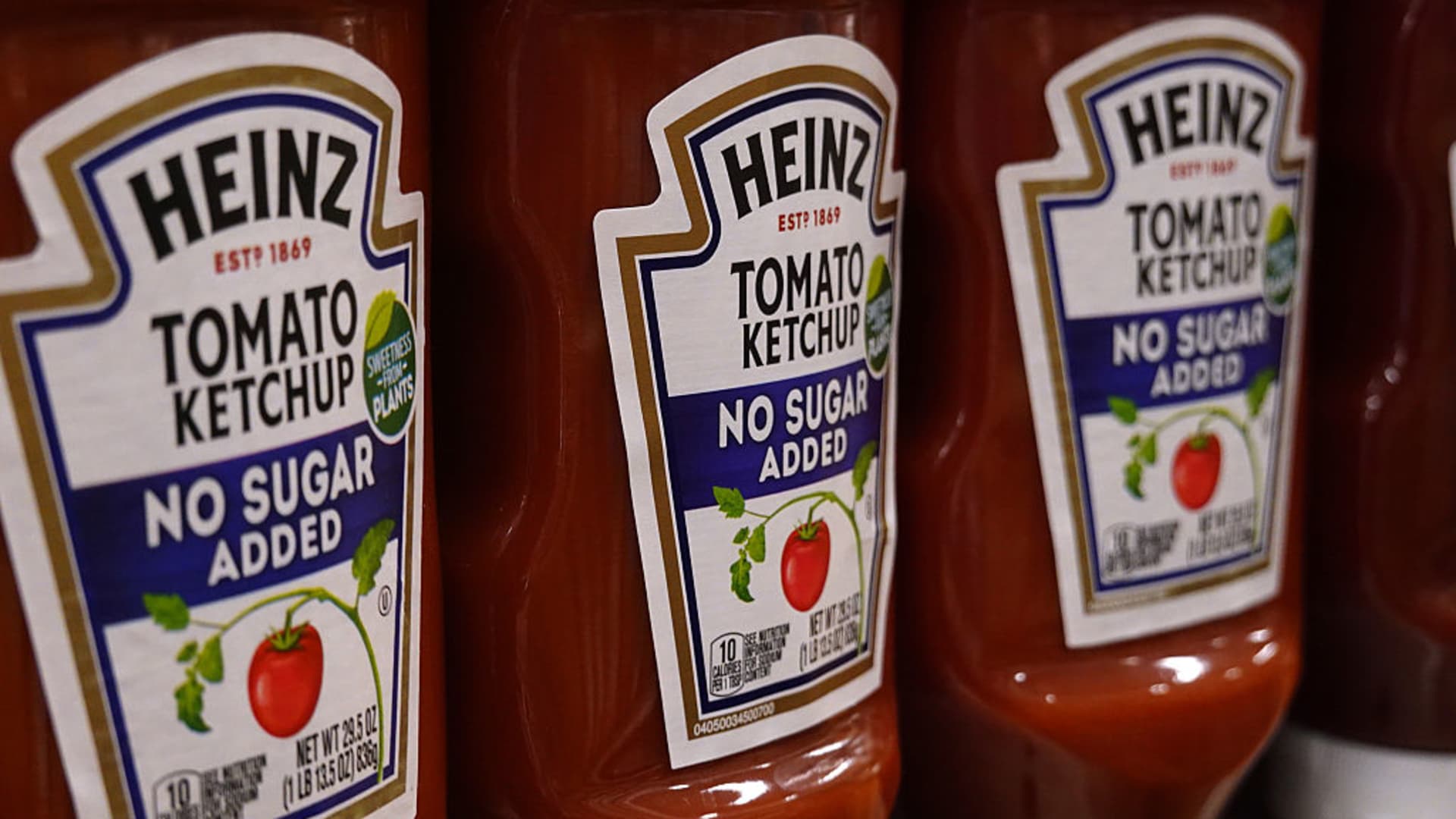
In September 2025, Kraft Heinz announced plans to break up into two separately trading companies, reversing a 2015 mega-merger orchestrated by billionaire investor Warren Buffett.
Justin Sullivan | Getty Images News | Getty Images
Kraft Heinz The company announced Wednesday that it is suspending work on its previously announced separation plan.
Chief Executive Steve Cahillane, who joined Kraft Heinz in January, said in a statement that many of the company’s problems are “fixable and within our control.”
“My top priority is to return the business to profitable growth, which requires us to fully focus all resources on executing our business plan,” he said. “As a result, we believe it is prudent to suspend work related to the separation and no further related dissynergies will occur this year.”
The company’s shares fell about 7% in premarket trading.
Kraft Heinz also plans to invest $600 million to help turnaround its U.S. operations. The company plans to use the funds for marketing, sales, and research and development. Cahillane said the investment will also go toward “product advantages and selective pricing.”
The company announced its breakup plan in September, reversing much of the blockbuster $46 billion merger a decade ago that created one of the world’s largest food companies.
Investors initially welcomed the merger, but its luster faded as the combined company’s U.S. sales declined and it sold many of its iconic brands, including Oscar Mayer and Maxwell House. Kraft Heinz has been in turnaround mode for at least six years, trying to revive its U.S. operations.
Warren Buffett, the mastermind behind the deal, said he was disappointed in the decision to split. Berkshire Hathaway has since taken formal steps to divest itself of its 28% stake in Kraft Heinz.
In December, Kraft Heinz announced Cahillane’s hiring. He previously led Kellogg until its dissolution and then its spinoff, Kelanova, until its sale to Mars.
Wednesday’s announcement coincided with Kraft Heinz’s quarterly earnings release. The company’s earnings beat Wall Street expectations, but sales fell short of analysts’ expectations.
