

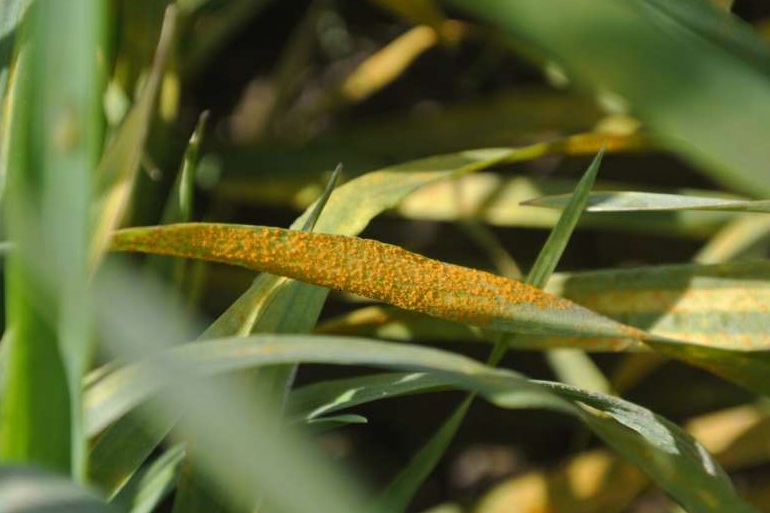
More than half of the UK’s wheat crop has been left exposed after a new strain of yellow rust has overcome the key resistance gene in the main commercial varieties.
Disruption of the Yr15 resistance gene, identified in 2025, affects more than 50% of the national wheat acreage, including the top three selling varieties, which account for around a third of the UK market.
Scientists warn that without prompt intervention, producers may become more reliant on fungicide programs to protect yields, increasing input costs and long-term resistance risks.
Yellow rust is a fungal disease that reduces green leaf area and limits photosynthesis and can cause significant yield losses in susceptible crops if not effectively controlled.
In response, UK Research and Innovation and Defra have awarded a Rapid Response grant to a John Innes Center-led collaboration aimed at identifying new sources of genetic resistance.
This project will utilize the historic Watkins Collection of wheat landraces, a diverse archive of heritage varieties, to identify resistance genes that can be bred into modern wheat.
Researchers have already shown that this collection contains genetic traits that may confer resistance to new species.
Professor Diane Saunders, group leader at the John Innes Center and lead on the project, said the scale of the resistance movement’s failure was unprecedented.
“It would have been unprecedented to witness such a large decline in yellow rust resistance in 2025,” she said.
But she said ancient landraces offered a “great resource of untapped genetic disease resistance” that could be quickly harnessed to protect crops.
The initiative brings together the John Innes Center’s expertise in rust pathology and wheat genomics, disease monitoring from Niab, and industry engagement through the Defra Wheat Genetic Improvement Network, led by Rothamsted Research.
Professor Cristóbal Ouai, director of the John Innes Center, said speed of response was key.
“Responding to this new threat requires us to work together and be agile,” he said, adding that the project demonstrates how scientists and plant breeders can “come together, collaborate and respond quickly” to protect crops.
Once new resistance genes are identified, breeders will work to incorporate them into commercial varieties grown by UK farmers.
Dr. Kostya Kanyuka, Head of Pathology at Niab, said the organization will focus on both identifying additional sources of resistance in wild wheat relatives and monitoring rust populations showing early signs of fungicide resistance.
“This collaboration will help us respond more quickly to emerging rust races and support the long-term resilience of British wheat,” he said.
Growers are being asked to closely monitor this season’s crops and review variety resistance ratings as new stocks become established.
While breeding solutions are being advanced, experts warn that fungicides remain an important tool, but over-reliance can encourage pathogens to develop resistance.
The project is also working with the International Maize and Wheat Improvement Center (CIMMYT) to ensure that new resistance genes can be integrated into global breeding programs as this strain spreads beyond the UK.
Professor Saunders said international partnerships would ensure the benefits would be spread around the world.
“By working with international breeding programs through our strategic partnership with CIMMYT, we can ensure that these British innovations not only better protect future British crops, but also help protect farmers around the world,” she said.
For now, the emergence of new rust races serves as a stark reminder of how rapidly disease pressures can change and how modern wheat production continues to rely on strong genetic resistance.
