

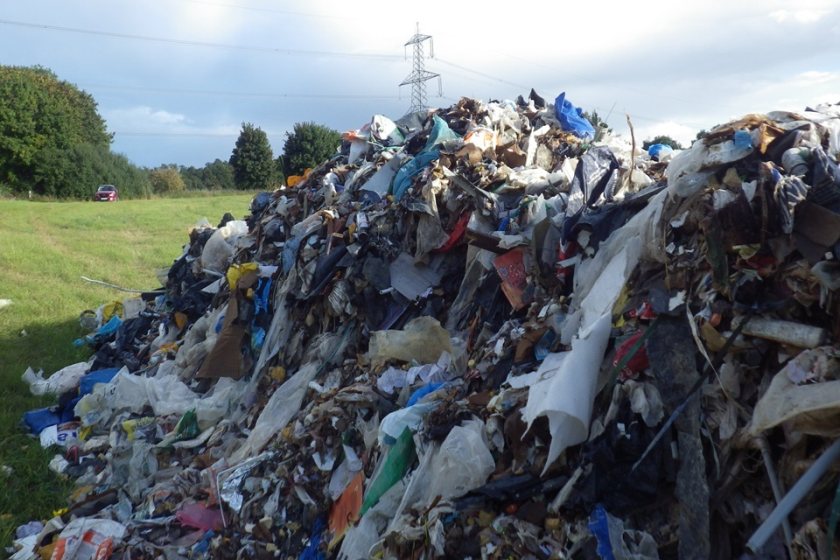
Waste criminals who dump waste on farmland and rural areas will face drones, laser mapping and new digital screening tools in a major crackdown from the Environment Agency.
The agency says the cutting-edge package is designed to deter illegal operators before they even begin operations, as waste crime continues to ravage rural land and landowners face huge clean-up costs.
The announcement comes just days after a waste crime boss who dumped the equivalent weight of 600 African elephants of rubbish on British farms and rural areas was ordered to pay more than £1.4 million.
According to NFU Mutual’s latest rural crime report, rural crime in England will cost £44.1 million in 2024, putting a huge strain on already struggling rural communities.
The measures build on what the EA called a “record year of enforcement” during which 751 illegal waste sites were shut down and hundreds of offenders brought to justice.
Central to the new approach is the expansion of a 33-person drone squad tasked with tracking illegally dumped materials from the air and capturing evidence for prosecution.
Some drones have been upgraded with advanced laser mapping technology to help police pinpoint where waste has been dumped and create detailed images of the scene for court.
The EA has also introduced a new proactive screening system that matches heavy goods vehicle driver’s license applications with waste permits and carrier records.
By scanning weekly data published by the Transport Commissioner’s Office, police officers can give early warnings to suspicious operators before waste is illegally moved.
The tool has already been trialled in East Anglia, where it helped uncover companies that were secretly relocating their HGV operations in an apparent attempt to evade law enforcement.
The software was able to identify new operating centers within a week and intervene before licenses were approved.
The package is supported by the expansion of the Waste Crime Integrated Unit, which has increased its number of experts from 13 to 20, including former police officers.
The unit aims to work with the police and the National Crime Agency to dismantle the organized networks behind serious waste crime.
Phil Davies, head of the Waste Crime Integrated Unit, said: “Illegal dumping of waste is appalling and we are determined to turn the tide on this heinous crime.”
“As organized crime becomes increasingly sophisticated, we are deploying new technology to detect and, importantly, stop criminals,” he said.
“Through more use of drones, stronger partnerships, and more police on the ground…we will stop you.”
Environment Secretary Emma Reynolds said the government was “aggressively pursuing waste offenders and bringing them to justice”.
She confirmed the Environment Agency’s executive budget had been increased by more than 50% to £15.6m.
“By increasing the Environment Agency’s enforcement budget by more than 50% to £15.6 million, we are investing in cutting-edge technology that will help us shut down illegal operators faster and more effectively,” she said.
“From advanced laser mapping to drone surveillance and new vehicle scanning tools, this technology is helping us track, expose and stop waste crime.”
Drones will soon be equipped with light detection and ranging (LIDAR) technology, which uses laser points to create highly detailed 3D maps of waste sites.
Previously deployed primarily from aircraft for flood monitoring, drone-mounted LIDAR will allow government agencies to more accurately map illegal dumping sites and strengthen evidence in prosecutions.
The Environment Agency said the approach, which combines aerial surveillance, licensing checks and enhanced investigative capabilities, reflects the growing scale and sophistication of waste crime.
Officials say the aim is not only to prosecute criminals, but also to stop illegal dumping before it happens and send a clear warning to criminals targeting the British countryside.
