

Welsh farming leaders have issued a clear warning ahead of the next Senedd election, appealing to politicians to provide certainty on funding, regulation and taxation or risk damaging the future of rural Wales.
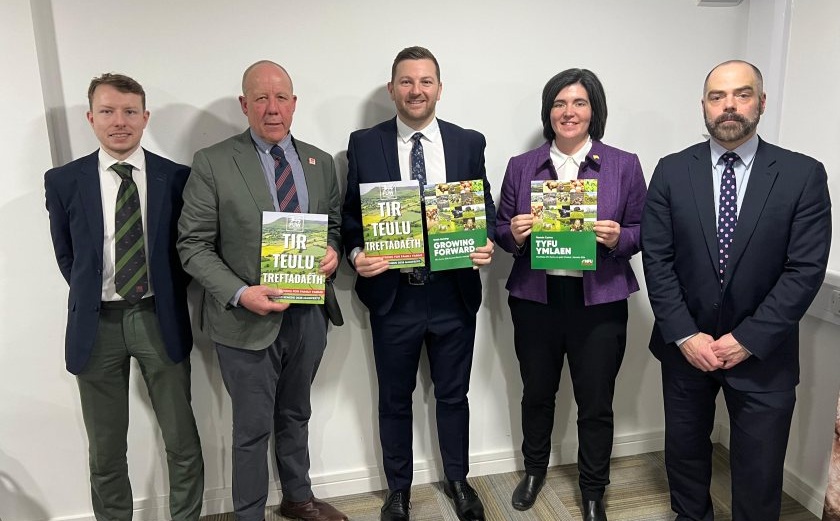
NFU Cymru and the Farmers’ Union of Wales (FUW) used a joint fringe event at the Welsh Conservative Party Conference in Llandudno to set out seven shared priorities for the next Welsh Government, in a rare show of unity at a pivotal political moment.
With the next Senedd election just around the corner and Sustainable Farming Systems (SFS) continuing to spark debate across the sector, both unions called for long-term stability and stronger local voice in Cardiff Bay.
The event was opened by Sam Kurtz MS, Welsh Conservative Shadow Cabinet Secretary for the Economy, Energy and Rural Affairs. FUW Chairman Ian Rickman and NFU Saimul Chairman Abi Rieder then outlined ambitions that span funding, food security, disease control and land use.
The focus of the discussion was the future of SFS. The policy has faced continued scrutiny from farmers concerned about its practical and financial implications.
Mr Rickman said the scheme “has the potential to be a policy that supports Welsh agriculture in its contribution to the environment, economy and communities”, but insisted the next government “must be committed to developing the scheme further and ensuring farmers are fairly compensated for their daily work”.
Both unions argued that without a fair, multi-year funding solution, farmers would lose confidence in investing for the future.
They also called for a dedicated Wales Food Plan to boost domestic food production and strengthen national food security, and suggested the issue should be high on the political agenda.
Reducing what they called excessive farm bureaucracy was another key demand. The union reiterated the need for a science-driven strategy to eliminate bovine tuberculosis and expressed renewed concern over NVZ regulations, which continue to produce unintended consequences for family-run businesses.
Alongside regulatory reform, both organizations emphasized the need for a balanced approach to land use, one that meets environmental and social expectations without displacing productive agriculture.
The conference also provided an opportunity to reflect on the industry’s 14-month dispute with the UK government over inheritance tax reform.
Both Presidents thanked the Welsh Conservative Party for its support during the election period. Mr Rieder described December’s outcome as a “fantastic” result after a “long and hard-fought campaign”, underscoring the decision to raise the threshold for applying IHT.
“The policy of taxing business assets as if they were personal property remains misguided,” she said, adding that changes to thresholds and transferability rules “leave most family farms in Wales exempt from this highly destructive tax.”
Despite recognizing significant pressures, from policy reform to disease to regulatory changes, the union insisted the industry was not short on solutions.
“Every single person in Wales depends on the future of agriculture in Wales, whether it’s for the food on their plates or for the livelihoods supported by agriculture,” Leader said.
“Farmers want to continue to play their part in a strong, sustainable and successful Wales, but they need support and stability to do so.”
Concluding the event, Mr Rickman said Labor would work with the next Welsh Government “regardless of its composition” to ensure agriculture “remains at the heart of rural Wales, supporting our economy, language and communities”.
As elections approach, both unions have made clear their intention to keep agriculture and its funding firmly at the center of the political debate.
