

Scottish arable farmers have been warned that rising policy costs and volatile markets could further squeeze profit margins, as experts warn fertilizer tax and regulatory differences are the biggest threat facing the sector.
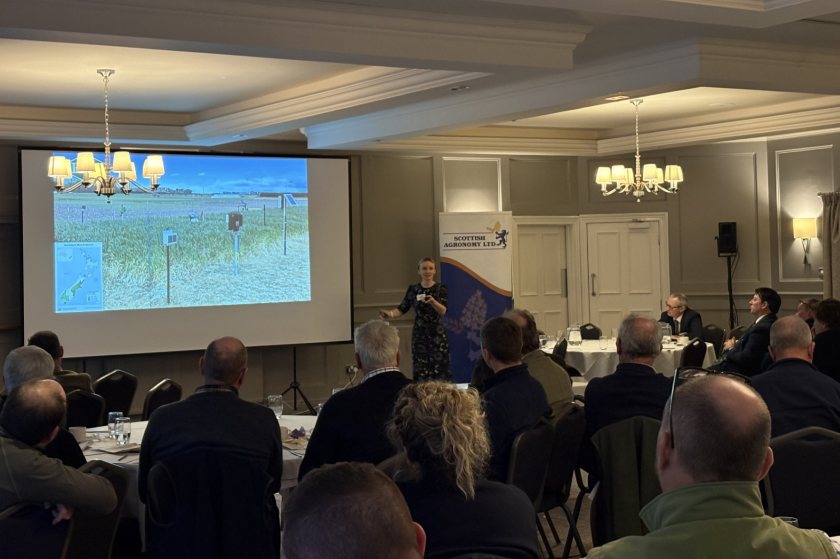
More than 200 farmers gathered in Perth for the 40th Scottish Agriculture Conference, themed ‘Thriving in a Lean Age’, to assess how businesses can remain competitive in a tightening economy.
Although input costs have eased from recent highs, speakers warned that new pressures are on the horizon. In particular, the UK’s proposed Carbon Border Adjustment Mechanism (CBAM) is scheduled to be applied to imported fertilizers from next year.
Professor Paul Wilson, director of the Center for Food Policy and Foresight at the University of Nottingham, warned that the mechanism could increase costs for UK producers if it is not carefully aligned with wider trade policy.
CBAM is designed to impose carbon-related fees on certain imports, including fertilizers, to prevent carbon leakage. However, Professor Wilson suggested that unless equivalent measures were applied to imported food, UK producers risked being placed at a competitive disadvantage against overseas suppliers operating under less stringent environmental standards.
He also urged producers to think carefully about carbon markets, arguing that keeping carbon credits within their own operations, rather than selling them externally, could better meet future policy demands.
The economic background became one of the pillars of the conference. The other thing was innovation.
Ben Abell, head of agronomy at Dyson Farming, outlined how the company, which grows wheat, barley, potatoes, maize, peas and rye on 14,000 hectares in the UK, is continually experimenting with new systems and technologies to increase efficiency.
He suggested that as profit margins shrink, embedding profits will become important.
Scientific advances were also highlighted as part of broader efforts to build resilience.
Dr Aoife O’Driscoll, Senior Plant Specialist in Plant Pathology at NIAB, highlighted the importance of integrating next-generation IPM approaches that combine agricultural innovation, biological control and genomic predictive models to sustainably manage disease pressure.
Meanwhile, Teagasc’s head of crop science, Dr Ewen Mullins, pointed to growing momentum around new plant breeding techniques.
Recent moves within the EU to ease regulations on gene-edited crops could accelerate the development of new varieties across Europe. This change contrasts with ongoing regulatory differences across the UK, adding further complexity for producers navigating the post-Brexit policy framework.
Scottish Agriculture Managing Director Adam Christie said the event gave farmers a valuable opportunity to look beyond their immediate field pressures.
“This conference is an opportunity for producers to take a break from the daily farm, meet other producers and gain big-picture insight from great speakers with a variety of perspectives and areas of expertise,” he said.
Despite the weak market and a difficult and rainy start to the year, he said there was “a huge buzz in the room” and “real positivity which is very encouraging”.
“Given what we heard during the day and the results of the trials, there is a lot to think about,” he added, indicating a focus on practical application in the upcoming season.
The conference also marked a milestone year for the farmer-owned co-operative, which was founded 40 years ago by a small group seeking independent agricultural advice and now counts 240 members.
Attention was also focused on the next generation.
The first George Rowley Scholarship recipients, Cameron Smith of Quilt Farming and James Hay of Calfergie Estates, shared insights from their study trip to Texas with the SAYFC Rural Affairs Committee.
Their visits included rice, pecan and cotton companies, lumber operations, cattle stud plants, poultry processors, Wagyu beef operators, and more.
Beyond technical learnings, they highlighted the pro-business and relatively light regulatory environment they observed. This contrast was not lost on participants earlier in the day when policy costs and compliance burdens were discussed.
As producers weigh increased environmental obligations, uncertain markets and evolving science, the message from Perth was clear. Thriving in lean times depends on balancing efficiency, innovation, and political awareness in equal measure.
