

Ministers have announced a streamlined Sustainable Farming Incentive (SFI), which is being presented as a reset to agricultural policy, reducing the scheme from 102 actions to 71 actions and introducing an annual payment cap of £100,000.
Defra Secretary Emma Reynolds confirmed the overhaul, along with a wide-ranging £345m funding package aimed at improving productivity and accelerating innovation, in a speech at the NFU conference today (24 February).
The revised SFI will launch in June for small farms and those without environmental land management (ELM) revenue contracts, with a second application window open to all farmers in September.
Defra says around 97% of farms have already applied for less than the new £100,000 cap, which they argue will distribute funds more equitably and prevent larger agreements from absorbing unfair sums.
The government describes the revised proposals as “simpler, fairer, more stable and shaped by farmers” after months of working with industry groups after concerns were raised about complexity and access.
Addressing participants at the conference, Ms Reynolds said she was “determined to give British agriculture the foundation it needs to grow”.
“We want agricultural businesses that are productive, profitable and resilient,” she said.
The SFI changes come within a wider package that includes £70m for the Agricultural Innovation Program to turn research into practical tools and £50m for the Farm Equipment and Technology Fund to support investment in productivity, animal health and slurry management.
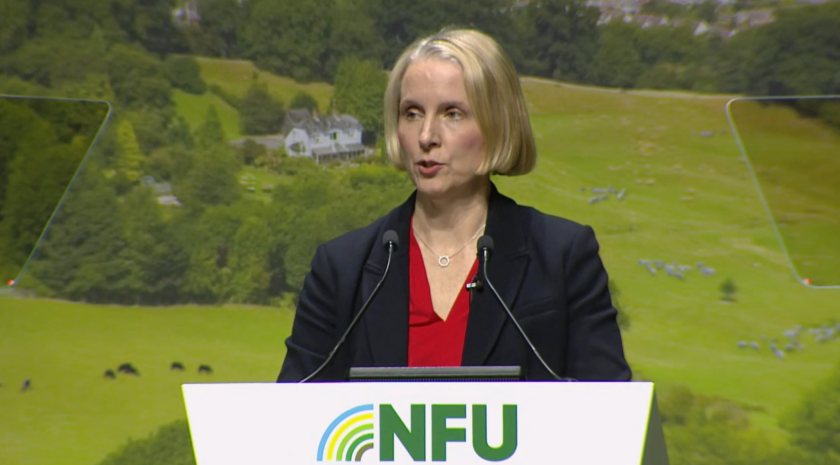
Defra Secretary Emma Reynolds confirmed the overhaul in a speech today
Ministers say the measures will contribute to their commitment to invest at least £200m in agricultural innovation by 2030. However, questions remain about the long-term size and stability of the overall agricultural budget.
A further £225m will be made available through a new round of ELM capital grants starting in July 2026, which will support projects such as hedgerow planting, slurry storage infrastructure, natural flood management and water quality improvements.
The Secretary of State also confirmed plans to consult on requiring animal health and welfare reviews (veterinarian visits) for UK cattle, sheep and pig farmers, alongside a new poultry biosecurity grant scheme to support the fight against avian influenza.
Industry groups broadly welcomed the SFI reset, but with different emphases.
NFU Chairman Tom Bradshaw said: “It’s heartening to hear the Defra Secretary reaffirm his commitment to working collaboratively with farmers and producers.”
He added that the reformed system “seems to strike the right balance between simplifying processes and maintaining flexibility,” warning that “the resilience of our food system cannot be taken for granted.”
The Country Land and Business Association (CLA) supported keeping 71 actions, but warned that the £100,000 cap was “risky” and suggested it could limit the ambitions of businesses to deliver significant environmental outcomes.
Peasant associations welcomed the tightening of regulations, arguing that the revised structure should prevent inactive landowners from acquiring large sums of money.
Chief executive George Dunn said the 71 options “should provide a wide range of opportunities for individuals to participate”, adding: “What Defra has proposed will give enough room for hard-working, active farmers to take part in the scheme.”
But he stressed the importance of being clear about the total budget available, especially ahead of September, when demand is expected to be at its highest.
The Nature-Friendly Farming Network described the announcement as “very welcome news for many UK farmers”, but argued that the funding needed for a full transition to nature-friendly farming remained lacking.
With a phased reopening of applications and re-caps on how payments are distributed, the success of the reformed SFI will depend not only on its design but also on whether ministers can deliver the long-term certainty the sector has repeatedly called for.
