

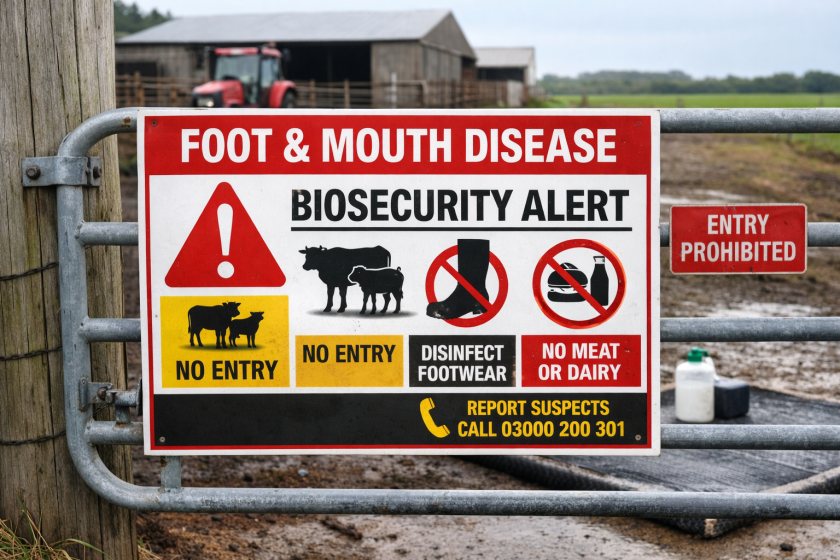
Foot-and-mouth disease has been confirmed in Cyprus, triggering immediate import restrictions into the UK and warnings for UK livestock farmers to tighten biosecurity.
Cases of a highly contagious viral disease have been detected in cattle and sheep in Larnaca. There have been no cases of infection in the UK, but authorities say swift action is essential to reduce the risk of introduction.
The Government has today (February 25) imposed restrictions on certain commercial imports from Cyprus to the UK.
The controls are for live animals and germplasm susceptible to foot-and-mouth disease, such as cattle and sheep.
Restrictions also apply to certain animal by-products, such as fresh meat and unprocessed meat products, milk and dairy products if not properly heat-treated, hay and straw, and pet food.
Foot-and-mouth disease does not pose a threat to humans or food safety. However, it spreads rapidly among artiodactyl animals such as cows, sheep, pigs, deer, wild boars, llamas, and alpacas.
The economic impact of the outbreak could be severe. Previous UK experience has shown that foot and mouth disease can lead to widespread production losses and the immediate closure of export markets for meat, milk and livestock.
Britain’s chief veterinary officer, Dr Christine Middlemiss, said authorities were closely monitoring developments.
“Foot-and-mouth disease has been confirmed in Cyprus. We remain in contact with our European counterparts to keep up to date with the situation,” she said.
He added: “Strong plans are already in place to minimize the risk of disease introduction to support the UK’s farming community and food security.”
Livestock keepers are urged to be alert for clinical symptoms, apply strict biosecurity measures and immediately report any suspected disease to the Animal and Plant Health Agency.
Clinical symptoms vary by species. In cattle, typical symptoms include blisters or sores on the feet, mouth, and tongue, fever, lameness, and refusal to feed.
In sheep and pigs, lameness is often the first visible sign and may be accompanied by blisters.
Commercial imports of cheese from Cyprus, including halloumi, are still permitted as long as they meet heat treatment requirements and are accompanied by the required health certificate. Officials stress that properly processed dairy products are considered low risk.
Private imports of meat and dairy products, including halloumi, from EU countries remain prohibited under restrictions introduced last year following increased disease activity across mainland Europe.
From April 2025, travelers will be prohibited from bringing meat from cows, sheep, goats, pigs or dairy products into the UK for personal use.
Importers and exporters are advised to check the latest official guidance to ensure compliance.
Foot-and-mouth disease is a notifiable disease and must be reported without delay. In the UK, animal keepers should call 03000 200 301. In Wales 0300 303 8268. and in Scotland, the local field service office.
There is no foot and mouth disease in the UK. However, as cases of infection have been confirmed in Europe, vigilance on farms remains the first line of defense.
