

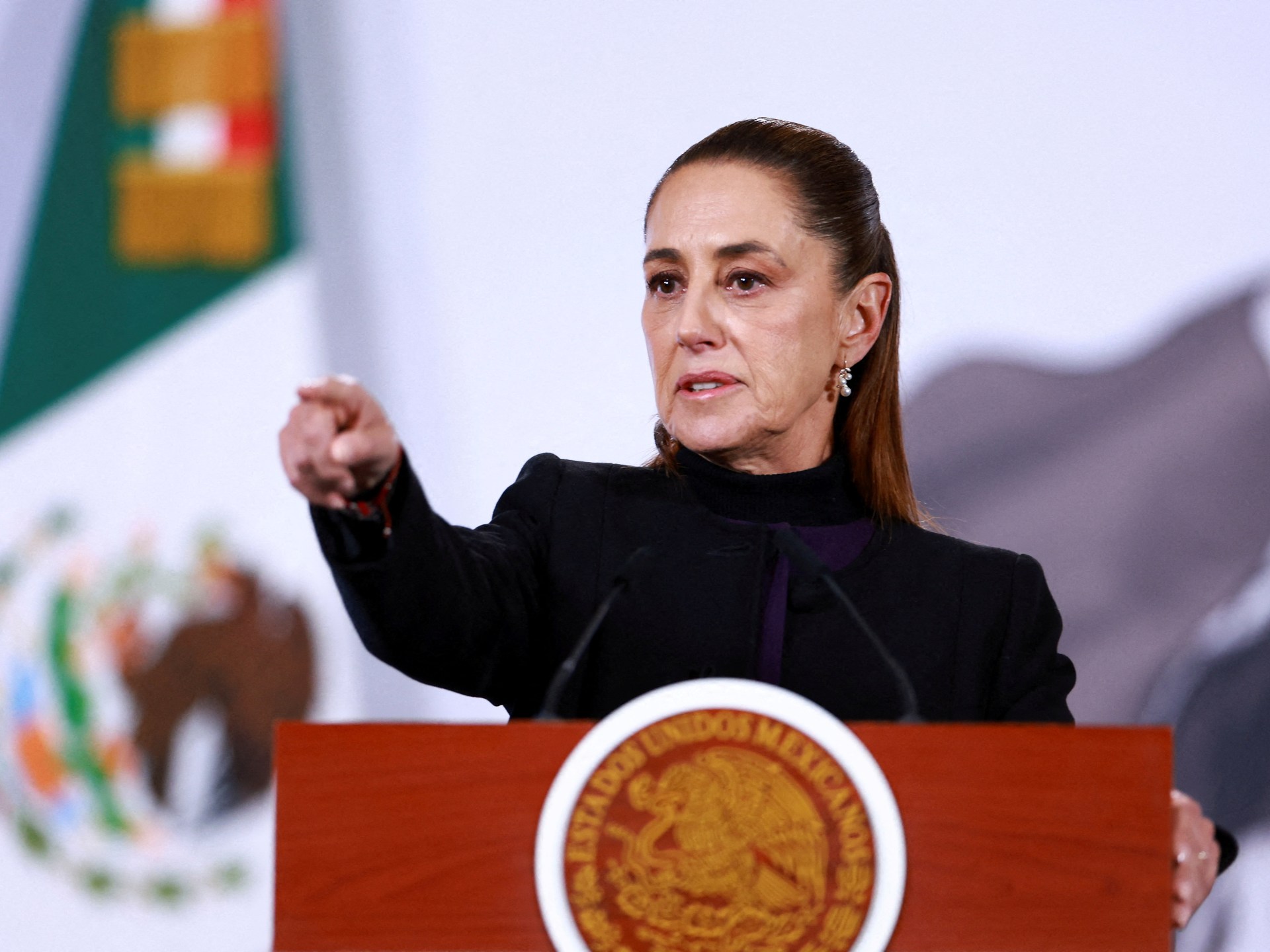
Mexico’s ruling Morena party praised the bill’s successful passage after years of negotiations with business owners.
listen to this article3 minutes
information

Published February 25, 2026
Mexico has passed a law that would gradually reduce the standard working week from 48 to 40 hours, but critics fear the reduction will be offset by an increase in the amount of overtime allowed.
The bill passed Mexico’s House of Representatives late Tuesday with broad support.
Recommended stories
list of 3 itemsend of list
Out of 500 members, 469 voted in favor of the bill, with no members opposing it. The specific terms were subsequently approved with 411 votes.
Still, the vote came after nearly 10 hours of debate as critics voiced opposition to some provisions of the bill.
The reforms, scheduled to begin next year, have trade-offs. Although total weekly working hours are scheduled to decrease, the law allows employers to increase weekly overtime hours.
The required minimum number of rest days has also not changed. Mexico currently requires one day of rest for every six days worked.
The effective date of reduced working hours will also be delayed. Weekly working hours will be reduced by two hours a year until 2030.
President Claudia Sheinbaum announced the proposal in December. It is expected to benefit approximately 13.4 million workers in Mexico.
The ruling Morena party welcomed the approval after years of negotiations with business owners.
“Productivity is not measured by fatigue. Productivity is built by dignity,” said Pedro Jaces, a Morena representative and secretary general of the Mexican Autonomous Labor and Management Federation, a labor group.
According to the World Bank, Mexico is Latin America’s second-largest economy, with a gross domestic product of approximately $1.86 trillion.
But critics say it has the worst work-life balance of any Organization for Economic Co-operation and Development (OECD) member country. Employees work an average of more than 2,226 hours per year.
Despite these long working hours, the country suffers from the lowest labor productivity and lowest wages of the 38 member states. Additionally, approximately 55 percent of employees remain in the informal sector, meaning they do not have the legal protections other workers enjoy.
Some Mexican opposition lawmakers argued this week’s bill didn’t go far enough.
Alex Dominguez, a lawmaker from the opposition PRI party, said: “The idea of reform is not bad, but it was incomplete and hastily implemented.”
The bill requires approval by two-thirds of Mexico’s state legislatures to take effect.
While Mexico is moving toward reducing the 40-hour work week, Argentina, Latin America’s third-largest economy, is taking the opposite approach.
Facing labor shortages and economic stagnation, Argentina’s President Javier Millei has backed a controversial bill that would extend working hours from eight to 12 hours and limit overtime pay.
Argentina’s House of Representatives narrowly approved controversial labor reforms last week. Final approval is expected from the Senate in the coming days.
