

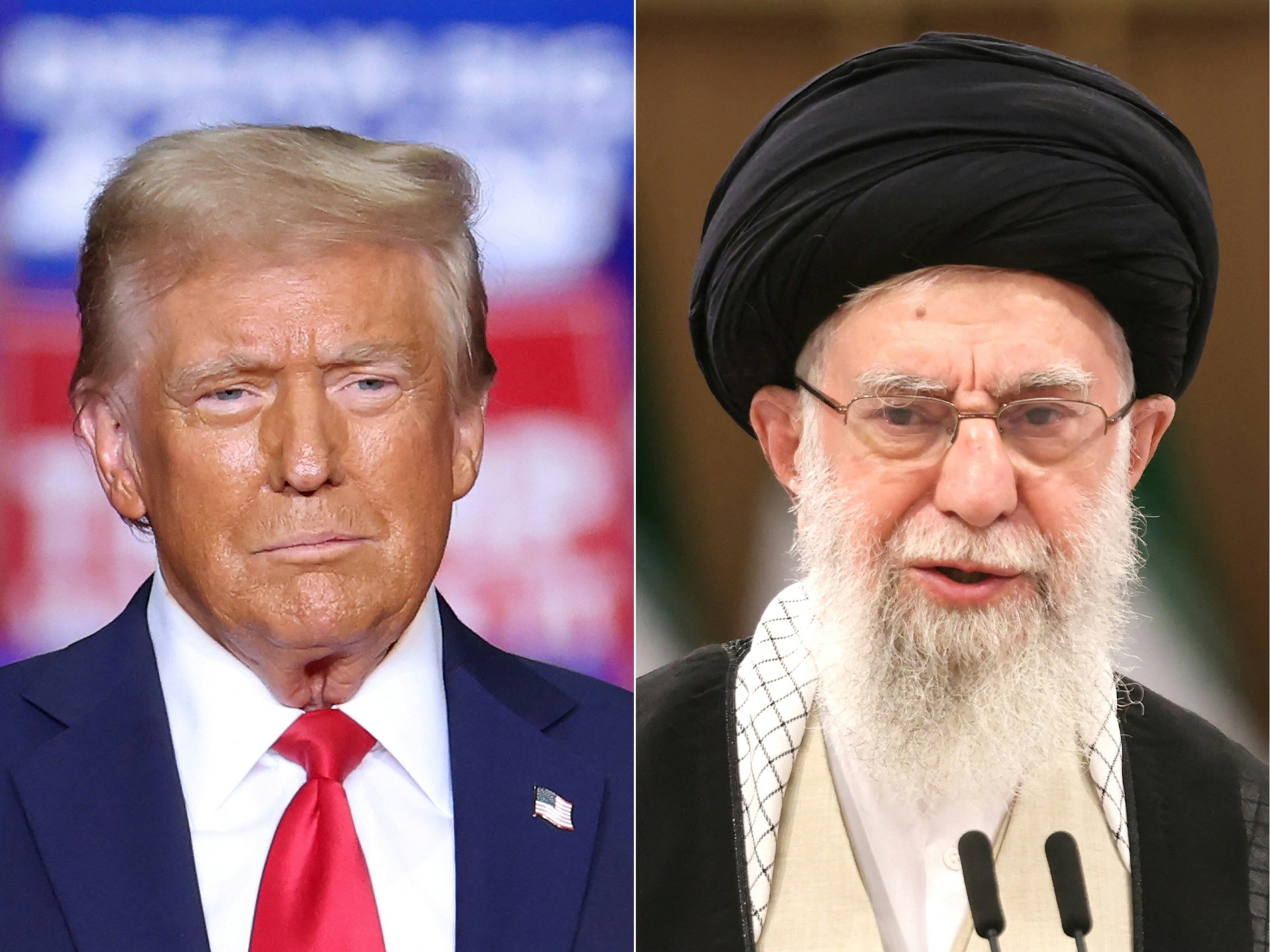
Illiberal systems often seem most durable just before they change. But moments of upheaval can also create other illusions. In other words, the system is on the verge of collapse due to a dramatic external shock. With Iran reeling from unprecedented protests against the country’s leadership, it’s tempting to imagine that U.S. air power could deliver the final blow.
That temptation misunderstands how the Islamic Republic actually survives. Forced cohesion is a strong element of the system. That is, the ability of parallel institutions of security and politics to continue to act in concert even when legitimacy is undermined. If its cohesion is maintained, the system absorbs the shocks that more conventional states would suffer.
Iran is not a single pyramid with one man at the top. It is a heretical network state. The centers of power overlap, centering on the office of the supreme leader, the Revolutionary Guards, intelligence agencies, administrative gatekeepers, and the patronage economy. In such systems, removing a single node, even the most iconic, does not guarantee that the structure will collapse. Redundancy and alternate chains of command are design features. Thus, US President Donald Trump’s famous story of tactical “successes” in Venezuela, followed by beheadings, looks more like a gamble on chaos than a strategy.
This is why President Trump’s dilemma is important. He sits between the neoconservative hawks who want regime change by force and the America First base, which does not support protracted wars, post-conflict stabilization, or new Middle East adventures. Instinct is therefore a punishment that appears decisive, immediately in and immediately out, without imposing any obligation.
Regional politics are further narrowing President Trump’s menu. Israel wants Washington to do the heavy lifting against Tehran. Key Gulf interlocutors, particularly Saudi Arabia, Qatar and Oman, have called for detente and diplomacy. Operationally, the lack of Gulf support for new operations could push the United States toward remotely launched military options, making it difficult to sustain sustained air operations.
Trump also boxed himself in rhetorically. Mr. Trump, who has warned that the United States would “come to the rescue” if Iran “violently kills peaceful protesters,” needed to signal a credible military option, suggesting diplomacy is preferable and hinting that the killings have “stopped.” In reality, this fluctuation looks like more bargaining and indecision than strategic ambiguity, prompting all factions around him to believe they can still win the argument.
It’s important to be clear about what Washington’s inner circle appears to want. The goal is not liberal democracy. The prize is a pragmatic Iran that can draw into the regional geoeconomic framework, open itself to trade with the United States, and move away from some degree of overreliance on China. This means restrictions on nuclear activities, some restraint on ballistic missiles, and a real or superficial reduction in Iran’s support for the so-called “Axis of Resistance.” This is a change in attitude and does not completely replace the Islamic Republic.
Air power can discipline and signal. It may cause deterioration of certain facilities. The costs of repression by authorities may increase. But it cannot reorganize the security sector, mediate succession, or bring about behavioral change. And protesters cannot be protected from the air. Libya in 2011 remains an alarming story. At best, military force is a risky attempt to force Iranians to the negotiating table and is likely to backfire.
The most likely military scenario is a limited standoff and punitive attack that could use cruise missiles and long-range weapons to attack Iranian Revolutionary Guards centers and infrastructure. This fits the “quick and clean” preference and can be framed as punishment rather than war. Its strategic drawback is that it increases the risk of retaliation through proxies, transportation disruption, and pressure on U.S. military bases in the Gulf, while giving the Guard a narrative of an “existential threat” that could justify harsher crackdowns. You can also reduce the chance of internal divisions by rallying opposing factions around a flag.
Attempts to “decapitate” leaders are more cinematic and less believable. This is the most escalatory option and is likely to unite the hardliners, but it is still unlikely that the networked system will collapse.
Continuous air operations are the least practical and the most dangerous. Without Gulf bases and overflights, logistics will drive operations toward more distant platforms and thinner sortie generation. Politically, it would violate the premise of America first. Strategically, it would internationalize the crisis, expand the battlefield, and invite an escalating cycle of retaliation that neither side can reliably control.
Cyber and electronic disruption fall into a separate category. That is, it is less visible and often denied, potentially consistent with the Gulf states’ preference to avoid starting a war. However, the effects are often uncertain and temporary, and a networked nation may be able to avoid chaos. The most likely outcome is that while cyber operations may accompany other movements, they are unlikely to bring about decisive political change on their own.
The deeper point is that external shocks rarely produce the concrete internal results that Washington claims it wants: real transitions at the top. Severe external pressure often strengthens the coercive core of a system. Because escalating violence doesn’t always equate to confidence. I often feel panicked when I’m wearing a uniform. The only permanent trigger for change is internal. That is, cracks within the security services and fragmentation of elites that create competing centers of power with incompatible survival strategies.
If the United States wants to influence these dynamics, it should focus on means of building unity rather than dramatic bombing. Maintain deterrence against genocide, but avoid promising “rescue” that cannot be achieved without war. Align economic pressure on individuals and groups promoting violence, while leaving a credible outlet for technocrats and pragmatists who prefer de-escalation and negotiation. Above all, we can work with America’s friends in the region, including the leaders of Qatar, Oman, and Saudi Arabia, to de-escalate and move coercive rhetoric to the negotiating table.
The Islamic Republic may continue to suppress these protests. It may also reorganize internally and survive in new forms. But the anger witnessed on the streets cannot be contained unless sanctions are lifted and the economy is transformed. To achieve this, the regime needs to transform from theocratic paralysis to a more pragmatic system.
