

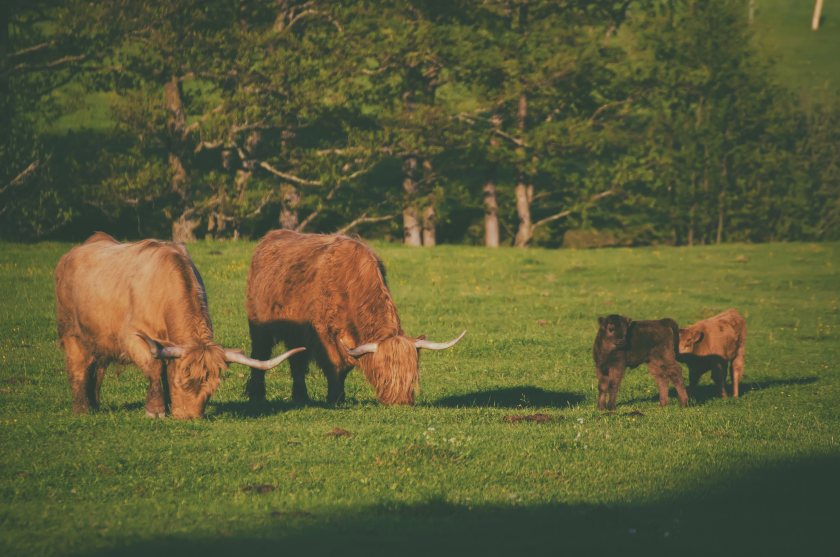
Scottish farmers have just months left to access funding in what has been described as the “best time in decades” to switch to organic production as key government schemes reopen.
The Agricultural Environment and Climate Scheme (AECS) will begin accepting applications on Monday (23 February) and will provide financial support to farmers and crop businesses looking to transition to organic systems.
This period ends on June 22nd for combined applications and July 31st for organic-only bids.
The reopening comes just weeks after the launch of the UK’s first nationally funded Scottish Organic Action Plan, which aims to achieve the Scottish Government’s ambition to double organic farmland to more than 200,000 hectares this year.
Industry statistics point to rising consumer demand as a further boost. Sales of organic food and drink in Scotland have increased by 20.6% over the past five years, although they still represent a relatively small proportion of the total market.
Although the sector remains a niche part of Scotland’s total agricultural output, supporters argue that steady growth and policy support are creating stronger long-term prospects for producers.
Scottish Soil Association co-director David McKay said there was growing interest from farmers.
“In recent years, we have seen an increase in the number of farmers seeking organic certification,” he said, citing policy support, political goals and increased public awareness of the benefits of organic as factors.
“Recent statistics show organic food and drink has grown by 20.6% in Scotland over five years, although it still has a small market share,” he added.
“We believe now is the best time in decades for Scottish farmers to capture this growing market.”
Payments under AECS are intended to offset the economic pressures associated with conversion, including potential short-term revenue losses during the transition period.
Organic producers are also automatically eligible for support under the Basic Payment Scheme.
Organic systems meet farm-wide planning requirements for animal health, welfare and integrated pest management and reflect standards that prioritize natural solutions over synthetic pesticides.
For some producers, this support has already been transformative.
Nicky Yoxall, technical director at Pasture for Life and manager of Lottal Estate Livestock Farm in Angus Glen, said achieving certification in September 2025 was a huge step forward.
“Achieving certification in September 2025 was a huge milestone for us,” she said.
“For farmers considering transition, AECS provides financial support to ease the transition. The environmental benefits are immediate and the scheme helps manage the practical business challenges associated with conversion.”
She said there had been improvement in wildlife on the ground, including the return of the Chinese sandpiper, a red-listed species that had declined significantly in recent decades.
“The sandpiper… is something we’ve started seeing in the spring, and it’s a reminder of why we take an organic approach,” she said.
However, she acknowledged gaps in the supply chain could be a challenge, especially where organics are difficult to source domestically.
“This payment provides an important buffer to support broader business transformation,” she added.
At an event in November 2025, Rural Affairs Minister Mairi Goujon pledged to donate £200,000 to support the rollout of the Organic Action Plan, which comes into force next week.
Scottish Soil Association and Soil Association Certification say they will work with retailers and public sector buyers to expand the availability of Scottish organic produce in stores, schools and hospitals across the UK.
With open funding and political support in place, industry leaders say the next few months will be crucial in determining whether Scotland can achieve its ambitious targets to expand organic farming.
