

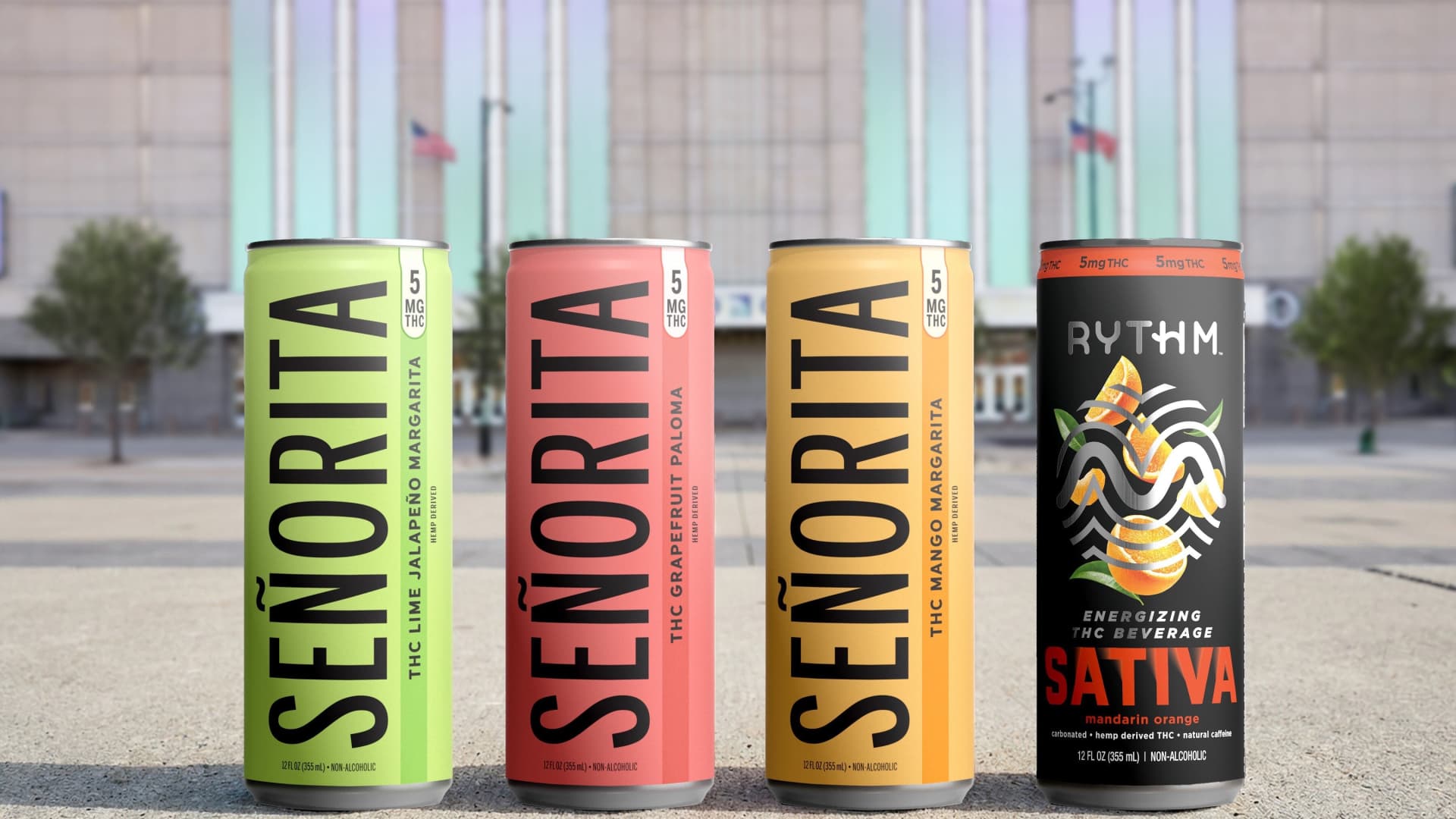
Chicago’s United Center is venturing into new territory for live events, becoming the first major U.S. arena to offer cannabis beverages at concession stands.
The arena, home to the NBA’s Chicago Bulls and NHL’s Chicago Blackhawks, on Tuesday announced a multi-year partnership with Rhythm, a hemp-derived THC beverage company that produces Rhythm and Senorita branded beverages, to sell cans at concerts and live events.
The drinks are for adults aged 21 and over and will be sold alongside alcohol and soft drinks.
“We’re seeing consumers choosing this in liquor stores, venues and restaurants. It’s a time when consumers are looking for alternatives,” said Ben Kobler, CEO of Green Thumb Industries, which owns Rhythm.
“We know consumers want them,” Kobler said. “They believe there is no hangover, and they want something to replace it.”
Consumer interest in hemp-derived THC products has steadily increased in recent years. According to a study conducted by consumer researcher Brightfield Group and cited by Bernstein, 14% of U.S. adults reported using some type of hemp-derived THC product in the first quarter of 2025, up from just 8% in the same period a year earlier.
“RYTHM’s Chicago roots make RYTHM’s beverage line a natural fit for the United Center experience as we continue to evolve our offerings for our guests,” United Center Chief Operating Officer Joe Maira said in a press release.
The drinks will be served during concerts at the venue starting in early February and will serve as a test case for cannabis in mainstream venues as lawmakers debate tighter regulation of the cannabis category, citing safety concerns.
Kobler said the sale of the product will be subject to safety and compliance measures consistent with Illinois law, but the company did not disclose supply limits or monitoring protocols.
“American consumers are very accustomed to drinking their own drinks and self-regulating,” Kobler said. [THC] Gummies — For most Americans, eating just one gummy is difficult. ”
THC regulation confusion
Last year, Congress passed a funding bill that included a THC cap that would effectively ban most cannabis-derived THC products (the same category currently sold at the United Center) starting in November.
Public health advocates say the market is outpacing regulations, while industry groups warn that a blanket ban could disrupt billions of dollars in consumer sales.
This legislation was followed by amendments to the 2018 Farm Bill, which added exemptions to the federal definition of hemp. Effectively, this change closes the so-called “hemp loophole” and could allow many hemp-based THC beverages to be produced within months without further policy changes.
Lawmakers in both the House and Senate have already introduced bills that would make hemp products legal until 2028. A bipartisan bill has also been introduced that would create a regulatory framework for drug addiction in hemp beverages and CBD products, offering hope for change in the industry before the current expiration date.
“The timing of the government and the regulations is never good, it’s never clear,” Kobler said. “It’s still uncertain, but we’re guided by the consumer, so we have a lot of confidence in betting on this now.”
In addition to the policy overhaul, the Trump administration moved last year to reclassify marijuana under the Controlled Substances Act. The changes sent cannabis stocks soaring and raised questions about taxation, banking access and federal oversight.
Although the schedule change primarily affects state-legal cannabis businesses rather than cannabis-derived products, it signals a growing appetite in Washington to reconsider decades of cannabis policy.
Analysts say continued policy momentum could open the door for more cannabis-related products to enter the mainstream market, but it does come with some risks.
“Investing in cannabis remains a volatile and challenging endeavor, and not for the faint of heart,” Bernstein analyst Nadine Sarwat wrote in a recent research note.
