

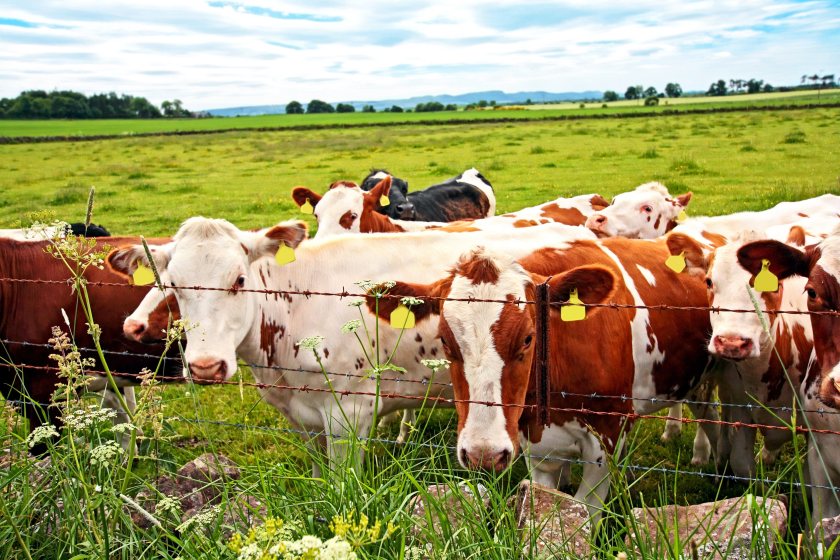
Dairy farms may soon be able to reduce their reliance on synthetic nitrogen fertilizers without sacrificing yield, as scientists begin testing biological alternatives designed to reduce emissions and increase efficiency.
The research is being carried out under Defra’s Agricultural Innovation Programme, and will investigate whether around 50% of the synthetic nitrogen fertilizer used in dairy feed systems can be replaced with biological inputs.
The University of Nottingham is a research partner in Bio-Phage UK, a Defra-funded low-emission farming project led by Terrafarmer and delivered through Innovate UK.
The trial will focus on real-world performance on active farms, at a time when dairy operations are under increasing stress due to fertilizer costs, climate change pressures and emissions targets.
Bio-Phage UK is one of 15 innovation projects across England to share £21.5m of funding to help farms reduce greenhouse gas emissions, improve resilience and maintain productivity.
Agriculture remains a significant source of nitrous oxide, a greenhouse gas that is about 300 times more potent than carbon dioxide over 100 years.
Dairy systems use large amounts of synthetic nitrogen fertilizers, making them a key focus of efforts to reduce emissions at source.
The researchers say that improving nitrogen use efficiency through biologically mediated soil processes has the potential to be a sustainable alternative, but its adoption will depend on strong, independent evidence from commercial conditions.
The University of Nottingham team will lead on-site greenhouse gas monitoring and optimization of the biofertilizer strategy, alongside a full lifecycle assessment of emissions.
Work spans key dairy feed crops including ryegrass, herb ley and whole crop systems, with field trials underway on three commercial dairy farms in the UK.
These tests are supported by controlled greenhouse experiments to better understand soil chemistry and microbial responses.
In addition to biofertilizers, the project will also test BIOCAT, a phage-based soil treatment that targets the bacteria responsible for nitrous oxide production, offering a new path to reducing emissions.
Dr Nick Gerkin, Associate Professor of Environmental Science and Director of the Center for Sustainable Agricultural Systems at the University of Nottingham, is leading the university’s contribution.
He said the project was designed to provide practical, system-wide evidence. He said: “By combining direct measurements of greenhouse gas emissions, soil chemistry, microbial community responses and whole system life cycle assessments and yield impacts, this project will generate robust evidence on key sustainability challenges for UK and global agriculture.”
Dr Gerkin said the findings could inform future decision-making across the field. “If successful, Biophage UK could demonstrate a reliable route to low-emission dairy feed production by reducing dependence on synthetic nitrogen, improving nitrogen efficiency and making soil systems more resilient.”
He added that the results will help farmers and policy makers distinguish between biological solutions that offer real benefits and those that do not, supporting evidence-based decisions as UK agriculture moves towards a more sustainable future.
