

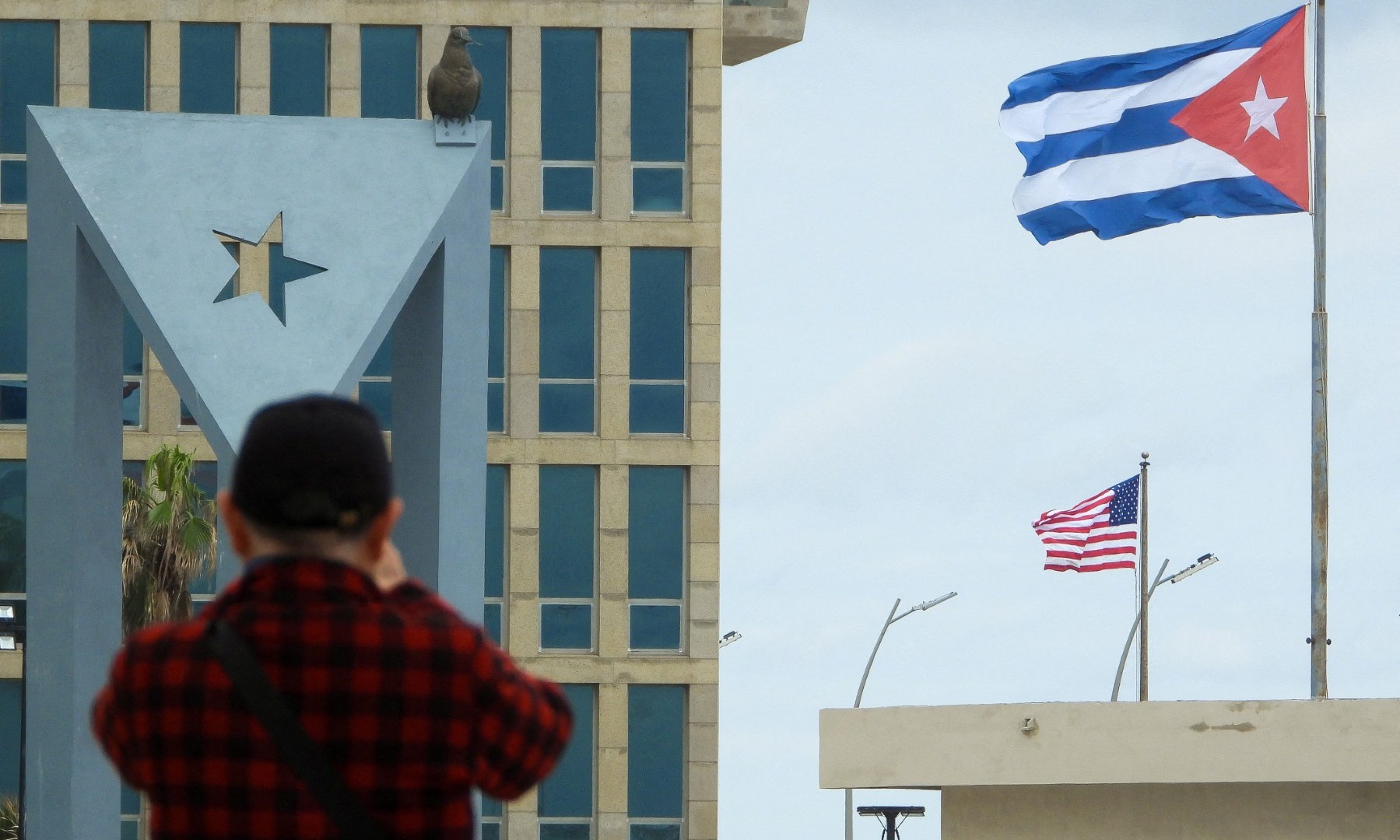
A Cuban diplomat said Havana was willing to talk with Washington, but certain matters were off the table, such as the constitution and a socialist government.

Published February 3, 2026
A Cuban diplomat said Cuba and the United States are communicating but have not yet developed into a formal “dialogue” as US President Donald Trump increases pressure on Havana.
Carlos Fernandez de Cossio, Cuba’s undersecretary of foreign affairs, told Reuters on Monday that the U.S. government recognizes Cuba’s “readiness to engage in serious, meaningful and responsible dialogue.”
Recommended stories
list of 3 itemsend of list
De Cosio’s statement was the first hint that Havana was in contact with Washington, even in a limited capacity, as tensions have risen in recent weeks as President Trump has threatened the Cuban government following the U.S. military’s abduction of Venezuelan leader Nicolás Maduro, Cuba’s longtime ally.
“We’ve exchanged messages, we’ve had embassies, we’ve communicated, but we can’t say we’ve had a dialogue table,” De Cossio said.
In a separate interview with The Associated Press, De Cossio said, “If we can have a dialogue, it might lead to negotiations.”
He also emphasized that certain issues, such as Cuba’s constitution, economy, and socialist system of governance, are off the table for Cuba.
On Sunday, President Trump indicated that the United States had begun talks with “the highest levels of Cuba’s leadership.”
“I think we’ll reach an agreement with Cuba,” President Trump told reporters at his Mar-a-Lago, Florida, mansion.
Days earlier, President Trump issued an executive order calling Cuba an “unusual and extraordinary threat” to U.S. national security and threatening additional tariffs if other countries supply Cuba with oil.
On Monday, President Trump returned to his threats to Havana, announcing at the White House that Mexico would “stop” exporting oil to Cuba, a move that could deplete the country’s energy needs.
Mexico, which has not yet commented on President Trump’s latest statement, is Cuba’s largest oil supplier.
Mexico has repeatedly said it would not halt oil shipments to Cuba for humanitarian reasons, but has also expressed concern that it could face retaliation from President Trump over the policy.
In recent weeks, the United States has moved to block all oil supplies to Cuba, including from Cuba’s ally Venezuela, sending food and transportation prices soaring and causing severe fuel shortages and hours-long power outages in the capital, Havana.
In response to President Trump’s threats regarding oil supplies, Cuba’s Mr. de Cossio said the measure would ultimately backfire.
“The United States… is trying to force countries around the world not to supply fuel to Cuba. Is that sustainable in the long run?” de Cossio told Reuters.
The United States has imposed crushing sanctions on Cuba for decades, but the conflict has recently come to a head due to Cuba’s devastating economic crisis and increased pressure from the Trump administration.

