

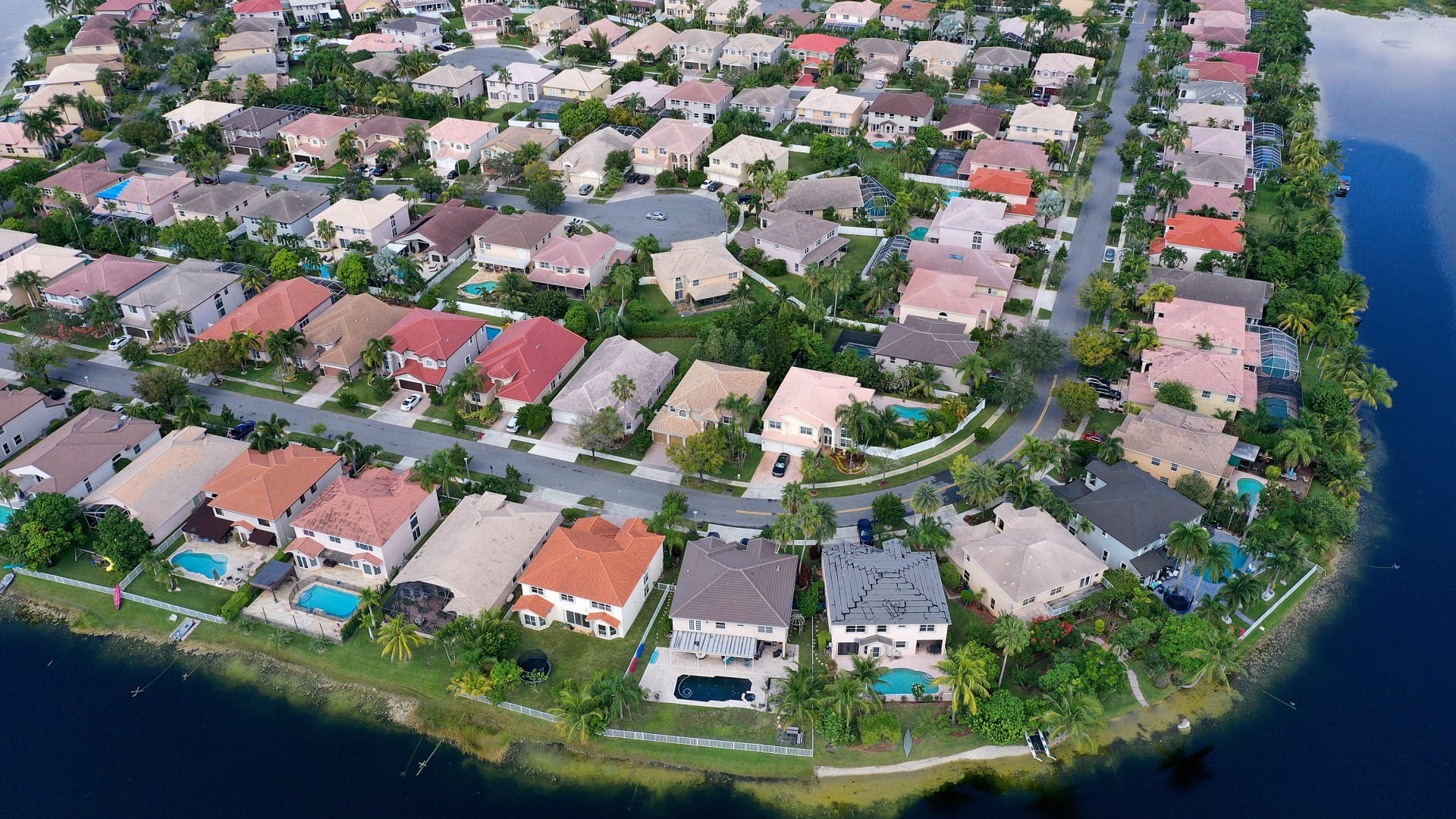
Single-family home in residential area of Miramar, Florida, October 27, 2022.
Joe Radle | Getty Images News | Getty Images
A version of this article first appeared in CNBC’s Inside Wealth newsletter by Robert Frank, a weekly guide for high-net-worth investors and consumers. Sign up to receive future editions directly to your inbox.
Private investment firms for the ultra-wealthy could inadvertently find themselves in the crosshairs of President Donald Trump’s proposed ban on increased purchases of single-family homes by “large institutional investors.” While President Trump’s announcement was aimed at Wall Street landlords, particularly private equity giants like Blackstone, Haynes Boone partner Vicki Odette told Inside Wealth that family offices are not necessarily out of the woods.
Three-quarters of North American family offices invest in real estate, with an average allocation of 18%, according to a study released last year by Camden Wealth and RBC Wealth Management. According to the report, residential real estate accounts for just under a third of the average family office’s real estate holdings.
The outcome of Trump’s proposal will depend on how large institutional investors are defined, which has not yet been made clear. In recent years, Odette said, Congress and government agencies have focused more on the number of homes an investor owns than on their total assets or investment strategy.
The Government Accountability Office’s 2024 report on institutional investors focuses on institutional investors that own 1,000 or more properties with four or fewer units. The Divestment of Predatory Investment Act, introduced in March, lowers the bar even further, with the law naming a “disqualified single-family homeowner,” defined as a taxpayer who directly or indirectly owns 50 or more single-family rental homes.
“There are a lot of wealthy families who inadvertently fall into that category because they were real estate developers and made their money in real estate,” said Odette, a partner at Haynes Boone who advises family offices, funds and institutional investors.
Family offices generally favor multifamily and commercial developments, she said. But there are some family offices, particularly in the South, that have meaningful portfolios of single-family homes in the suburbs and rural areas, she said.
Michael Cole, managing partner of R360, an investment community for billionaires, said it was too early to tell whether the ban would affect family offices. Complicating matters, he said, is the fact that family offices are structured in a wide variety of ways.
“There is no legal entity called a family office. It’s not a corporation, it’s not an LLC, it’s not an FLP,” he said, referring to family limited partnerships. “These are organizations that operate under the concept of a single-family office, but a single-family office is not a legal organization.”
Ariel Frost, a real estate partner at Mr. Withers, said family offices are unlikely to be immediately affected because Wall Street landlords are the main targets. What’s unclear, she says, is whether politicians and lawmakers will continue to target other types of investors.
“A first strike is probably the most important because we need to get support for it and momentum behind it,” she said. “So the question is, is it going to subside? Are we going to say, ‘Okay, now that we’ve satisfied our base, we’re going to move on to other things,’ or is this something that the administration really cares about and is going to continue to focus on?”
