

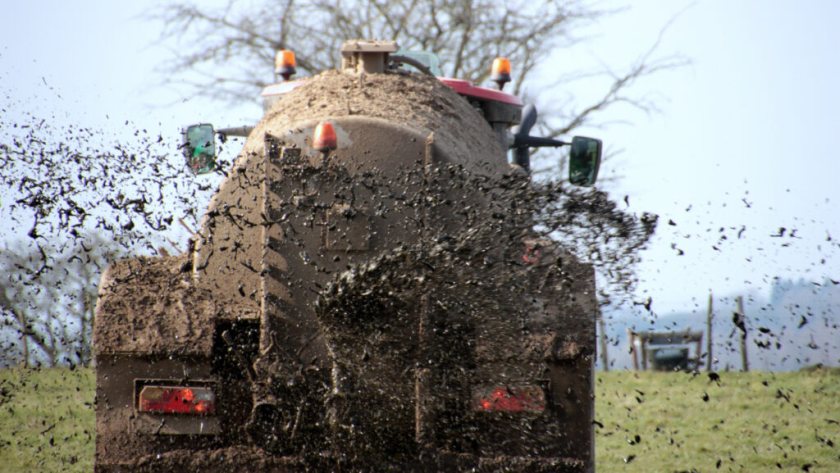
Farmers across Wales have been warned that strict regulations will continue to apply when the organic fertilizer application season resumes, despite the closure period ending this month.
Natural Resources Wales (NRW) said the rules were essential to protect land and water from agricultural pollution, as slurry and other high-nitrogen fertilizers return to fields.
Spraying on grassland will be allowed from January 16th, and on cultivated land from January 31st. However, NRW stressed that the regulations under the Agricultural Pollution Control Regulations will remain in force until the end of February.
Limits include applying no more than 30 cubic meters of slurry or 8 tonnes of chicken manure per hectare in a single application. There should be at least 3 weeks between each application.
Before work begins, farmers should inspect their fields to assess weather and soil conditions, slope, ground cover, and proximity to waterways to reduce the risk of runoff and contamination.
All applications must be planned and recorded within a nitrogen management plan to ensure nutrients meet crop and soil needs and remain within legal nitrogen limits.
Spraying on flooded, flooded, snowy or frozen ground is strictly prohibited. This includes land that has been frozen for more than 12 hours in the past 24 hours.
NRW said its teams will continue to support farmers while carrying out checks to ensure regulatory compliance.
Simon Griffiths, team leader for the NRW Agricultural Pollution Inspection Team, said farmers and contractors should not assume restrictions have been completely lifted.
“As the closure period comes to an end, we would like to remind farmers, tenants, landlords and contractors of the restrictions that remain in place until the end of February,” he said.
“This means anyone considering applying organic fertilizers should ensure that conditions are suitable before commencing work.
“NRW is committed to protecting the environment and all cases of pollution will be investigated and appropriate enforcement measures will be taken.”
NRW is calling on farmers and the public to report pollution incidents immediately, warning that prompt reporting will help limit damage to land, waterways and wildlife.
