

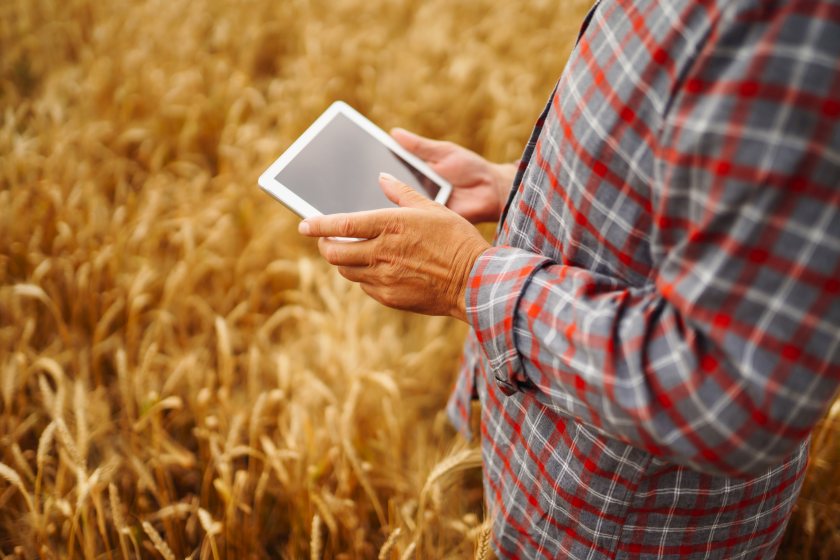
The future of UK farming is at risk unless the industry finally gets serious about sharing and using data, leaders in the food and farming sector have warned, saying profits and progress on climate targets will stall without urgent action.
Speaking at the Map of Ag roundtable in London, NFU chairman Tom Bradshaw, Myton Food Group’s Sophie Throop, Barclays UK’s Kate Hosking and Arla’s Arthur Fearnall said the sector could no longer afford to maintain fragmented, duplicate and inconsistent farm data.
They argued that high-quality information is now essential to run efficient businesses, reduce emissions and demonstrate environmental performance to supply chains and financiers.
They said the path forward must be built on three non-negotiables: cooperation across the food system, common metrics that everyone recognizes, and farmers leading the agenda rather than being dictated to.
They emphasized that improved data quality can deliver real, immediate value to farms by reducing red tape, reducing duplication, improving herd and crop performance, and helping to free up finances.
However, the committee acknowledged that the industry is still uncertain about what “good quality” data actually looks like. Throop said the department “did a lot of measurements” but some of them were not reflected in “decisions and actions on the farm.”
She pointed out that farms already have strong data sets and technology, including AI, could reduce emissions to meet the UK’s climate targets, while reducing data collection.
She also called for a trusted, independent center for farm data management to rebuild trust and encourage broader sharing.
Bradshaw cautioned that information is only useful when it is combined and analyzed. “Data has no value in and of itself unless it is collected, collectively analyzed, and used to inform change,” he said. He added that farmers need confidence that “there is a purpose and a reward for providing information.”
One of the biggest complaints raised was duplication, with farmers repeatedly demanding the same figures under different schemes. Fiernal said producers should be able to “enter data once and let it flow where it needs to go,” adding that the industry “cannot afford to waste time duplicating efforts.” He cited the Dairy Roadmap as proof that unified metrics can deliver real environmental benefits.
Mr Hosking highlighted how robust data has become critical to securing public finances. She said clear and consistent indicators are essential to support farmers through the transition to more sustainable systems. “Finance is key to supporting farmers’ transition,” she said, adding that reliable data will help ensure farmers are properly compensated for their improvements.
Speakers reiterated the need for farmers to shape the criteria by which their emissions and sustainability performance is judged. Duncan Lawson, from the European Food and Agriculture Partnership, said producers should come together and set their own indicators. “This is about putting farmers in control of their own destiny,” he said.
The committee warned that if action is delayed, the sector could face a heavier reporting burden, conflicting supply chain demands and reduced access to investment. “This is not a debate about which methodology is perfect,” Hosking says. “The key is to agree on what is important, act on it, and build trust in the process.”
Throop said momentum will depend on breaking down silos between governments, food companies, finance and farmers. With common metrics and strong farmer leadership, the industry can build systems that deliver “productivity, profitability and environmental stewardship” in the face of rapid change, she said.
Map of Ag, which hosted the event, operates a data platform designed to connect farm and produce information through a secure permissions system that gives farmers full control over how their data is used.
