

For two decades, global energy demand was static and efficiency gains, economic shifts, and renewable growth created an illusion of control.
The narrative was one of managed transition — a straight line from fossil fuels to a cleaner, perhaps simpler, energy system.
Recommended Stories
list of 4 itemsend of list
Energy companies believe that narrative is over.
Addition, not substitution
It’s unusual to see that many security personnel lining the road to Qatar’s convention centre. Enter LNG 2026, and the vast conference centre in Doha is hosting the people who shape the global energy system. Seated on the same stage were Saad Sherida al-Kaabi of QatarEnergy, Wael Sawan of Shell, Darren Woods of ExxonMobil, Patrick Pouyanne of TotalEnergies, and Ryan Lance of ConocoPhillips — leaders of companies that collectively sit at the centre of global energy supply.
Their estimation: The era of demand is here, and the age of gas is accelerating, not fading.
Everything from artificial intelligence, data centres, electrification and population growth are all pulling the energy system to a new scale. The executives say that demand is rising faster than grids, infrastructure, and policy frameworks can adapt.
From oil to energy
Perhaps that is why the industry is changing how it describes itself. These companies no longer frame their future narrowly like “international oil companies” or oil producers. They now talk about being “international energy companies” – a deliberate shift reflecting a broader ambition: to manage molecules, systems, and supply chains in a world with increasing energy demands.

Executives outlined projections that underline how deeply the market is changing. Global LNG demand, currently about 400 million tonnes a year, is expected to reach 600 million tonnes by 2030 and approach 800 million tonnes by 2050, according to the energy executives, and LNG is growing at more than 3 percent annually, making it the fastest-growing fuel among non-renewables, according to their data.
Building for a bigger world
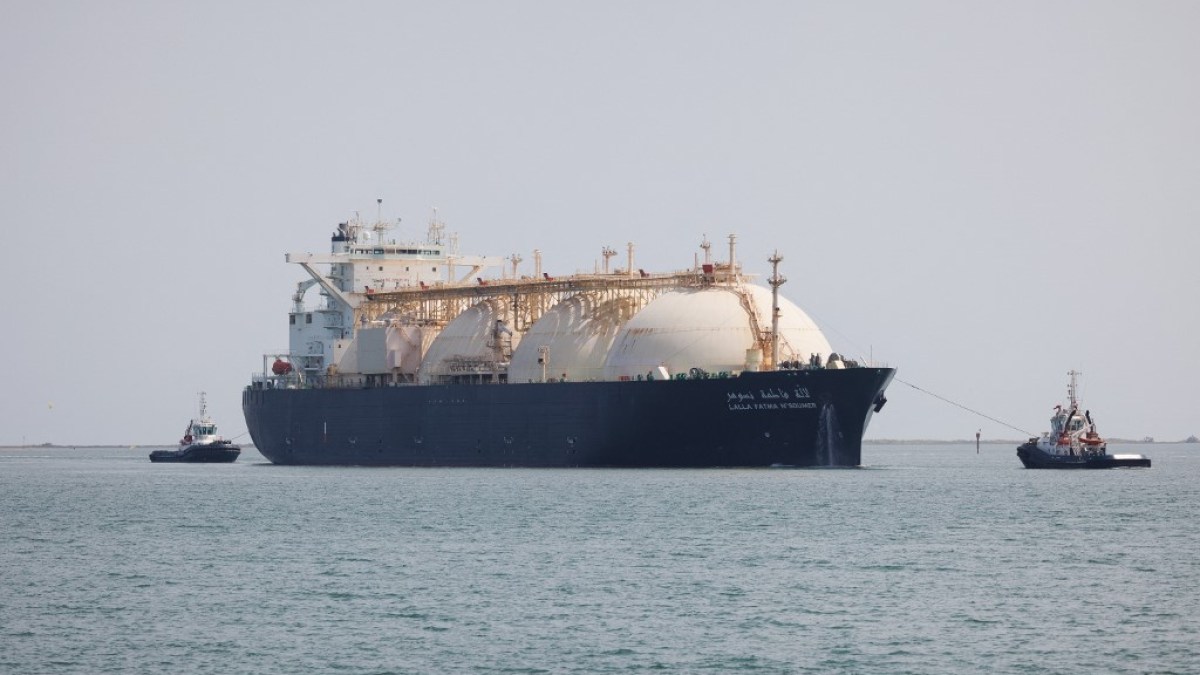
The confidence in Doha was backed by construction on a vast scale. QatarEnergy, under Saad al-Kaabi, is expanding LNG production and assembling a fleet expected to reach about 200 LNG carriers, one of the largest shipping expansions in energy history.
In the United States, ExxonMobil and QatarEnergy are partnering on a new 18 million MMBtu LNG facility, part of a wider North American build-out. Canadian LNG is entering the market, while new supply is emerging from Africa and South America.
These are substantial investments.
As al-Kaabi put it during the discussion: “The world cannot live without energy. People need to be prosperous, and nearly a billion people still do not have basic electricity. We cannot deprive them of growth.”
It is a framing shared across the panel. This is no longer a conversation about replacement, as one executive summed it up, “we are in a world of energy addition, not energy substitution.”
Europe and energy security
The Russia–Ukraine war remains a defining reference point. Europe’s sudden loss of Russian pipeline gas forced a dramatic pivot to LNG. Imports jumped from roughly 50 million tonnes a year to approximately 120 million tonnes, transforming Europe into a major LNG market almost overnight.
What began as crisis management has reshaped global gas flows. LNG delivered flexibility, security, and scale, and for investors, that restored confidence that LNG infrastructure could be strategic.
As new supply comes online, executives expect prices to ease. When that happens, Asian demand, currently constrained by cost, is expected to rebound sharply. Several Asian economies are also shifting from exporters to net importers as domestic reserves decline.
Oil’s quiet re-entry
Two years ago, oil was widely predicted to disappear from the energy mix by 2030. That narrative, too, has faded.
Oil demand has proven resilient, and even gas-focused producers are expanding oil portfolios. Qatar is actively seeking new oil opportunities and remains one of the world’s largest holders of exploration blocks.

The shift is pragmatic. The industry is no longer debating whether oil and gas will be needed, but how they can be supplied at the lowest possible cost and emissions intensity. Several executives noted that many former oil sceptics have quietly reversed course.
AI and the end of low demand
The most urgent driver of change is not geopolitics — it is artificial intelligence.
For nearly 20 years, global energy demand was relatively stable. That period has ended. AI-driven data centres are consuming electricity at a scale planners failed to anticipate. Individual facilities can require thousands of megawatts of constant power, running 24 hours a day, with no tolerance for interruption.
Executives described this moment as a decisive break with the past. After decades of flat demand, the system has entered what they call hyper-scaling mode.
This demand, they say, is inflexible. Data centres cannot wait for weather conditions. They require power that is reliable, dispatchable, and immediate.
When renewables need backup
No one on stage dismissed renewables. Shell’s Wael Sawan and TotalEnergies’ Patrick Pouyanne both stressed their central role in the future mix. But they were clear about limitations.
The executives viewed wind and solar as intermittent and argued that grids built for predictable generation are under growing stress. Recent blackouts and near-misses in highly renewable systems have exposed the consequences of imbalance.
“When the wind isn’t blowing and the sun isn’t shining,” one executive noted, “gas fills the gap.”
Gas turbines remain essential for grid stability. Nuclear takes decades to scale. Batteries are improving but remain limited. Hydrogen is promising, but not yet deployable at the pace required.
Gas, the industry argues, is the only option that can be built fast enough to meet the contemporary surge in demand.
AI: The friction points
But behind the power-hungry AI-driven confidence are real snag lines. Building energy infrastructure has become slower and more complex.
The executives pointed to permitting delays that stretch projects more than a decade. Water and grid connections are major bottlenecks. Skilled labour is in short supply. Community resistance is growing, driven by cost concerns and environmental pressure.
Executives were openly critical of policy frameworks they see as detached from operational reality. Overlapping and conflicting regulations, they argued, raise costs and delay supply.
“The market dictates what can be delivered,” one leader said, warning that governments risk choking the arteries of energy flow.
Sustainability, emissions and the social contract
The industry acknowledges that its future depends on emissions performance. Methane leakage, efficiency, manufacturing footprints, and transport emissions remain under scrutiny. Gas offers immediate reductions where it replaces coal – about 40 percent in power generation and 20 percent in marine fuels. Carbon capture and sequestration is increasingly integrated into new projects.
ExxonMobil’s Darren Woods emphasised the company’s push to be seen as a technology player — working on hydrogen, carbon capture, and new uses for hydrocarbons beyond combustion. They describe this approach as responsible energy addition.
Yet the tension remains. The current demand surge has pushed environmental scrutiny to the background, but executives know that window is temporary. The sustainability of gas in this new role is under intense scrutiny.
While it burns cleaner than coal, its emissions of CO2 and methane, along with the transport footprint of LNG, remain central to the climate debate. Industry leaders acknowledge that gas must evolve to maintain its social licence. The CEO of QatarEnergy emphasised delivering energy “in the most environmentally responsible manner”.
There is awareness that the current surge in demand has sidelined environmental concerns, but these questions will resurface forcefully once the immediate capacity crisis abates. The gas industry risks a fate similar to coal if it fails to accelerate its decarbonisation efforts through carbon capture, utilisation, and storage (CCUS), and the integration of low-carbon gases, such as hydrogen.
Inclusive not mutually exclusive
The dynamic with renewables and emerging technologies adds another layer of complexity. Executives recognise that, for many regions, building new infrastructure, renewables are the cheapest and easiest option.
The role of gas, therefore, is evolving from a baseload provider to a “complementary load-following role,” essential for balancing grids increasingly saturated with variable wind and solar power.
The advancement of battery storage technology also looms as a potential competitor for this grid-balancing role. The future energy mix is envisioned as abundant, accessible, reliable, and clean, but the path is uncertain.
Investments in hydrogen and ammonia are continuing, though with fluctuating levels of hype, indicating a sector in search of the next breakthrough.
The human connection
Strip away politics and technology, and the core driver is human. Roughly five billion people still consume far less energy than developed economies. To paraphrase QatarEnergy’s al-Kaabi: Prosperity requires power.
Removing energy poverty means adding supply – reliable, affordable supply – at unprecedented scale. That is the context in which the energy company executives are positioning gas: not as a bridge, but as a stabiliser. Energy producers are betting that global demand – supercharged by AI and economic ambition – will outpace the ability of renewables alone to carry the load.
They are building for a world that they say cannot afford shortages, blackouts, or theoretical purity. Gas, they believe, is not a bridge, but the foundation to weather the storm of demand.
And its future will be defined by a simple metric: Can the system deliver abundant, accessible, reliable, and progressively cleaner energy?
