

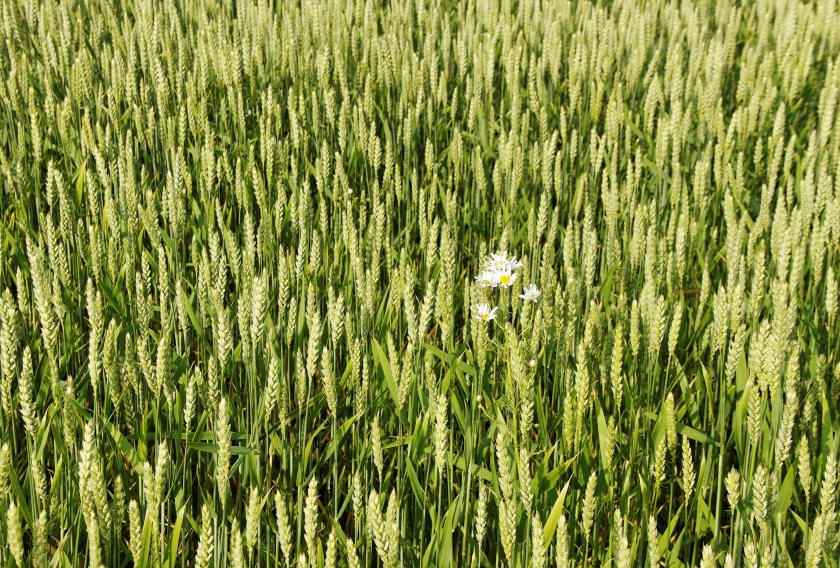
Heatwaves that hit wheat crops during flowering could reduce global yields far more severely than droughts in the future, scientists have warned.
New research suggests that short periods of extreme heat and drought during this critical stage of development could become one of the biggest threats to wheat production in coming decades.
Flowering is the stage in which wheat sets grain and is very important in determining final yield and overall yield.
The Rothamsted Research study used advanced climate forecasts alongside the Sirius Wheat Model to assess how future extreme weather events will impact wheat yields around the world.
As climate change causes heat waves to become more frequent and intense, farmers face increased uncertainty over crop performance during critical growing seasons.
Dr Mikhail Seminov, a mathematical modeler and honorary research fellow at Rothamsted Research Institute, said flowering was a particularly vulnerable stage.
“Flowering is one of the most sensitive stages in wheat development. It is when the plant sets fruit, which ultimately determines yield,” he said.
“Even a few days of very high temperatures or severe water stress at this stage can reduce grain numbers and significantly reduce final yields.”
The findings indicate a major shift in the risk balance.
Currently, drought during flowering causes more yield losses than heat. The researchers stressed that while drought remains a major threat, extreme heat is increasing rapidly and is expected to have a greater long-term impact.
In contrast, thermal stress during this grain formation period is predicted to be more damaging. By 2050, global yield losses associated with extreme heat during flowering could increase by about one-third.
By 2090, these losses could increase by more than three-quarters, underscoring the scale of the challenge facing wheat producers around the world.
Researchers predict that heat-related yield losses will accelerate sharply from mid-century onwards as extreme temperatures become more common.
Although the study focuses on global production, UK producers could also face greater risks as summer heat intensifies across Northern Europe.
Professor Malcolm Hawksford, Rothamsted Research’s ‘Sustainable Wheat Provision’ Institute Strategic Program Leader, said the results underlined the importance of crop breeding for future conditions.
“Modeling studies of this type provide important information and guidance on which traits to breed now in preparation for projected future climate conditions,” he said.
This study highlights the need for farmers to select varieties with improved tolerance to both heat and drought, and to consider sowing dates and management strategies that reduce the likelihood that flowering coincides with maximum temperatures.
Producers may need to stay informed through seasonal forecasts and local climate trends, and place greater emphasis on soil moisture conservation and irrigation planning where possible.
As global demand for wheat continues to increase, protecting yields under changing weather patterns is essential for long-term food security.
This study suggests that the future of wheat production may depend on whether the crop can adapt to heat stress during its most vulnerable period.
