

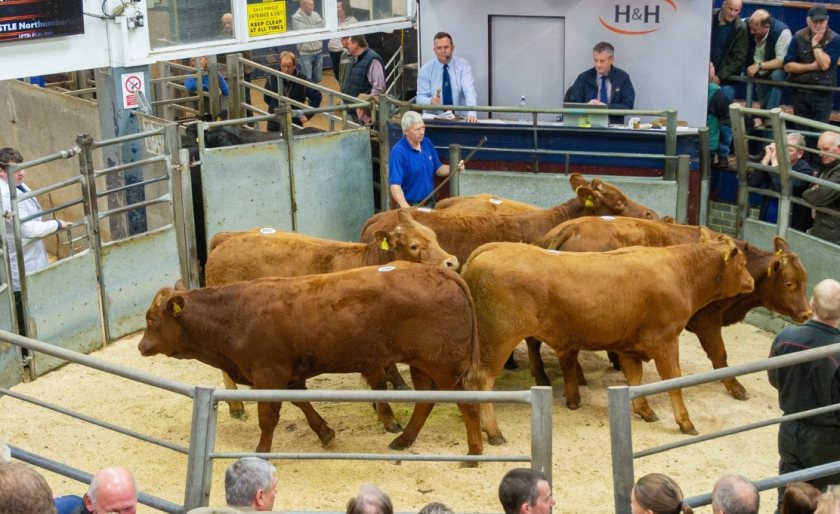
The Livestock Auctioneers Association says tight livestock supplies and competitive prices are creating valuable opportunities for producers as the industry faces 2026.
LAA said the live auction market continues to support strong sheep and cattle values as declining livestock numbers, reduced government support and land use changes reshape the sheep and cattle sector. Auctioneers report that competitive bidding in live rings remains central to price discovery and farm profitability.
“The highly competitive live auction market continues to support high prices,” LAA Executive Director Chris Dodds said. He added: “Livering remains the most effective environment for achieving true market value, with competitive bidding consistently driving prices higher than the direct supply chain.”
Inventories are tight in many regions as producers downsize, environmental programs provide alternative sources of income, and fewer farms expand herds and herds. Although this raises concerns about future supply, LAA said this is helping to keep prices strong in the short term.
“Reducing the number of animals in the system maintains strong values and creates opportunities for those animals that are still actively producing,” Dodds said.
Alastair Brown, head of policy and strategy at the LAA, said competitive tensions in the live market continued to impact on a wide range of trading. “Everyone in the ring is competing for the best price, and that competitive tension is what creates value,” he said, adding, “The live market sets the benchmark and deadweight prices follow.”
He said with limited government support available, farmers were increasingly reliant on securing the highest possible prices through free competition.
The LAA warned that in addition to market trends, tax and policy pressures are increasingly influencing corporate decision-making. The association welcomed the budget decision to allow an inheritance tax threshold of £2m between spouses, but said it did not go far enough to protect family farms.
According to the LAA, many companies are now exceeding the threshold purely due to land prices, discouraging retirements and limiting opportunities for new entrants. Many auctioneers are also qualified land agents and are playing an increasing role in valuations, succession planning and providing specialist advice.
Animal health also remains under pressure. Following the easing of bluetongue restrictions on 10 November, England and Wales now operate as a single bluetongue BTV-3 restricted area, allowing cross-border trade after months of disruption.
While losses have remained minimal, auctioneers stressed the importance of evidence-based veterinary advice and continued vigilance as temperatures rise over the coming year.
Regional reports point to a widespread recovery in trade. In the UK, Stephen Dodsworth of Darlington Farmers Auction Mart said cattle supplies remained tight, mainly due to the decline of traditional mountain rearing systems and continued cost pressures.
He said the sheep trade had softened recently due to an oversupply of heavy lambs and a shortage of animals for export, adding: “The oversupply of heavy lambs is pushing prices down and trade is likely to remain flat.”
In Wales, McCartney partner and Wales LAA chairman Katie Davies said lamb prices had remained strong throughout the year, supported by tight supply, but demand for cattle continued to outstrip supply of calf rings.
He said the early-season drought had helped lambs finish earlier and maintain a more controlled autumn supply, and welcomed the easing of regulations for bluetongues, while warning disease and weather remained key risks.
The LAA said access to transparent and competitive markets will become increasingly important as environmental change, disease threats and tax pressures combine.
“With stock prices falling and uncertainty rising, live auction systems are proving their worth,” Dodds said. “While the industry faces challenges, there are also real opportunities and our role is to help farmers, markets and rural communities make the most of them.”
