

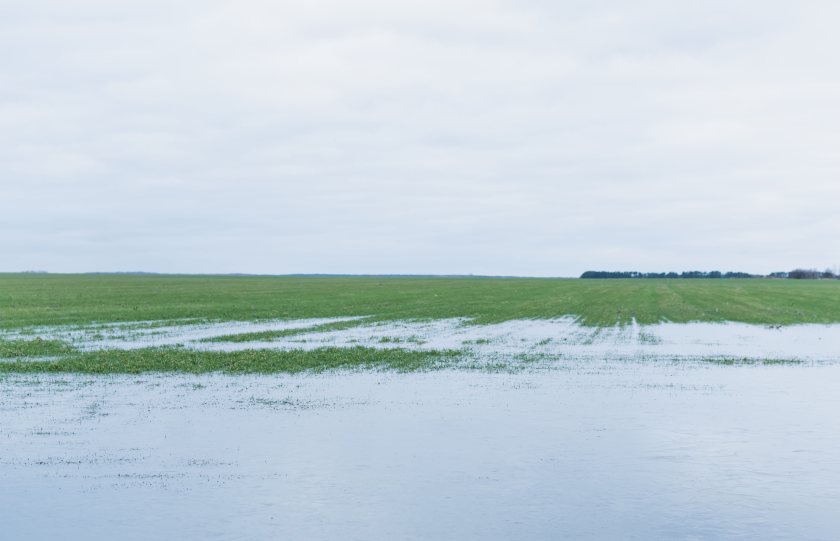
Slurry tanks across Northern Ireland are rapidly filling up after 28 consecutive days of rain, leaving many farmers with no room to spread out safely and increasing pressure to comply with environmental rules.
The Ulster Farmers’ Union (UFU) has warned that soil saturation is making slurry spread dangerous in many areas, severely restricting nutrient management and straining storage capacity on farms already operating close to capacity.
The UFU has called on the Department of Agriculture (DAERA) and Stormont Ministers to recognize the situation and demonstrate practical flexibility, as compliance requirements remain unchanged despite continued rain.
The union said farmers are committed to protecting water quality and adhering to regulatory standards, but stressed that persistent weather events are creating real operational and welfare concerns.
It also highlighted long-term infrastructure challenges, arguing that while many producers would like to invest in additional slurry storage facilities to increase resilience, planning constraints make this difficult.
UFU vice-chairman John McClenahan said the current situation was putting a huge strain on farming operations.
“We recognize that many farmers are under strain at the moment,” he said.
He advised farmers facing storage pressure to seek guidance and exercise caution.
“If storage capacity becomes a welfare concern or an issue arises, farmers should contact their UFU technical director for advice and guidance and, if ground conditions permit, farmers should use their judgment to identify fields suitable for slurry application, but only if it can be done safely.”
He confirmed that the issue had been raised directly with the Minister.
The UFU seeks regulatory understanding in situations where prolonged rainfall eliminates opportunities for safe dispersal, particularly in situations where welfare and storage pressures increase.
McClenahan acknowledged that seasonal improvements could provide some relief.
“While we continue to have tough days, the trend is for longer daylight hours, improved soil temperatures and hopefully drier weather,” he said.
“Farmers are resilient and committed to doing the right thing, and with practical support they will get through this period.”
The union said it will continue to work with DAERA and the Northern Ireland Environment Agency to ensure the rules continue to work despite continued adverse weather conditions, while protecting both environmental protection and sustainable food production.
With more rainfall expected in parts of the state, pressure on slurry storage is unlikely to ease anytime soon, with continued focus on regulatory flexibility and long-term infrastructure solutions.
