

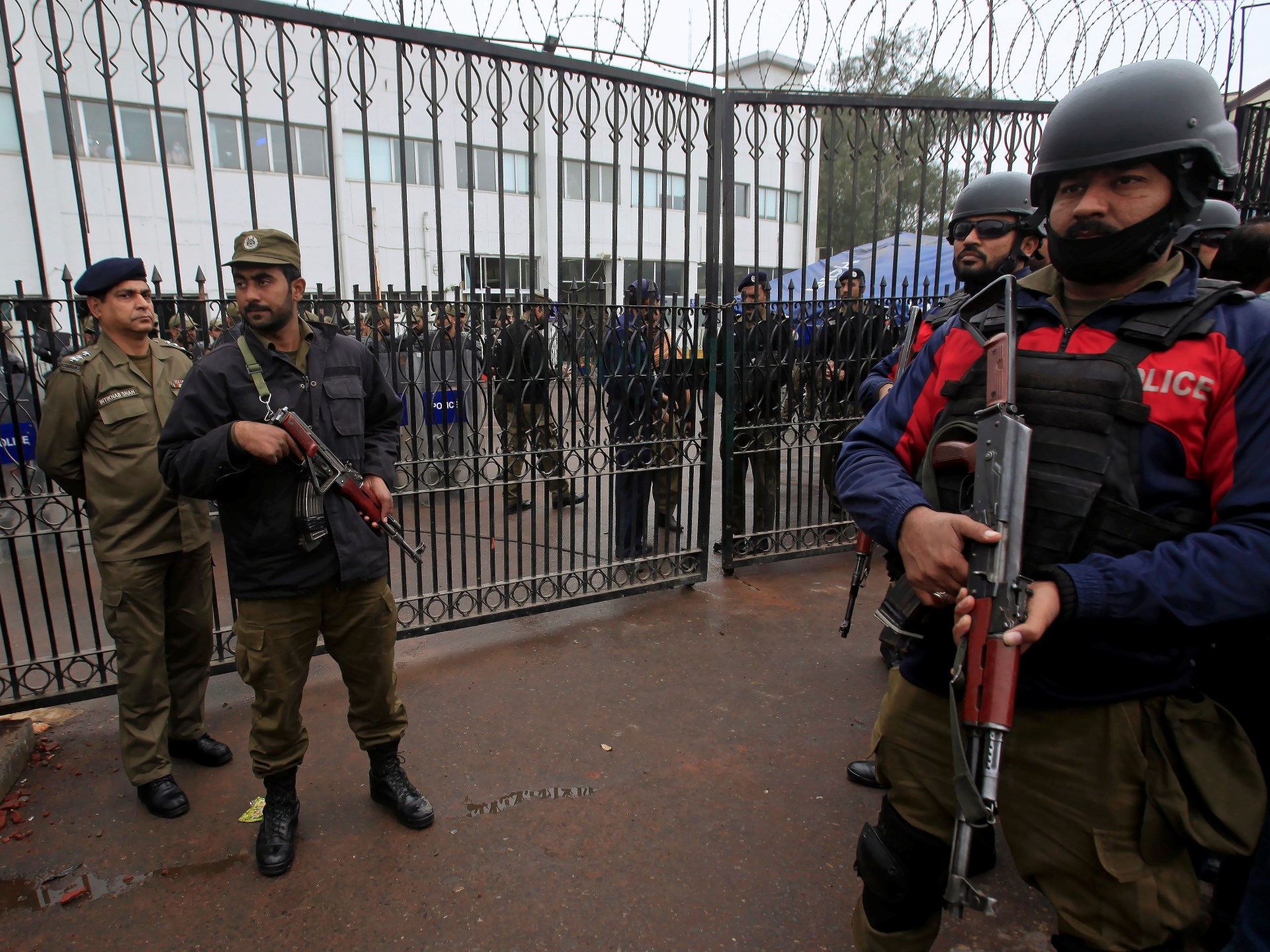
ISLAMABAD, Pakistan – When armed officers from the Pakistan Crime Control Bureau raided Zubaydah Bibi’s home in the southern Punjab city of Bahawalpur in November last year, they took everything including her mobile phone, cash, gold jewelry and her daughter’s wedding dowry. They also took her sons.
Within 24 hours, five members of her family were killed, killed in separate “police encounters” in different districts of Pakistan’s Punjab province (this province alone is home to more than half of the country’s population).
Her sons Imran, 25, Irfan, 23, and Adnan, 18, and two sons-in-law were among them.
“They entered our house in Bahawalpur and took all our belongings,” Zubaydah told a fact-finding mission from the Human Rights Commission of Pakistan (HRCP), Pakistan’s largest rights organization.
“We followed them to Lahore and begged them to release their sons. The next morning, five of them were dead,” she added.
Later, when she filed a legal petition, Zubaydah said police threatened to kill whoever remained in her family unless she withdrew the petition.
Her husband, Abdul Jabbar, claims his sons had no criminal history. “They were working, married and had children,” he says.
The family’s testimony is at the center of HRCP’s explosive fact-finding report released on February 17, which concludes that the Punjab Crime Control Department (CCD) is pursuing what it calls a “systematic policy of extrajudicial killings in violation of the law and the Constitution.”
HRCP recorded at least 670 “encounters” between April 2025, when the unit was formed, and December 2025, resulting in 924 suspected deaths.
The CCD was formally established in April last year and was tasked with combating serious organized crime.
But HRCP describes this as a “parallel police” operating with virtual impunity, and links it to a surge in encounter killings that has sparked debate over the state’s obligation to protect the rule of law and the right to life.
HRCP director-general Farah Zia said Punjab is historically where encounter killings first took root in the 1960s, in part because of “the existing police culture of impunity for torture.”
She said the practice later spread to other states. The HRCP’s annual Human Rights Situation Report documents hundreds of police encounters each year elsewhere, particularly in Sindh.
“It is not helping the problem that governments have chosen to apply such short-term, unsustainable and illegal measures to curb crime, rather than investing in better forensic technology, community-based policing and more effective prosecutions,” Zia told Al Jazeera.
New forces, rapid growth
Under Punjab Chief Minister Maryam Nawaz Sharif, CCD was established with the stated objective of assisting the state government in realizing its ‘Safe Punjab’ vision.
This is a specialist unit aimed at tackling serious organized crime, inter-district gangs and serious criminals that regular police have a hard time dealing with.
Maryam, the daughter of three-time prime minister Nawaz Sharif and niece of current prime minister Shehbaz Sharif, belongs to the Pakistan Muslim League-Nawaz Party.
Within weeks of the formation of the CCD, a sustained increase in the number of police encounters was recorded across Punjab. More than 900 suspects were killed in eight months. During the same period, two police officers were killed and 36 others were injured.
In comparison, HRCP’s 2024 annual report recorded that 341 suspects died in encounters during the year in Punjab and Sindh combined. CCD is active in one state and has more than doubled its losses in less than eight months.
Lahore had the highest concentration of killings with 139, followed by Faisalabad with 55 and Sheikhupura with 47.
The most frequently killed suspects were dacoity suspects (366). Of the deaths, 114 were drug-related suspects, 138 were robbery suspects, and 99 were charged with murder.
familiar script
The commission describes how CCD teams typically apprehend suspects, based on multiple police reports filed after a killing. The suspects are described as almost always riding motorcycles and moving “suspiciously”, usually at night or behind barricades.
The suspects allegedly reacted aggressively and fired first, forcing police to act in self-defense. During the exchange, the suspects are punched and their accomplice flees “taking advantage of the darkness.”
HRCP has noted what it calls “strikingly similar” language in a number of FIRs, including a statement in which an injured suspect briefly regains consciousness and voluntarily provides his full name, parentage, home address and criminal record to the shooting officer shortly before his death.
The committee found that the same phrases appeared across districts, dates, and crime charges, suggesting “copy-and-paste structuring rather than incident-specific coverage.”
Official police media releases issued after each encounter and circulated to crime reporters via WhatsApp groups also often reproduce the same sequences almost verbatim, highlighting the suspected criminal history of the deceased while omitting procedural details.
Asad Jamal, a Lahore-based human rights lawyer who has worked on encounter cases for years, said Prime Minister Maryam Nawaz’s repeated claims that crime in Punjab is on the decline suggests that this approach reflects policy-making at the highest political level. He expressed skepticism about the prospects for accountability.
“They seem to think that a decline in crime rates will justify resorting to ‘extrajudicial killings’ rather than improving investigative techniques, improving law enforcement resources and improving intelligence,” Jamal told Al Jazeera.

What the government and police say
In fact, according to HRCP, in court filings, the CCD claims that its operations have reduced property crimes by more than 60 percent over a seven-month period compared to 2024, and dacoity-related murders have decreased by a similar amount.
The department says it is following an “intelligence-led policing model” that has dismantled notorious organized gangs.
The commission dismissed HRCP’s concerns, citing a lack of evidence of extrajudicial killings.
HRCP counters that even if crime numbers have fallen, the method is important. The commission argues that whether crimes are dealt with through investigation, prosecution and judicial proceedings, or through summary executions, goes to the heart of what kind of state Punjab aspires to be.
The commission said families reported being told to immediately bury the deceased before an independent post-mortem examination was conducted.
HRCP said it had requested materials on encounter procedures from the Punjab Police but had not received any data, and that written requests for meetings with senior police officers and state officials went unanswered.
Al Jazeera also repeatedly contacted Punjab Police officials, including the CCD, Information Minister Asma Bokhari, and Senior Minister Marriyum Aurangzeb, but received no response.
A former senior Punjab Police official who retired in the 2010s said there were two main factors behind the rise in encounter killings: an overburdened and often corrupt judiciary and political pressure to show control over crime.
Court delays and weak prosecutors are “creating dissatisfaction between the public and the police, and are beginning to justify shortcuts such as extrajudicial killings,” he said.
“The political government controls crime and wants to be seen as violating due process. This approach also encourages police to resort to extrajudicial killings, knowing that there is no accountability for such actions,” the official told Al Jazeera on condition of anonymity.
Ten years of encounters
According to HRCP’s annual report, there have been nearly 5,000 encounters across the country in the past 10 years up to 2024, with nearly 2,000 in Punjab alone.
Between 2020 and 2023, the number of encounters in Punjab remained below 400 per year, suggesting a persistent but relatively stable baseline.
However, in 2024, that number jumped to 1,008, more than three times the number from the previous year. The latest report records an overall decline in the number of encounters, but a significant increase in deaths.
HRCP and independent monitors have repeatedly characterized many such incidents as staged or fake encounters, in effect extrajudicial killings in which suspects are executed rather than arrested.
Lahore-based lawyer Rida Hossain said encounter killings and extrajudicial violence are “remains of colonial structures and military dictatorships” that treated citizens as subjects rather than individuals entitled to a fair trial and due process.
“While the Punjab government frames these measures as a path to ‘zero crime,’ in reality they appear to be institutionalizing another form of crime, namely state-sanctioned crime. Once state-sanctioned violence becomes the norm, it is rarely confined to alleged ‘criminals,'” Hossain told Al Jazeera.
“While the government may claim that the hundreds of people killed were ‘criminals,’ guilt should be determined through due process, not summary execution. If this violence is left unquestioned, tomorrow’s targets could be dissidents, or even innocent bystanders labeled ‘criminals’ to justify killings with impunity,” she added.
