

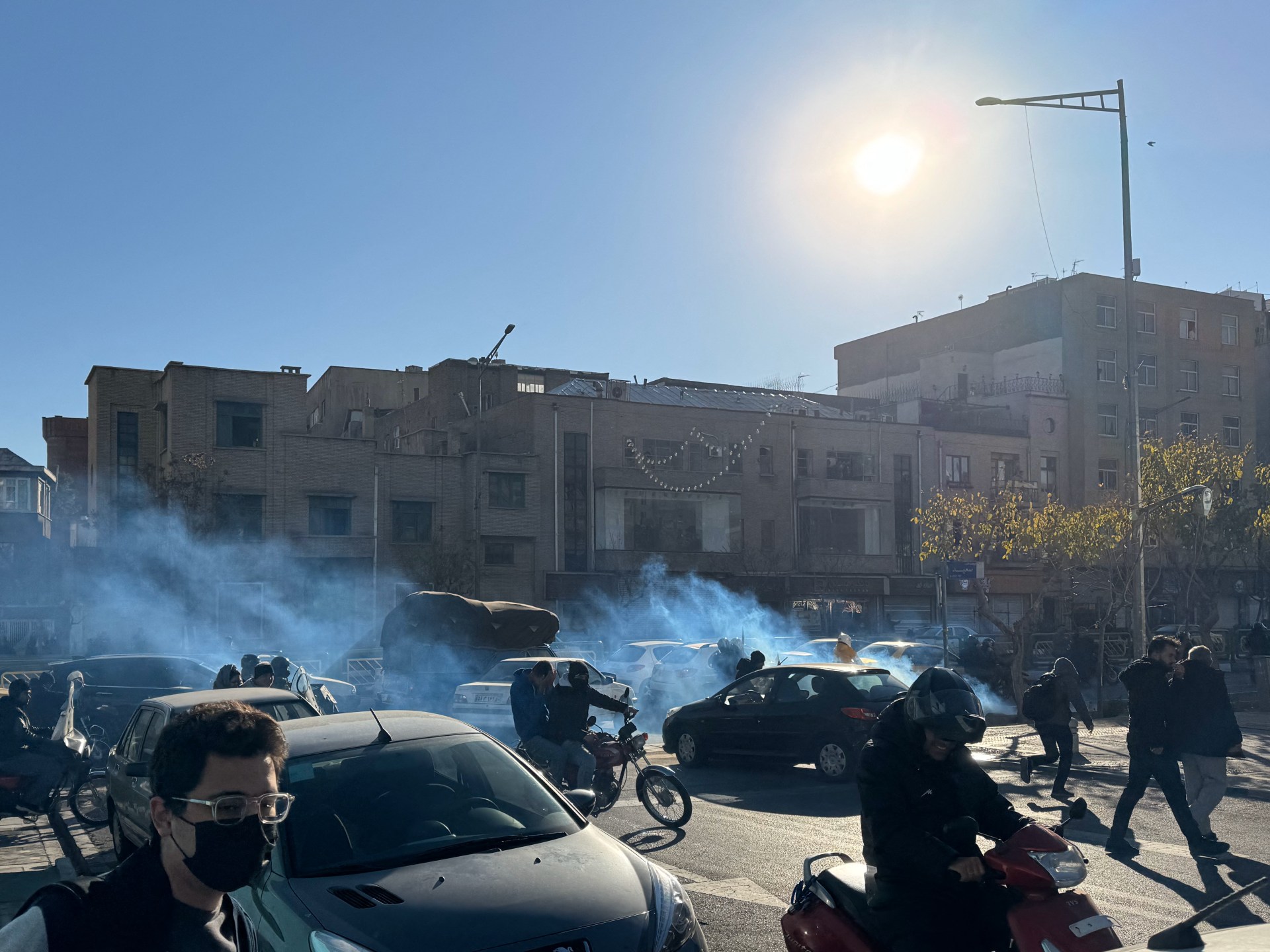
Iran’s president has acknowledged protesters’ “legitimate” grievances about inflation and is seeking to calm tensions.
At least five people have been killed as demonstrations over the rising cost of living in Iran spread to more parts of the country.
At least three people were killed and 17 injured in protests in the city of Azna in Lorestan province, about 300 kilometers southwest of Tehran, Iran’s semi-official Fars news agency reported on Thursday.
Recommended stories
list of 3 itemsend of list
Videos shared online showed objects in the street ablaze and gunshots rang out as people chanted “Shameless! Shameless!”
Fars earlier announced that two people were killed during protests in the city of Loudegan in Chaharmahal-Bakhtiari province, about 470 kilometers (290 miles) south of the capital Tehran.
“Some protesters started throwing stones at the city’s administrative buildings, including the governor’s office, the mosque, the Martyrs’ Foundation, City Hall, and banks,” Fars said, adding that police responded with tear gas.
Online videos showed demonstrators gathering in the streets with gunshots in the background.
Earlier on Thursday, Iranian state television also reported that a member of the security forces was killed overnight during protests in the western city of Qudasht.
“A 21-year-old Basij member from Kowdasht was killed by a mob last night in order to protect public order,” the station said, quoting Said Prali, deputy governor of Lorestan province.
The Basij is a volunteer army affiliated with the Islamic Revolutionary Guards Corps (IRGC).
The report comes days after shopkeepers began protests on Sunday over the government’s handling of the currency depreciation and sharp price hikes.
The unrest comes at a critical time for Iran, whose economy has suffered 40% inflation due to Western sanctions and following Israeli and U.S. airstrikes in June that targeted the country’s nuclear infrastructure and military leadership.
Al Jazeera’s Tohid Asadi, reporting from Tehran, said the government was taking a more measured approach to this week’s protests than previous demonstrations.
“The government says it is working hard to find solutions to address the economic hardships people are feeling,” Assadi said.
The last major demonstrations in Iran were in 2022 and 2023 following the death of Mahsa Amini, a 22-year-old woman who died in police custody after being arrested on suspicion of violating a strict dress code for women.
The latest protests started peacefully in Tehran and expanded on Tuesday with students from at least 10 universities taking part.
Iranian President Masoud Pezeshkian has sought to calm tensions by acknowledging the “legitimate demands” of protesters and calling on the government to take action to improve economic conditions.
“From an Islamic point of view…if we don’t solve the problems of people’s livelihoods, we will go to hell,” Pezeshkian said in an event broadcast on state television.
Government spokeswoman Fatemeh Mohajerani said on Thursday that authorities would hold direct talks with trade union and shop representatives, although she did not provide further details.
Still, authorities vowed to take a “firm” stance and warned against exploiting the situation to sow chaos.
Iran’s prosecutor general said on Wednesday that “any attempt to turn economic protests into a means of insecurity, destroy public property or carry out externally planned scenarios will inevitably be met with a legal and proportionately firm response.”
Meanwhile, Tasnim news agency reported on Wednesday evening that seven people were arrested as affiliated with “groups hostile to the Islamic Republic based in the United States and Europe.”
Iran is in the midst of a long weekend, with authorities declaring a public holiday on Wednesday at the last minute, citing the need to conserve energy due to the cold weather.
