

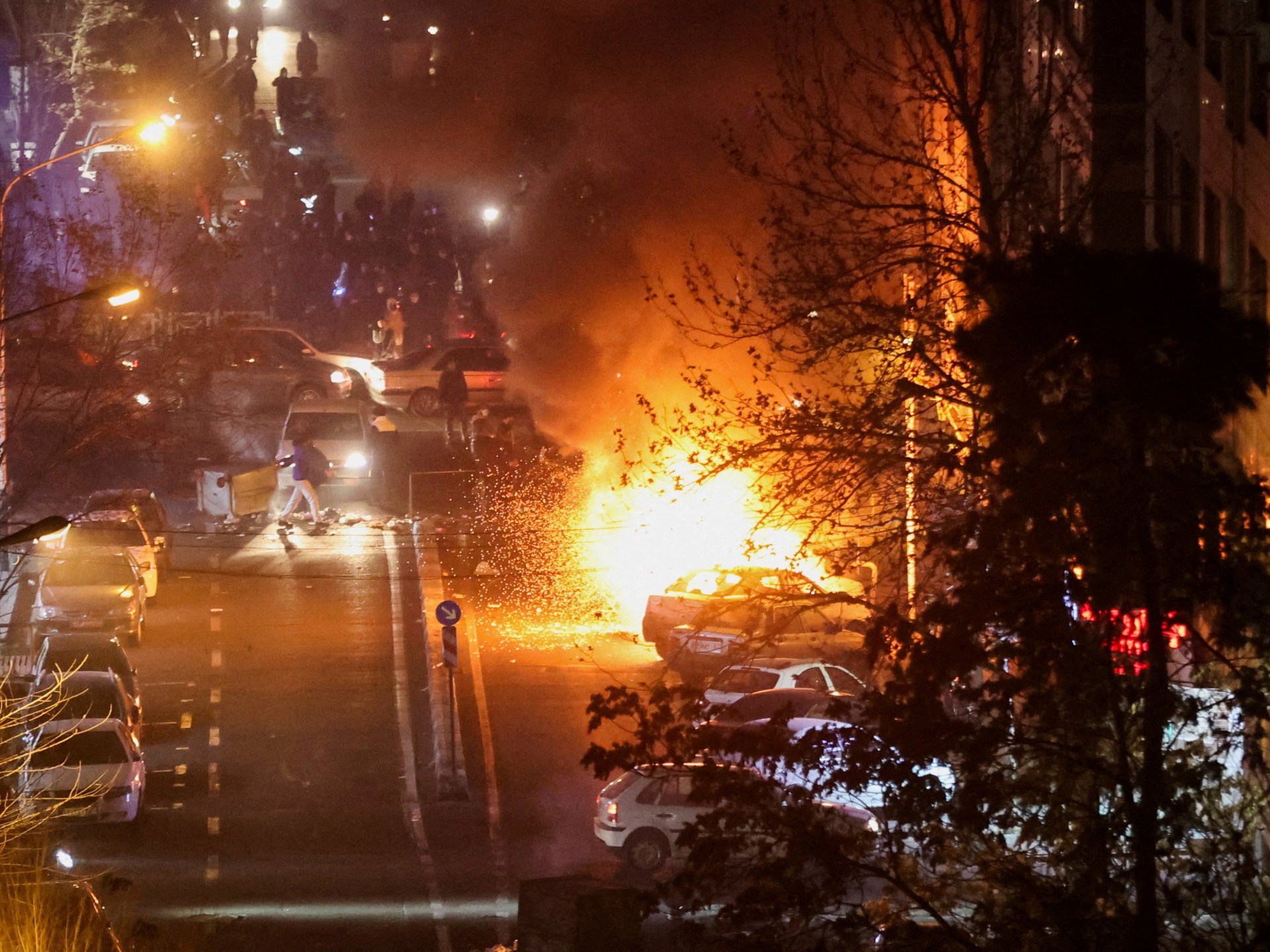
TEHRAN, Iran – Amid growing calls for accountability, Iranian authorities have launched an online portal for people to report the names of loved ones missing from the government list of thousands killed in recent nationwide protests.
Authorities said 3,117 people were killed in anti-regime protests that began in late December, denying statements by the United Nations and international human rights bodies that state forces were behind the killings, which took place mainly on January 8 and 9.
The US-based Human Rights Defenders News Agency (HRANA) said it had confirmed 6,872 deaths and was investigating more than 11,000 other cases. The UN special rapporteur said the death toll could exceed 20,000 as information trickles out despite strict state internet filtering.
On Sunday, the government of President Massoud Pezeshkian released the names of 2,986 Iranians confirmed to have been killed during the protests. The remaining 131 people have not been identified and a supplementary list will be released at an undisclosed time, it said.
The list includes the full names of those killed, their father’s first name and the last six digits of their 10-digit national identification number. It does not elaborate on where, when, how or by whom the killings occurred, and avoids further classification, such as distinguishing between protesters and heavily armed state forces.
Since the list was published, many Iranians have reported on social media that the names of people identified by family and friends as killed during protests have been omitted. The register also contained numerous repeating entries with matching names and national identification codes.
Late Tuesday, the government launched a website where people can report the names of loved ones missing from the list. However, it was unclear when potential updates would be made to add names and clarify errors and ambiguities.
They were also asked to report violations, including authorities demanding money to retrieve the body of a loved one and refusing to provide life-saving medical care to injured protesters.
The government has consistently denied all reports of illegal actions by state forces, including attacks on hospitals and arrests of medical personnel who assisted protesters.
It also announced the creation of an internal fact-finding mission, as it defies U.N. mandates on the issue, but gave no details on who its members would be or when its findings would be made public.
In an apparent attempt to appease the families of the victims and the grieving nation, a government statement on Sunday said: “The victims of recent events and unrest are all children of this land, and none of their families should be abandoned in silence and helplessness.”
But this message stands in stark contrast to daily comments from political, military and law enforcement officials, including Mr. Pezeshkian, who claim that “terrorists” were behind the “riots” and were armed and financed by the United States and Israel.
Additionally, in late January, the Iranian Martyrs Foundation announced that 2,427 of the dead, including civilians and security forces, were “innocent.” The numbers suggest the remaining 690 people killed may have been classified as “terrorists”, as state officials referred to them, but that is less clear.
The government’s list of names was published in full text and in small print on the front page of two newspapers, with the morning edition of Payamwe Ma using the heading “Deceased” to refer to the victims.
Government spokesperson Fatemeh Mohajerani held a press conference on Tuesday where she was reprimanded by journalists, footage of which has been widely shared online.
Ham Mihan journalist Parisa Hashemi, who is currently facing legal charges for reporting on the protests, reminded reporters that Iran suffers from corruption, poverty, an energy crisis, a water crisis and chronic air pollution.
“Now we hear that the ‘enemy’ disrupted protests in our country, spilled rivers of blood and committed genocide. There is no doubt that those who opened fire on our youth, children, women and men are enemies of this country,” she said, noting that no official has resigned in the aftermath.
“If this were happening in any other country, the officials there would either die of shame or commit suicide for honor,” Hashemi said.
In response, Mohajerani smiled and said journalists were making statements, not questions, and reiterated the line that “hope” is important for any society.
The state-run IRNA news agency did not include the three-minute section of journalists’ comments when it published a recording of the press conference on its website.
Meanwhile, famous actress Elnaz Shekerdoost announced in a bloody handwritten statement on Monday that she is retiring from the Iranian film industry due to the killings caused by the protests.
“I will never again play any role in this blood-scented soil. This is my main role,” she wrote, also stating that she would boycott the Fajr International Film Festival.
The state-run festival opened this week amid a boycott of artists and the general public, with some of the directors and actors who attended slamming the absentees.
Film director and screenwriter Mohammad Hossein Mahdavian faced backlash online after he called the boycotters “cowards” and said he was glad he didn’t have to hire “a bunch of scary stars” to screen his state-funded film at the festival.
