

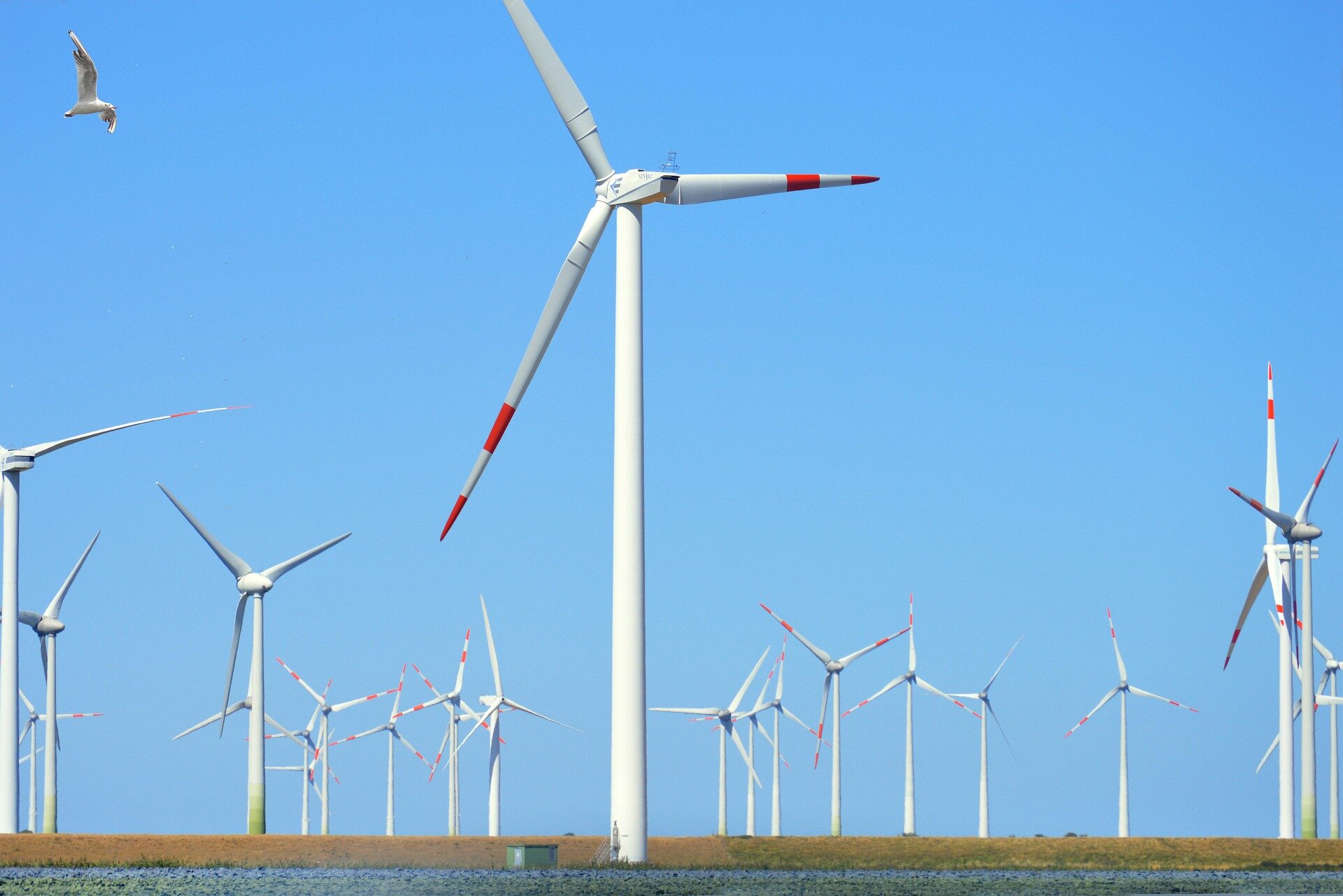

Credit: Pixabay/CC0 Public Domain
You might not know it from the headlines, but there is some good news regarding the global fight against climate change.
Ten years ago, the cheapest way to meet growing electricity demand was to build more coal or natural gas power plants. No more. Solar and wind power aren’t just good for the climate; They are also cheaper today on a utility scale than fossil fuels and are less harmful to people’s health.
But renewable energy projects face headwinds, including in the world’s fastest-growing developing countries. I study energy and climate solutions and their impact on society, and I look at how to overcome those challenges and expand renewable energy, which requires international cooperation.
Decline in clean energy prices
As the technologies mature, solar and wind power have become cheaper than coal and natural gas for utility-scale power generation in most regions, largely because the fuels are free. Global electricity generation from renewable energy saved US$467 billion in fuel costs in 2024 alone.
As a result of falling prices, more than 90% of all electricity generation capacity added worldwide in 2024 will come from clean energy sources, according to data from the International Renewable Energy Agency.
At the end of 2024, renewable energy accounted for 46% of the world’s installed electricity capacity, with a record 585 gigawatts of renewable energy capacity added in the same year. That’s about three times the total power generation capacity in Texas.
Health Benefits of Quitting Fossil Fuels
Beyond affordability, replacing fossil fuels with renewable energy is healthier.
Burning coal, oil, and natural gas releases small particles into the air along with toxic gases. These pollutants can make people sick. A recent study found that air pollution from fossil fuels kills an estimated 5 million people a year worldwide, based on 2019 data.
For example, using natural gas to fuel stoves and other appliances releases benzene, a known carcinogen. The health risks from this exposure in some households have been found to be comparable to second-hand tobacco smoke. Combustion of natural gas has also been linked to childhood asthma, with one study attributing an estimated 12.7% of childhood asthma cases in the United States to gas stoves.
Fossil fuels are also a major source of greenhouse gases that cause climate warming. When burned to generate electricity or run factories, vehicles, and appliances, carbon dioxide and other gases are released and accumulate in the atmosphere, trapping heat near the earth’s surface. Their accumulation is raising global temperatures, causing further heat stress, respiratory illnesses, and the spread of disease.
By powering our buildings, cars, and appliances with renewable energy, we can reduce these air pollutants while slowing climate change.
So what’s the problem?
Despite the proven economic and health benefits of transitioning to renewable energy, regulatory inertia, political gridlock, and lack of investment are hindering renewable energy adoption in many parts of the world.
For example, in the United States, permitting a large energy project takes an average of 4.5 years, and approval of a new transmission line can take more than 10 years. The majority of new power projects planned in the U.S. use solar power, and these delays are slowing the adoption of renewable energy.
The Energy Permit Reform Act of 2024, introduced by Democratic Sen. Joe Manchin of West Virginia and Republican Sen. John Barrasso of Wyoming to speed approval, failed to pass. Manchin called it “just another example of politics getting in the way of doing what’s best for the country.”
Developing countries with rapidly growing economies face even greater challenges.
These countries must meet rapidly increasing energy demands. The International Energy Agency expects emerging countries to account for 85% of additional electricity demand from 2025 to 2027. However, most countries are lagging behind in the development of renewable energy. The main reason for this is the high price of financing renewable energy construction.
In many developing countries, wind and solar power projects have higher capital costs than coal and gas. Fossil projects have a longer history, and financial and policy mechanisms have been developed over decades to reduce risks for lenders on these projects. These include government payment guarantees, stable fuel contracts, and long-term revenue deals that guarantee repayment to lenders.
Both lenders and governments have little experience with renewable energy projects. As a result, these projects often have weak government guarantees. This increases the risk for lenders, who charge higher interest rates and make renewable projects more expensive upfront, even if the project’s lifetime cost is lower.
To lower borrowing costs, governments and multilateral development banks can take steps to make renewable projects safer for investors. For example, energy policy can be kept stable and public funds and insurance can be used to cover some of the lender’s investment risks.
When investors trust that they will be rewarded, interest rates fall dramatically and renewable energy becomes a cheaper option.
Without international cooperation to lower financial costs, developing countries could miss out on the renewable energy revolution and greenhouse gas emissions from fossil fuels could continue to rise for decades, further exacerbating climate change.
The road ahead
Countries have agreed to reduce greenhouse gas emissions in the coming decades to avoid the worst effects of climate change.
Achieving this goal will not be easy, but the difficulty is greatly reduced because renewable energy is more affordable in the long term than fossil fuels.
Switching the world’s electricity supply to renewable energy and electrifying buildings and local transportation would reduce about half of today’s greenhouse gas emissions. The other half comes from sectors where emissions are more difficult to reduce, such as steel, cement and chemical production, aviation and shipping, agriculture and land use. A solution is in development, but will take time to complete. Good governance, political support and accessible finance are also important for these sectors.
The transition to renewable energy will bring significant economic and health benefits, along with lower climate risks, if countries can work together to overcome domestic political obstacles and increase financing for developing countries.
Presented by The Conversation
This article is republished from The Conversation under a Creative Commons license. Read the original article.
Quote: Renewable energy is cheap and healthy, but why isn’t it replacing fossil fuels? (November 17, 2025) Retrieved November 17, 2025 from https://techxplore.com/news/2025-11-renewable-energy-cheaper-healthier-isnt.html
This document is subject to copyright. No part may be reproduced without written permission, except in fair dealing for personal study or research purposes. Content is provided for informational purposes only.
