

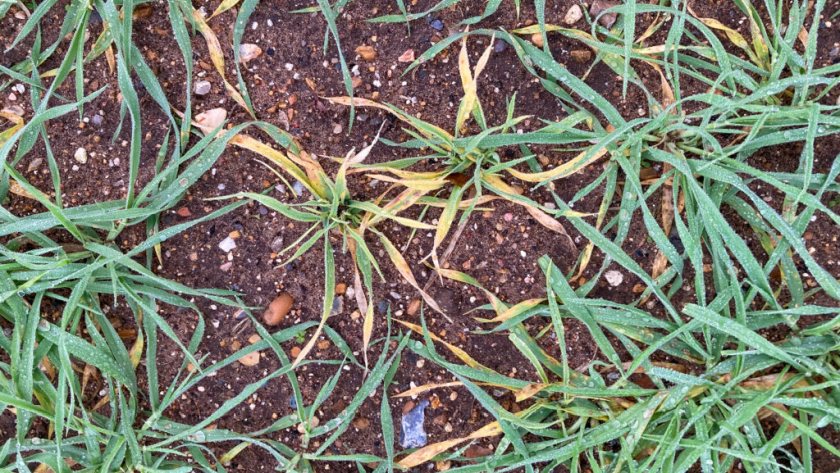
Wheat dwarf virus may be more prevalent in UK grain than previously thought, with new research confirming cases in both winter barley and winter wheat.
The findings, from research led by members of the Association of Independent Crop Consultants (AICC), suggest the disease is often overlooked or misdiagnosed.
Recent laboratory tests have confirmed wheat dwarf virus in Norfolk winter wheat samples, with multiple positive results in winter barley during 2025.
The virus is transmitted by the leafhopper Psammotetix Alienus and is well known as a harmful cereal disease in continental Europe. In contrast, it has received relatively little attention in the UK.
One reason is that the symptoms are easily confused with barley yellow dwarf virus (BYDV), meaning cases may have historically gone unrecognized.
The latest findings are the result of a collaboration between AICC members, entomologists and plant virologists who carried out targeted sampling and laboratory analysis across the east of England.
This new situation was discussed at a recent AICC technical conference chaired by Chris Nottingham of Apex Agronomy.
Tim Martin from Apex Agronomy, along with entomologist Alan Dewar, shared field observations in East Anglia and extensive insights into vector biology and disease behavior.
Tim said this study highlighted the strength of the AICC network.
“Independent agronomists walk crops over large areas every week. This puts us in a good position to spot emerging problems early and work with researchers to turn those observations into robust, actionable evidence.”
Early results suggest that the virus spreads primarily through primary infection in early fall, rather than secondary spread within crops later in the season.
This is consistent with the life cycle of leafhopper vectors and influences drilling decisions.
The patterns seen so far indicate that crops that are excavated early, especially on light soils after a hot, dry summer, are at higher risk and favor leafhopper activity.
Grasses, native plants, and cover crops are also thought to act as reservoirs of the virus between seasons.
Those involved in the work stressed that the focus was on understanding the risks, not sounding the alarm.
“I’m not saying this is a problem everywhere, but without being aware of what’s happening on the ground, the industry can’t assess where the risks are and where to focus research,” Tim said.
The researchers also highlighted major gaps in knowledge, including how widely distributed wheat dwarf virus is across the UK, which strains are present, and how effective culture and variety controls are under UK conditions.
AICC members are now being encouraged to report suspected cases and submit samples with the aim of expanding the investigation beyond East Anglia.
The findings will be shared with AHDB and Defra, but agronomists are urging growers to remain vigilant when harvesting crops, particularly in early-drilled grains that are showing BYDV-like symptoms.
