

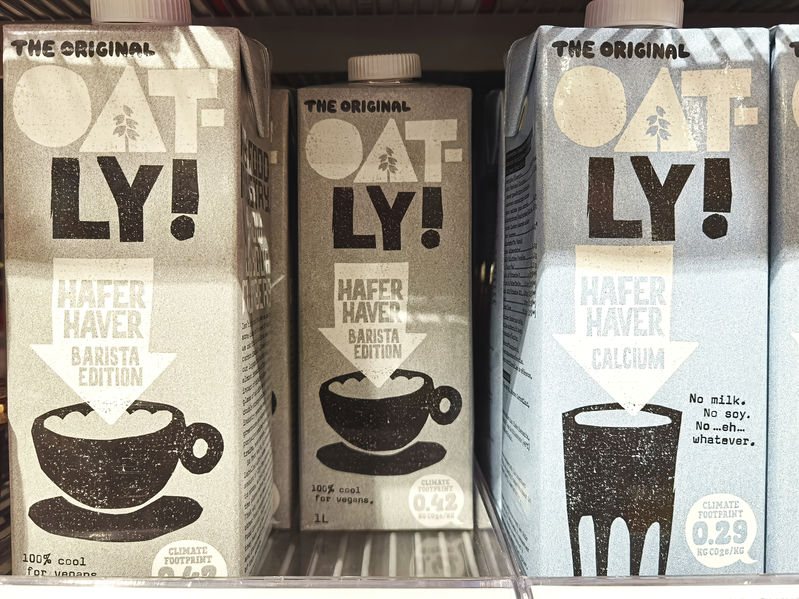
Oatly has been banned from using the word ‘milk’ to promote its plant-based products, in a landmark Supreme Court ruling that could reshape how Britain’s burgeoning dairy alternatives sector is marketed.
The UK Supreme Court has ruled in favor of industry group Dairy UK, ending a long legal battle with the Swedish drinks maker over its use of dairy-related terminology.
In a unanimous decision handed down Wednesday, the judges ruled that Oatly can no longer trademark or use the slogan “Post Milk Generation.”
The debate centered on whether plant-based producers could adopt language traditionally reserved for animal-based products.
Under UK law (closely aligned with current EU regulations), terms such as ‘milk’ and ‘cheese’ are protected names for products of animal origin. The court’s decision strengthens that position.
Following the ruling, British Dairy chief executive Dr Judith Bryans said the organization was “delighted” with the outcome.
“We are pleased that the Supreme Court has upheld the Court of Appeal’s earlier decision and found that Oatly’s trademark ‘Post Milk Generation’ violates the rules protecting dairy reservation terms,” she said.
Dr Bryans added: “This judgment is an important decision for the dairy industry, as it finally provides clarity on how dairy terminology can and cannot be used in branding and marketing.”
He said the ruling “brings more certainty to businesses and ensures that long-established dairy terminology remains clear to consumers, while allowing the use of appropriate descriptors where the law allows.”
Daily UK also expressed its “deepest gratitude to the Supreme Court justices for their careful consideration of this case” and said it was “very grateful to DWF’s legal advisers and Tom Moody Stuart KC for their expertise and dedication throughout the proceedings.”
Legal experts said the ruling drew a clear line in the sand for food and drink brands operating in the UK.
Richard May, partner at international law firm Osborne Clarke, said: “The Supreme Court’s unanimous decision provides important clarity for food and drink brands operating in the UK. It confirms that the UK will continue to take a rigorous approach to the use of protected dairy terms post-Brexit, closely aligned with the EU regime.”
He said the principles underlying the case were clear. “If a product is not derived from animal milk, it cannot be marketed using dairy product designations such as ‘milk’ or ‘cheese.'”
For plant-based producers, he added, “a safer bet is to use clearly descriptive alternatives like ‘oat drink’ or ‘plant-based drink’ and keep statements like ‘dairy-free’ factual rather than brand-defining.”
This decision is expected to have an immediate impact on branding and advertising across the plant-based category.
“As a practical matter, terms such as ‘oat milk’ and ‘plant-based cheese’ now pose heightened legal risks in the UK market,” May said, warning that “marketing teams need to ensure product names and campaign messages do not tread into protected territory.”
The ruling could signal a tougher stance from regulators on what lawyers call “categorical borrowing” beyond dairy alternatives.
“Companies that build their brands around legally defined product names, whether dairy or otherwise, should expect careful scrutiny and plan their brand strategy accordingly,” May said.
The judgment strengthens the UK’s commitment to protecting traditional food designations, even as consumer demand for plant-based options continues to grow.
Mr. Autry has been contacted for comment.
