

SAPAN KAWAYAN, Philippines – Two hours north of the capital Manila, on the grounds of a former U.S. military base, the Philippine government is moving forward with a multibillion-dollar “smart city” project that President Ferdinand Marcos Jr. hopes will become a “mecca for tourists” and “a magnet for investors.”
New Clark City, being built on the former Clark Air Base, is at the heart of the government’s efforts to attract foreign investment and ease congestion in Manila, home to nearly 15 million people.
Recommended stories
list of 4 itemsend of list
As the city grows, the government also has ambitious plans for a nearby airport complex. With new rail lines, an expanded airport runway and a $515 million stadium, officials hope it will be attractive enough to attract global pop singer Taylor Swift.
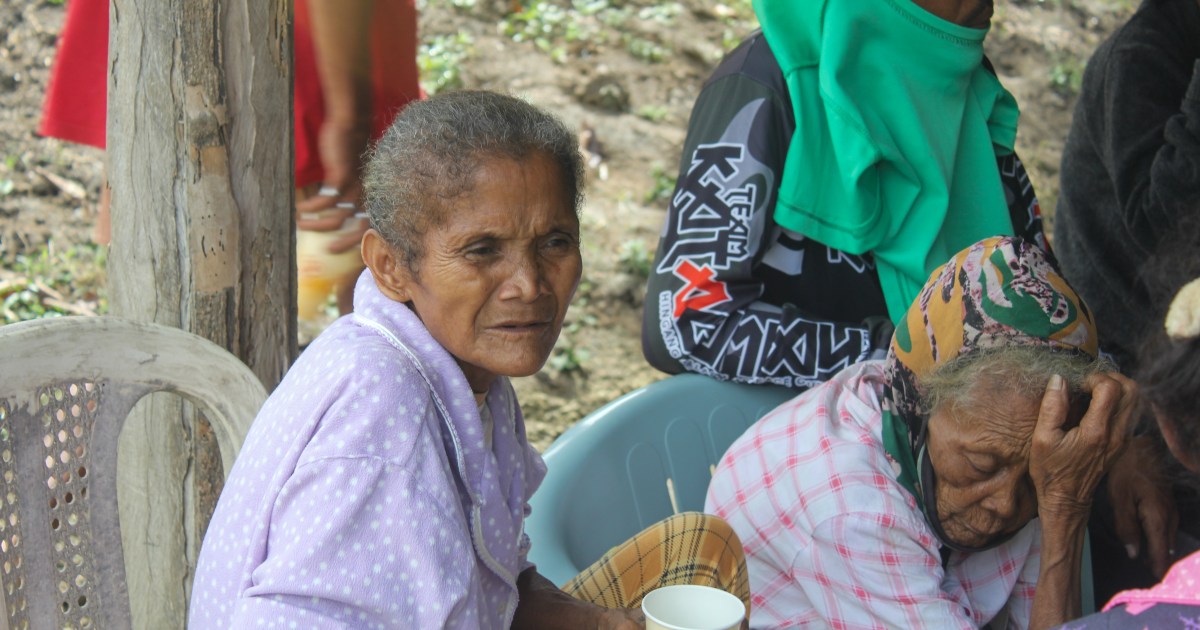
Sandwiched between the emerging city and the planned stadium site is the indigenous Aeta village of Sapan Kawayan. For about 500 families living in nipa grass and wicker houses, the development spells disaster.
“We were here before the Americans and even before the Spaniards,” said Petronila Capiz, 60, head of the Aeta Hanji tribe of Sapan Kawayan. “And land continues to be taken away from us.”
Historians say American colonists, who took the Philippines from Spain in 1898, seized 32,000 hectares (80,000 acres) of land that became Clark Air Force Base in the 1920s and dispossessed the Aetas, a semi-nomadic, dark-skinned people believed to be among the archipelago’s earliest inhabitants.
Many were evacuated, but some moved deep into the jungle inside the base and were hired as laborers.
The United States handed over the base to the Philippine government in 1991, nearly 40 years after recognizing Philippine independence. The Base Conversion and Development Authority (BCDA) has managed the complex ever since. Today, it is believed that approximately 20,000 Aeta remain in the Clark region, spread over 32 villages.
However, most of their claims to land are not recognized.
Sapang Kawayan residents fear the government’s development boom could force them out long before such claims are established. The community, along with other Aeta villages in Clark, is collaborating with researchers from the University of the Philippines to facilitate the long-pending Certificate of Ancestral Domain Title (CADT) application. CADT is the only legal mechanism by which rights to territory and its resources can be asserted.
In January, July, and September, men and women of all ages gathered under a temporary wooden shelter in Sapan Kawayan to assemble family trees and share stories and photos. Volunteers documented details of each in hopes of proving that the communities there predate colonial rule.
Their 17,000 hectares of ownership overlaps nearly all of the 9,450 hectares earmarked for the City of New Clark, which includes new rail lines, a runway and an airport complex slated for construction 14 kilometers south.
Together, the new city and airport complex will “eat up the fields where we farm, the rivers where we fish, the mountains where we gather our herbs,” Capiz said.

“Taylor Swift Ready”
The Philippine government first announced the New Clark City project under then-President Rodrigo Duterte, promoting it as a solution to Metro Manila’s devastating traffic congestion. BCDA describes the development as a “green, smart and disaster-resilient metropolis.”
Construction began in 2018, with the construction of main roads and a sports complex that will host the 2019 Southeast Asian Games.
The city, designed to accommodate 1.2 million people, is expected to take at least 30 years to complete.
BCDA is currently constructing three highways connecting the city of New Clark to the airport complex where a “Taylor Swift-ready” stadium is planned. Officials are touting the stadium, which is scheduled to be built by 2028, as a magnet for Swift, who missed the Philippines on the South Asia leg of her Elas tour last year.
“One of the key factors that makes Clark so attractive to investors is its unparalleled connectivity,” BCDA Chairman Joshua Vincan said earlier this year, citing the airport, nearby seaport and major highways. “But we need to further strengthen this connectivity and invest more in infrastructure.”
This expansion came at a cost to the Aeta community.
Research institute Countermapping PH and activists estimate that hundreds of Aeta families have been forced to flee since the city’s construction began, including dozens who were given just a week to vacate “voluntarily” ahead of the 2019 Southeast Asian Games.
They warn that thousands more people could be uprooted if development continues.
BCDA offered financial compensation of $0.51 per square meter and resettlement to the affected families. Ground was broken on 840 homes in July, but it is unclear whether they will be for evacuated Aeta residents.
The agency maintains that no evictions have occurred because the Aetas have no proven legal claim to the area. In a statement to Al Jazeera, the BCDA said it “defends the welfare and rights of indigenous peoples” and recognizes their “long historical presence” in Central Luzon, where Clark is located. However, he noted that Clark’s boundaries follow “long-established government ownership” dating back to U.S. military bases, and that the new Clark city does not infringe on recognized ancestral territory.
The BCDA also insisted that the National Commission for Indigenous Peoples (NCIP) handles applications for ancestral domain ownership certificates, stressing that it respects the “land given to indigenous peoples.”
The Clark International Airport Authority, which oversees the airport complex, offered similar assurances, saying “there are no households or communities at the site.” The group added that while there is an Aeta community in the expanded Clark area, there is none within the airport complex itself.

“From time immemorial”
Only a handful of Aeta people have been awarded the CADT.
Two certificates were issued in the suburb of Clark, but applications submitted by Sapan Kawayan and other villages on the base have been stalled since 1986.
Marcial Rengao, director of the NCIP’s Tarlac office, told Al Jazeera that in order to award the CADT to the Aetas of Clark, “we need to prove that they have been there since time immemorial,” meaning that they were present during or before the arrival of Spanish settlers in the archipelago 400 years ago.
The commission said it has established minimum requirements for CADT. It includes genealogies of at least five clans dating back at least three generations or pre-colonial times, testimonies from elders, maps of territories, and a census of the current population.
Mr. Rengao said that Mr. Sapan Kawayan’s application has not yet completed these.
But even if the application is approved, the village faces other unique hurdles. Because the BCDA owns the land rights in Clark, any CADT approved by the commission for this area must be reviewed by the executive branch or the Office of the President.
“They will be responsible for finding a win-win solution,” Rengao said.
But activists decried the NCIP’s demands as onerous and warned that the longer the Aetas remain without CADT, the more they risk losing their land.
“Without CADT, without real recognition from the government, the Aeta will continue to be treated like squatters on their own land,” said Pia Montalban of Karapatan Central Luzon, a local rights group.
“Among the most abused indigenous peoples of the Philippines”
The Aeta people, who rely on small-scale subsistence farming, are historically one of the most disenfranchised indigenous peoples in the Philippines. No official data exists on the Aeta population, but the government believes they are part of the indigenous Philippine tribe and number in the tens of thousands nationwide.
The Aeta Tribe Foundation describes them as one of the “poorest and least educated” groups in the country.
“They are one of the most abused indigenous peoples in the Philippines,” said Jeremiah Silvestre, an expert in indigenous psychology who teaches at Tarlac State University and has worked closely with the Aeta community until 2022. “Many people have taken advantage of the Aetas, in part because of their friendly culture. To make matters worse, they continue to live off their land.”
Silvestre also described the CADT process as “unnecessarily academic” and compared it to “defending a thesis,” requiring Indigenous elders to present complete family trees and detailed maps to government officials.
He noted that a change in government officials could restart the entire process.
A World Bank report last year found that indigenous peoples in the Philippines “often face insurmountable bureaucratic hurdles when processing CADT.” The report said recognizing and protecting indigenous peoples’ land rights is “an important step in addressing poverty and conflict.”
For Sapan Kawayan families, experts fear the lack of formal recognition could lead to displacement and homelessness.
“There’s no safety net,” Silvestre said. “If things continue like this, more Aeta people may end up begging on the streets. Systemic poverty will also mean the loss of indigenous culture.”
Victor Ballantine, the indigenous enforcement representative for Tarlac province, which includes part of Clark province, is concerned that the Aeta people’s territory at the old base is shrinking as new projects accelerate.
“We’re going to have to move more and more,” he said. “Shopping centers aren’t working for us.”
Ballantine went on to lament what he sees as common imbalances.
“BCDA projects happen very quickly,” he said. “But everything will be terribly slow for us.”
