


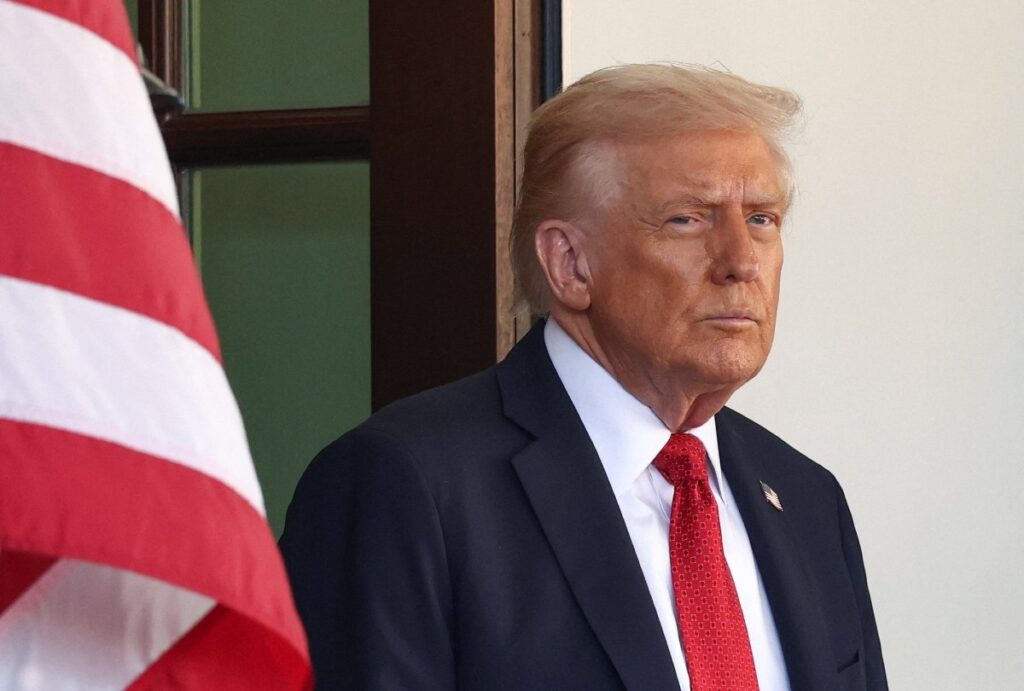
The U.S. Supreme Court’s Friday decision to lift trade tariffs imposed last year by President Donald Trump could ease costs for some oil producers and drillers, but experts and analysts told Reuters that broader energy flows are likely to remain unchanged for some time.
The court’s ruling could reduce the cost of building LNG plants and other large energy infrastructure that rely on foreign-made modules and other components that are subject to tariffs.
For example, Venture Global is building an LNG plant in Italy piecemeal before importing parts to the United States for final assembly. President Trump’s tariffs have raised costs for U.S. oil producers and service companies along the value chain, hurting imported equipment and materials. Many have absorbed additional costs. Others tried to pass them on to customers.
Venture Global did not respond to a request for comment.
“We were expecting to have to pay about $5 million to $6 million in tariffs in 2026, so hopefully that number will come down,” said Cam Hewell, president and CEO of Premium Oilfield Technologies, which manufactures and sells spare parts and equipment to oilfield companies.
“We had to absorb about 90% of the tax increase, so it won’t have a big impact on what we charge customers, but it will give us more cash flow to fund research and development, employee raises and cashbacks to investors,” he added.
Kirk Edwards, president of Texas-based producer Latigo Petroleum, said the ruling could help companies budget more accurately and better understand drilling costs.
The Supreme Court’s ruling did not eliminate the 50% tariffs on steel and aluminum imposed last year. Some government officials remain wary that the administration will find a way to maintain tariff costs.


“I have some concerns that the administration will quickly bypass Congress and create another tariff system that mimics the current system and never changes the amount we have to pay,” Whewell said.
President Trump has made a similar proposal, saying he would impose a 10% tariff on the entire world for 150 days.
“We have an alternative, a great alternative,” President Trump said.
The flow of LNG is likely to remain unchanged.
Ira Joseph, a senior fellow at Columbia University’s Center on Global Energy Policy, said the court’s ruling would theoretically reduce the cost of building LNG plants, but simple economics make it unlikely to result in China accepting more LNG from the United States.
“It makes more sense for China to continue trading U.S. LNG to Europe, either to arbitrage shipments or to import LNG from the Middle East based on a cheaper oil index,” Joseph said. “Beijing currently treats its LNG market as strategic leverage with the United States, and no LNG purchases were agreed as part of the deal late last year. Even if tariffs were eased, it is unlikely that China would offer to buy or make any concessions,” said Alex Manton, director of global gas and LNG research at consultancy Rapidan Energy.
“If this administration has proven anything, it’s that it will be extremely resourceful and look for alternatives to accomplish its policies,” said Samantha Santa Maria Hartke, head of market analysis at Vortexa. China suspended U.S. crude oil and LNG deliveries after imposing its own retaliatory tariffs on the U.S., but added that it was unlikely to change course.
(Reporting by Georgina McCartney, Aracey Somasekhar and Curtis Williams in Houston; Editing by Nathan Crooks and David Gregorio)
Share this:
