

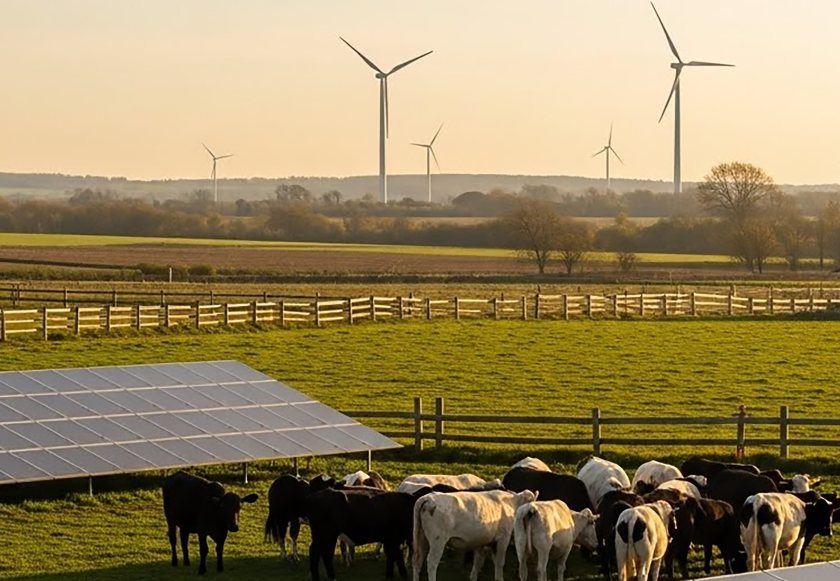
A record 157 new solar power projects were approved under the government’s latest renewable energy auction, a move that ministers say will strengthen energy security, but has also raised concerns that it will divert agricultural land from food production.
The latest round of deals for difference has delivered what the government claims is the largest clean energy auction in UK history, covering solar, onshore wind and tidal energy projects.
A total of 4.9GW of solar capacity has been secured alongside large-scale new onshore wind projects and tidal developments. Combined with last month’s offshore wind results, the government has now contracted 14.7GW of new renewable power. This is enough to power the equivalent of 16 million homes.
But the scale of new solar power development could intensify debate in the agricultural sector, where concerns are growing about the long-term impact of energy infrastructure on domestic food production.
Farming organizations have repeatedly warned that the expansion of renewable energy must not come at the expense of the UK’s ability to produce food, especially as food security has risen to the political agenda in recent years.
Ministers say the auction is essential to delivering clean electricity by 2030, reducing bills and protecting the UK from volatile fossil fuel markets.
The government said new onshore wind power has been agreed at £72.24/MWh and solar power at £65.23/MWh, both of which are “more than 50% cheaper” than the £147/MWh it costs to build and operate a new gas power station.
Energy Secretary Ed Miliband said: “Clean British electricity is the right choice for our country.”
He added that supporting wind and solar power at scale will help lower bills while protecting families and businesses from the “fossil fuel roller coaster.”
Successful projects include the West Burton Solar Farm, which was awarded the contract as the largest government-backed solar power project in history, alongside new large-scale wind developments such as Imerys Wind Farm in Cornwall.
The government says the bid is expected to generate an additional £5bn of private investment and support up to 10,000 jobs.
While some argue that solar power schemes can be combined with grazing and other dual-purpose farming systems, critics say large-scale development still risks reducing the production capacity of key agricultural areas.
For many in the agricultural sector, the rapid expansion of solar power plants continues to raise questions about land use priorities and the balance between energy generation and domestic food production.
This expansion is expected to increase calls for clearer national strategies on how renewable infrastructure can be provided without compromising food security.
