

Written by Timothy Gardner
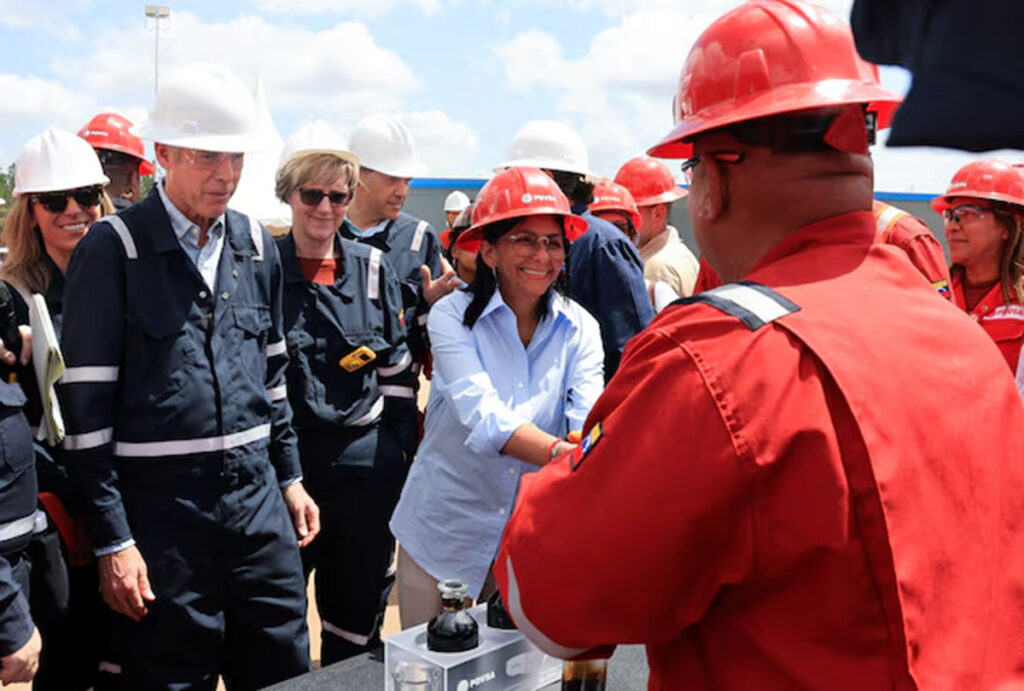
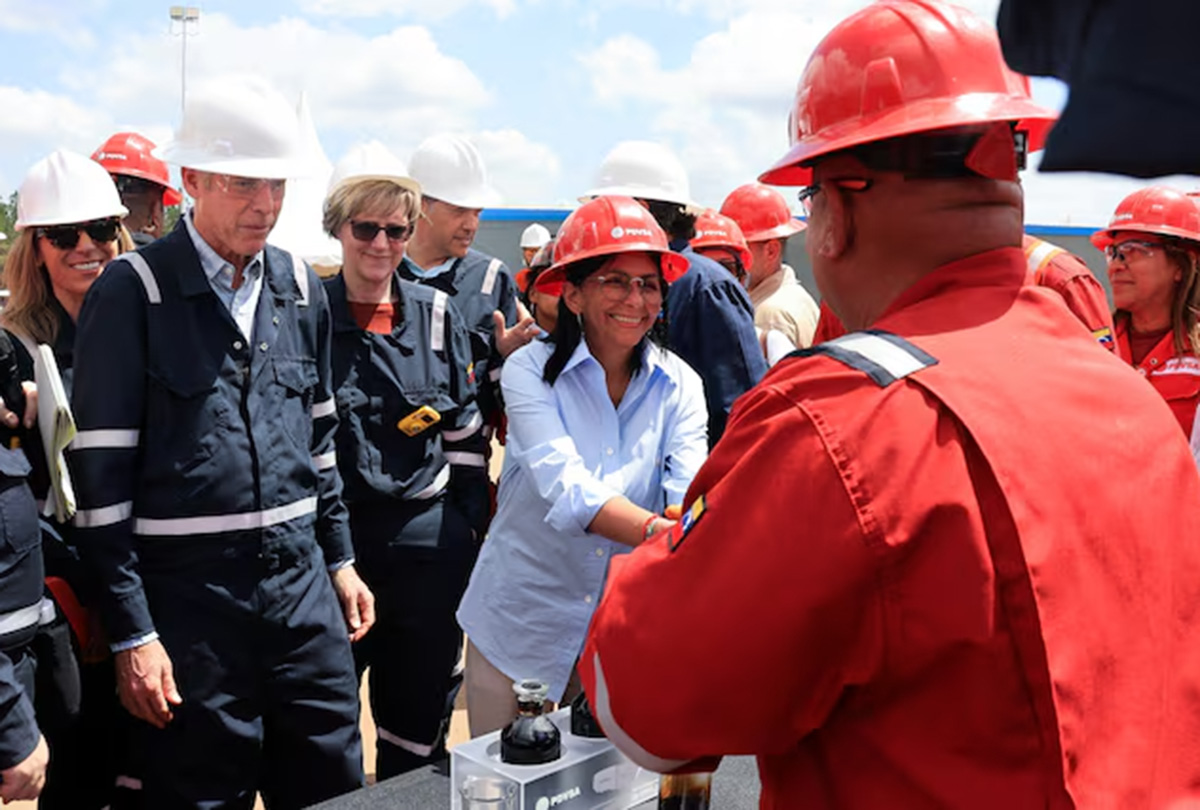
Venezuela’s Interim President Delcy Rodriguez, U.S. Energy Secretary Chris Wright, and U.S. Chargé d’Affaires to Venezuela Laura Dogu visit an oil production facility operated by a joint venture between Chevron and national oil company PDVSA in the Orinoco oil region.
Grants general licenses to oil majors with offices in Venezuela New investments in oil and gas are allowed, but subject to separate permits Biggest sanctions relief since the US took over Maduro’s government Royalty payments for oil majors must go through a US-controlled deposit fund
WASHINGTON, Feb 13 (Reuters) – The United States eased sanctions on Venezuela’s energy sector on Friday and issued two general permits allowing global energy companies to operate oil and gas projects in the OPEC member country and other companies to negotiate contracts to bring in new investment.
The Treasury Department’s Office of Foreign Assets Control has issued general licenses to Chevron (CVX.N), BP (BP.L), Eni (ENI.MI), Shell (SHEL.L), and Repsol (REP.MC) allowing them to operate oil and gas operations in Venezuela. These companies still have offices in the country, invest in projects and are among the main partners of state-owned company PDVSA.
The oil major’s license to operate requires that royalties and Venezuelan tax payments be routed through a U.S.-controlled foreign government deposit fund.
Another license allows companies from around the world to enter into agreements with PDVSA for new investments in Venezuelan oil and gas. The agreement is subject to specific clearance from OFAC.
The authorization does not permit transactions with entities owned or controlled by Russian, Iranian, or Chinese companies or joint ventures with people from those countries.
The move is the biggest sanctions relief for Venezuela since the U.S. military detained and removed President Nicolas Maduro last month.


Petroleum law revision
The U.S. license follows sweeping reforms to Venezuela’s main oil law approved last month, which give foreign oil and gas producers greater autonomy over operations, exports and cash sales revenues, either through existing joint ventures with PDVSA or through a new production-sharing agreement model.
The United States has imposed sanctions on Venezuela since 2019, when they were imposed during President Donald Trump’s first administration.
President Trump is currently seeking $100 billion in investment by energy companies in Venezuela’s oil and gas sector. U.S. Energy Secretary Chris Wright said Thursday, on his second day in Venezuela, that the country’s oil sales since Maduro’s arrest have reached $1 billion and will reach another $5 billion in the coming months.
Wright said the United States would manage the proceeds of the sale until Venezuela establishes a “representative government.”
Since last month, the Treasury Department has issued several other general permits to facilitate the export, storage, import and sale of oil from Venezuela. It also authorized the provision of U.S. goods, technology, software, or services for oil and gas exploration, development, and production in Venezuela.
The Venezuelan government confiscated the assets of Exxon Mobil (XOM.N) and ConocoPhillips (COP.N) in 2007 under then-President Hugo Chávez. The Trump administration is also trying to encourage these companies to invest in Venezuela. At a meeting at
Exxon Mobil CEO Darren Woods met with President Trump at the White House last month and said Venezuela was currently “uninvestable.”
Wright said Thursday that Exxon no longer has an office in Venezuela but is consulting with the Venezuelan government and collecting data on the oil sector. Exxon did not immediately comment.
Report by Timothy Gardner. Additional reporting by Marianna Paraga in Houston; Editing by Nia Williams and William McLean
Share this:
