

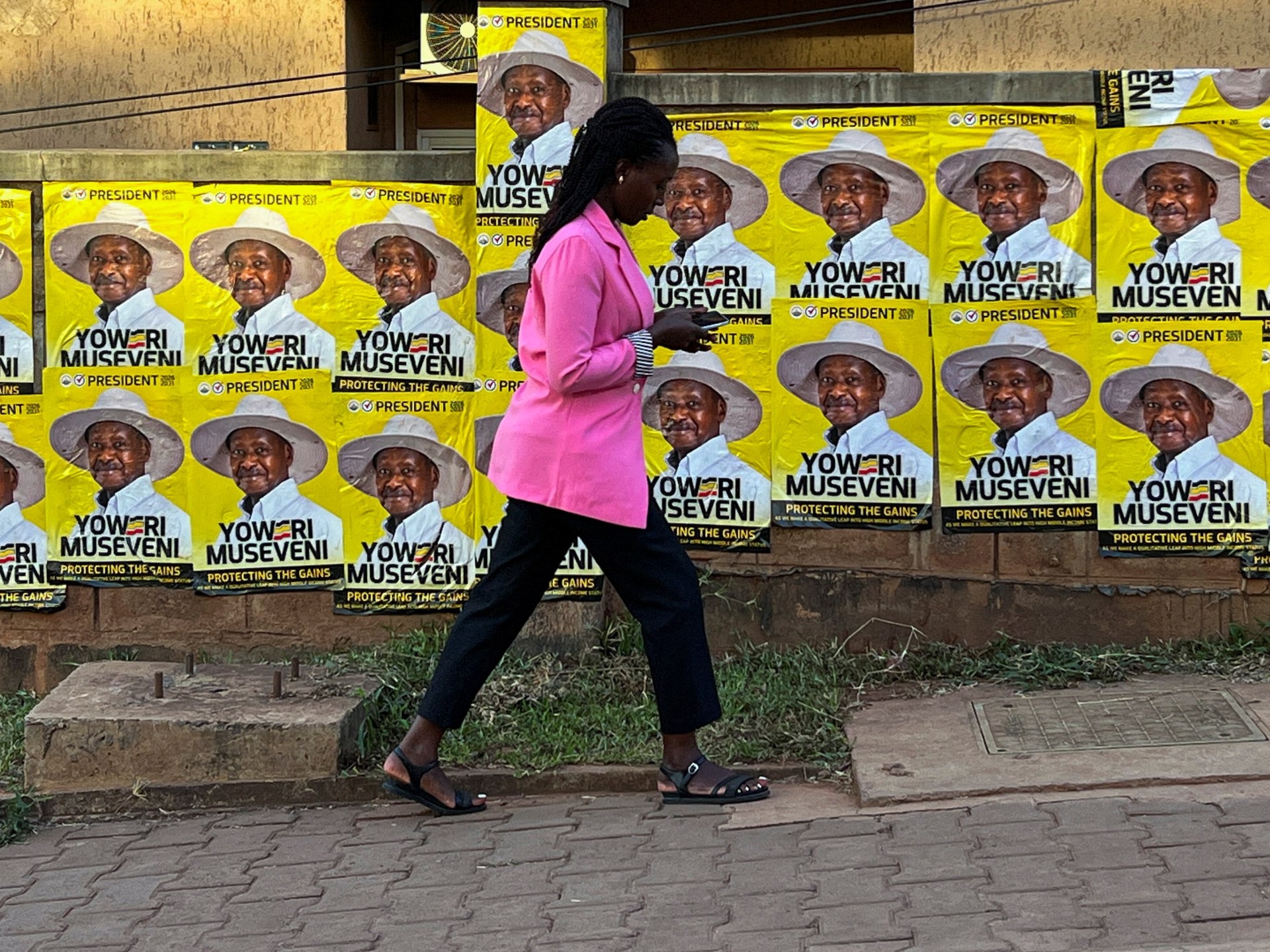
KAMPALA, Uganda – On the eve of a closely contested presidential election in Uganda, the country is partially on lockdown.
The national communications authority suspended public internet access, new SIM card sales and registration, and outgoing roaming services.
Recommended stories
list of 3 itemsend of list
On the streets of the capital, the move has sparked anger and frustration, especially among young people who rely heavily on the internet for work, communication and opportunities.
Marvin Masore says he primarily uses WhatsApp for communication and business.
The 27-year-old college graduate has repeatedly tried and failed to find a job.
Disappointed, he is now seeking opportunities overseas.
“Many of us use WhatsApp. Without the internet, we are stuck,” he told Al Jazeera.
“There are people making money online. If we had a youthful president, I don’t think he would have allowed it to shut down. He’s alienating us.”
Masore gathers with friends at a food stall in downtown Kampala. The group shares the famous “Rolex”, an egg-wrapped chapati, a popular street food in Uganda.
The oldest of them is 37 years old. Most are in their 20s.
This reflects the national average, with more than 70% of the country being under 35 years of age.
But for decades, this youthfulness was not reflected in the upper echelons of power.
Mazore and his friends have only known one president in their lifetimes. Yoweri Museveni, now 81, is seeking a seventh term in office after nearly 40 years in power.

tension and anxiety
More than 21.6 million voters are registered for Thursday’s election.
But for many young Ugandans, there is a sense of a generational and political disconnect between them and Museveni’s policies. They are educated, digitally connected, and face high unemployment rates, yet many say their voices do not lead to power.
But for other young Ugandans, the generational gap between them and the president is not an ideological one.
Scovia Tsavimana is a strong supporter of the president and his policies. She believes his leadership has benefited the country.
“I was five years old when Museveni came to power. I am an orphan. I could not afford to go to school,” she told Al Jazeera.
“The president introduced universal primary education. He also built roads and hospitals.”
Asked about internet shutdowns and reports of campaign violence against opposition parties and their supporters in the run-up to the vote, she said: “I am not happy with this situation, but I believe there is a reason for it.”
Masore says that in an ideal world, he would like to see a peaceful and harmonious transition of power after the vote.
However, Uganda has not experienced a peaceful handover since independence in 1962.
For years, Uganda’s elections have been clouded by uncertainty and tension.
According to human rights groups, more than 50 people were killed in the last polls in 2021 due to election-related violence and repression by security forces.
Both before and since then, Museveni’s government has been accused of violently repressing critics.
In recent months, opposition politicians and activists have faced escalating harassment, including arbitrary arrest and detention on politically motivated charges.
Civil society organizations are also under increasing pressure, facing increased regulation and surveillance aimed at limiting their ability to influence and comment on the political process.
During this year’s election campaign, main opposition candidate Bobi Wine also warned that the state planned to rearrest him.
This comes as political analysts and observers predict Mr Museveni’s re-election is all but certain, a victory that his rivals will likely say was fraudulent.

“I dream of a country with good hospitals.”
On the streets of Kampala, many people say they want to vote, but are worried about what will happen after they vote.
Former teacher Abdul Okiya says he hopes for a peaceful outcome. However, he insists that the will of the people must be respected.
Frustration and disillusionment run deep, especially among first-time voters who doubt whether their votes can still make a difference.
Sam Muzaale runs a food stall in downtown Kampala.
A former security guard, he struggled to sell Rolex chapatis. He currently employs several people. And I’m going to vote for the first time.
“I dream of a country with good hospitals, enough medicine, schools with teachers and low taxes, because taxes keep going up,” he told Al Jazeera.
Mazzole says he’s still frustrated by the internet shutdown and lack of opportunities, and doesn’t know what will happen next.
“The president knows how to use the military and police to bring peace. He knows how to restore order. He will find a way to stabilize the situation,” he says.
“My concern is what will be done to restore that stability.”
It is a concern shared by many Ugandans: a desire for peace and harmony and anxieties about the costs of maintaining it.
