

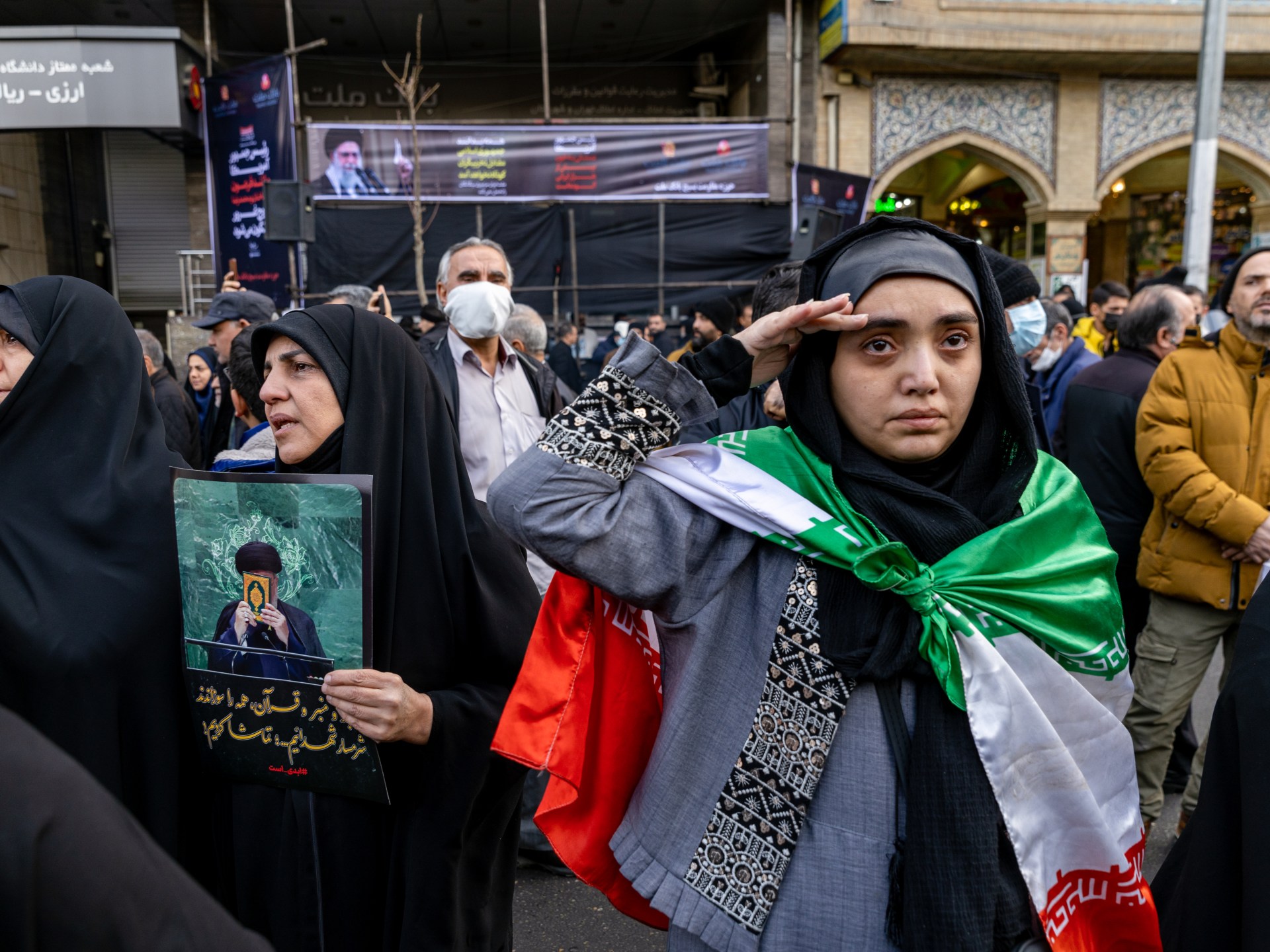
Iranian protests that began in late December 2025 over the country’s deteriorating economic situation have escalated into a broader challenge to the country’s clerical leadership, which has been in power since the 1979 Islamic Revolution.
Tensions have been rising with the United States since President Donald Trump suggested the United States could intervene militarily in Iran if there was a crackdown on protesters.
Critics of the Iranian government, mainly from Western countries, claim that thousands of people have been killed in the protests. Notably, the US-based Human Rights Activists News Agency (HRANA) announced the death toll on Wednesday at 2,615.
However, the Iranian government said these numbers were exaggerated, with Iranian state television reporting putting the figure at about 300.
On Wednesday night, President Trump’s tone softened, saying he had received assurances from Iran that the killing of protesters in Iran had stopped and that detained protesters would not be executed.
But earlier threats to attack Iran prompted Iran to threaten retaliation, and on Wednesday Qatar confirmed it had removed some personnel from Al Udeid Air Base, where U.S. forces are stationed, in response to “current regional tensions.”
Clashes have broken out in Iran between demonstrators and security forces, resulting in some deaths. The ongoing internet blackout, which entered its eighth day on Thursday, has made tracking the true number of deaths particularly difficult, according to monitoring group Netblocks.
What do we know about Iran’s death toll?
Iran has not released an official death toll, but authorities said this week that more than 100 members of its security forces were killed in clashes with demonstrators. Opposition activists said the death toll was even higher, including more than 1,000 demonstrators.
HRANA said the number of people killed reached at least 2,615 on Wednesday.
The Norway-based group Iran Human Rights (IHR) reported on Wednesday that at least 3,428 protesters had been killed in the crackdown.
But on the same day, Iranian state television reported that a mass funeral would be held in Tehran, including 300 bodies of security force members and civilians.
In an interview with Fox News on Wednesday, Iranian Foreign Minister Abbas Araghchi denied that Tehran was planning to execute protesters. During the interview, Araghchi downplayed the reported death toll.
“I certainly deny the numbers and numbers that they said. It is an exaggeration, a misinformation campaign just to find excuses and launch new aggressions against Iran,” Aragushi said, adding that the numbers were exaggerated to draw President Trump into the conflict.
Al Jazeera cannot independently verify the reported figures.
Of all these numbers, HRANA’s numbers are the most cited by news organizations around the world.
What is Herana?
The US-based HRANA is a news agency affiliated with the Iranian Human Rights Activists Association (also known as HRAI or HRA), which describes itself as a “non-political, non-governmental organization comprised of activists defending human rights in Iran,” according to its website.
The website states that HRAI was formed in 2005, but does not reveal the name or details of the organization or its founders.
According to the newspaper, in February 2006, a small group of Iranian activists gathered to organize protests against human rights violations in the country.
“That effort laid the foundation for a larger vision that would eventually lead to the creation of the organization known as Iranian Human Rights Defenders,” the website said, adding that the effort initially focused on political prisoners. Supported families of victims, documented abuse, and conducted public education campaigns in Iran.
Why is the group currently based in the US?
By March 2010, the group was legally registered in Iran and said it had transitioned from a “semi-secret organization to an organization operating openly in Iran.”
The organization added that it had decided during this time to make the leader’s name public. “By publishing the names of our country’s leaders, we hoped to neutralize such suspicions that have historically led to brutal repression in the past.”
However, the government says it has cracked down on it.
The website further adds: “The military crackdown on our organization on March 2, 2010 has made our members more determined than ever to reorganize and ultimately rebuild the infrastructure necessary to continue our operations, despite the security risks that threaten each of us.”
According to a document released by Amnesty International on March 12, 2010, HRAI reported that Iranian security forces raided the homes and workplaces of at least 29 members between March 2 and March 3, and arrested 15 people.
The website added that immediately after the crackdown, HRAI registered as a nonprofit organization in the United States and focused on recruiting skilled members, integrating technology into its operations, and “obtaining appropriate funding sources.”
What is HRANA’s assessment of the Iran crisis?
This week, HRANA reported that of the 2,615 people killed, 2,435 were protesters, 153 were government or military personnel, and 14 were non-protesting civilians.
In addition to the death toll, HRANA reported that 18,470 people were arrested in 617 protests in 187 cities that began on December 28 in Tehran.
HRANA also publishes news articles online with the names, photos, ages, and other information of those allegedly arrested or killed.
What do we know about HRANA’s supporters, members, and methodology?
Al Jazeera contacted HRANA for comment, but a spokesperson declined to disclose information about the group’s members or funding sources, citing security concerns.
A spokesperson told Al Jazeera that the organization verifies all data as a primary source, but cannot disclose the identities of the individuals or organizations in Iran whose information HRANA corroborates. Data collection and analysis methodologies are not provided on the website.
How do HRANA’s previous reports compare with official government statistics?
Iran waged war with Israel for 12 days from June 13 to 24, 2025.
HRANA reported that 1,190 people were killed and 4,475 injured in Iran over the course of the conflict. These figures include civilian and military casualties. The organization also reported that 1,596 people were arrested by Iranian security forces during the war.
By contrast, 610 people were killed and 4,746 injured during the war, according to Iran’s Ministry of Health and Medical Education.
In September 2022, a young woman named Mahsa Amini, 22, was arrested in Tehran on suspicion of wearing the hijab inappropriately. She collapsed in custody and died in hospital a few days later.
Her death sparked public outrage and led to weeks of widespread protests in Iran. Slogans “Women, Life, Freedom” were shouted in the streets.
HRANA reported in October 2022 that 200 people were killed and approximately 5,500 arrested during these protests.
The death toll matched figures from Iran’s Ministry of Interior National Security Council, which announced in December 2022 that more than 200 people had been killed since September. Security agencies said the dead included those killed by security forces, those killed in “acts of terrorism” and those killed by foreign-backed groups, and those killed by state forces were “insurgents” and “armed counterrevolutionary elements who were members of separatist groups.”
